
It’s late November. The pot of lemongrass that looked like a fountain on the patio all summer is now sitting by the back door, the nights are dipping toward freezing, and you’re wondering whether it can really live in the house until spring. Or maybe you just bought a bundle of stalks for a Thai curry and noticed one still has a little root plate at the bottom.
Short answer: Yes, you can grow lemongrass indoors. Give it your brightest window (about 6 hours of direct sun) or 12–16 hours under an LED grow light (UC Master Gardeners), keep it above 55°F (13°C) if you want it to keep growing (RHS), and water so the mix stays evenly moist but never soggy. A fresh grocery stalk with its base intact will usually root in a glass of water in about two to three weeks.
If you want to grow lemongrass indoors successfully, this guide gives you the numbers that matter (temperature, light, feeding, harvest size), a step-by-step method for both store-bought stalks and nursery plants, a winter plan, and a troubleshooting table for when leaves brown or stalls happen. By the end you’ll know exactly where to put your plant and what to do with it each week.
Can You Grow Lemongrass Indoors? What to Expect
Lemongrass (Cymbopogon citratus) is a tropical grass from South and Southeast Asia. It isn’t frost hardy, so in most of the US and all of the UK it either lives in a pot that moves indoors for winter or gets treated as an annual (RHS; University of Illinois Extension). That makes it a natural container plant.
Be realistic about size. Outdoors in the tropics a clump can reach 3–6 feet tall and 3 feet wide (Utah State University Extension). In a pot inside, it stays much smaller. Illinois Extension describes it at about 2–3 feet tall, which is a fair guide for a well-grown indoor plant.
Also be honest about speed. USU notes that lemongrass grows slowly until summer heat arrives, then increases in size dramatically. Indoors in winter, the goal is usually to keep a plant healthy and pick a few stalks, not to grow a giant clump. Spring and summer are when it bulks up.
| What you want | Realistic indoors? | Why |
|---|---|---|
| Keep a patio plant alive over winter | Yes, very doable | Needs a bright spot above 45°F (7°C) (RHS) |
| Root grocery-store stalks | Usually | Works if enough root plate remains (UW–Madison) |
| Harvest thick stalks all winter | A few, not many | Low winter light slows growth (RHS) |
| Grow from seed | Possible but slow | Seed often germinates poorly (UW–Madison) |
| Flowers | Rarely | Plants grown as annuals seldom flower (UW–Madison) |
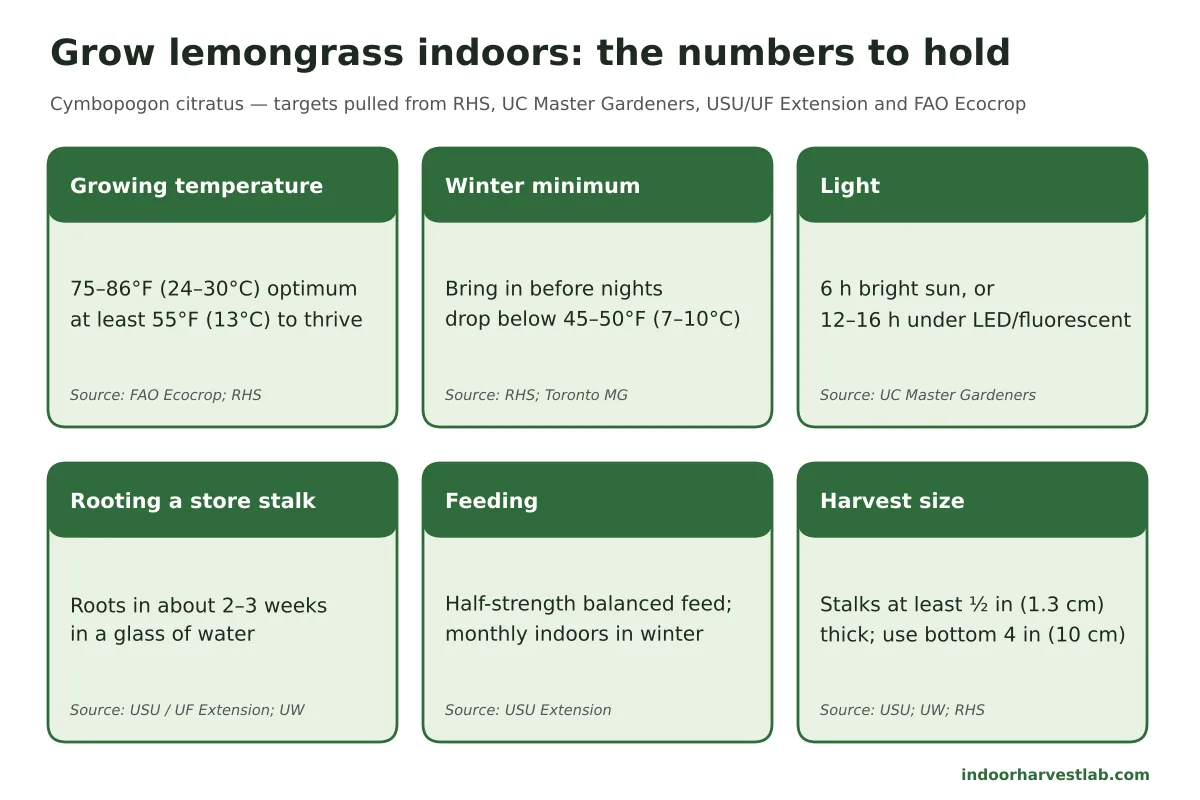
Lemongrass Indoors: The Numbers to Hold
Pin these targets near your plant; they cover everything you need to grow lemongrass indoors. Every figure is traced to the source in brackets, and the sources are listed in full at the end of the article.
| Factor | Target | Source |
|---|---|---|
| Optimum growing temperature | 75–86°F (24–30°C) | FAO Ecocrop |
| Minimum to grow well | At least 55°F (13°C) | RHS |
| Winter survival floor | Keep above 45°F (7°C), in bright light | RHS |
| Bring pots indoors | Before nights fall below 45°F (7°C); Toronto MG uses 50°F (10°C) | RHS; Toronto Master Gardeners |
| Light | 6 h bright sun, or 12–16 h under LED/fluorescent lamps | UC Master Gardeners (Santa Clara) |
| Soil pH (field data) | Optimum 5.0–5.8; tolerated 4.3–7.3 | FAO Ecocrop |
| Seed germination | 68–77°F (20–25°C); 2–3 weeks | RHS |
| Rooting a store stalk | About 2 weeks in water (USU); 2–3 weeks (UW–Madison) | USU; UW–Madison |
| Feeding (pots) | Half-strength balanced soluble feed; monthly for indoor pots | USU Extension |
| Harvest size | Stalks at least ½ in (1.3 cm) thick | USU; UW–Madison; UC MG |
| Part to cook with | Bottom 4 in (10 cm) of the stalk | RHS |
One note on pH: the FAO figures come from field soil data, not container trials. Any good peat-free or standard potting mix will sit in a range lemongrass handles. If you want to understand why light hours and brightness work together, our guide to how many hours of light herbs need explains daily light integral in plain terms.
Light and Temperature for Growing Lemongrass Indoors
Get these two right and growing lemongrass indoors is easy. Get either wrong and no amount of feeding will save the plant.
Temperature: the make-or-break factor
When people try to grow lemongrass indoors and fail, the cause is usually cold, not neglect. It’s a tropical grass and it behaves like one: warm means growth, cool means a stall, and cold means damage.
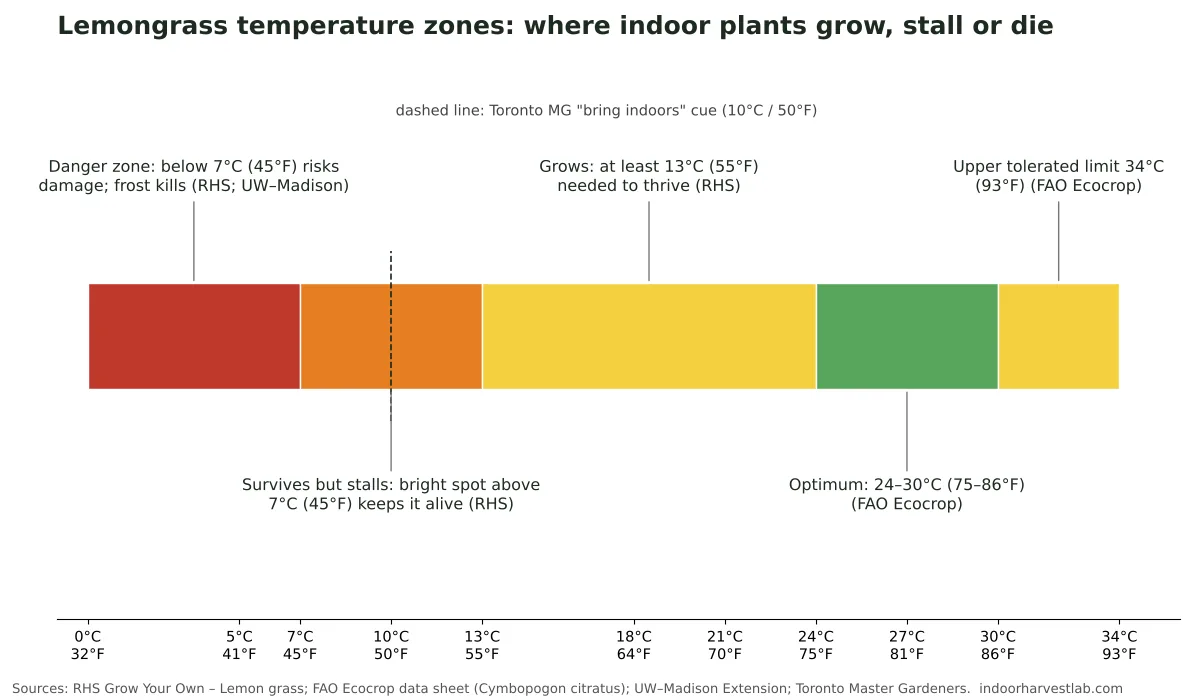
The FAO Ecocrop database lists an optimum of 24–30°C (75–86°F) and an absolute growing range of 18–34°C (64–93°F). The RHS says the plant needs at least 13°C (55°F) to really grow well, and should be kept above 7°C (45°F) over winter. UW–Madison Extension is blunt: frost will kill or severely damage the plants.
Where to put the pot in your house:
- Best: a south-facing window (north-facing in the Southern Hemisphere) in a room kept at normal living temperatures.
- Watch out for: the glass itself on frosty nights. Leaves pressed against single glazing can get much colder than the room. Pull the pot back a few inches after dark.
- Avoid: unheated porches and garages. The RHS warns that even an unheated greenhouse may be too cold.
- Also avoid: the blast from a heating vent. Hot, dry air speeds up leaf-tip browning and favours spider mites (see troubleshooting below).
How much light does lemongrass need indoors?
Lemongrass wants full sun outdoors (USU; UW–Madison). Indoors, UC Master Gardeners of Santa Clara County give two practical options: about 6 hours of bright light from a sunny window, or 12–16 hours of supplemental light from cool-white fluorescent or LED lamps.
In a northern winter, a window alone often falls short of that. Short days and a low sun angle mean far less light reaches the leaves, which is why the RHS says to water sparingly in winter: growth simply slows. A grow light fixes this.
Setting up a grow light for lemongrass:
- Use a full-spectrum LED panel or bar sized to cover the whole clump.
- Run it on a timer for 12–16 hours a day (UC Master Gardeners).
- Lemongrass is tall, so the light has to move up as the plant grows. Hang it from adjustable cords or chains rather than fixing it to a shelf.
- If you’re choosing a fixture, the same rules in our PPFD chart for indoor crops apply: brightness at leaf level matters more than the wattage on the box.
A useful detail from research: a 2025 study in Food Science & Nutrition compared shaded and naturally lit lemongrass and found that plants grown in natural light gave the best leaf-oil yield and quality (Xu et al., 2025). The aromatic compounds you cook with build up best in bright conditions, so don’t park your plant in a dim corner and expect full flavour.
How to Grow Lemongrass Indoors, Step by Step
There are three ways to start growing lemongrass indoors: a grocery stalk, a nursery plant, or seed. Most indoor growers use the first two. Here’s how to do each one well.
Step 1: Pick the right stalks (if starting from the store)
Look for firm stalks with a heavy, moist base and, ideally, a bit of the flat root plate still attached (UW–Madison; Toronto Master Gardeners). If the bottom has been sliced clean away, there’s nothing to grow roots from. Buy three or four, because not every stalk will root.
One caution from the RHS: it advises against growing from supermarket stems because of the biosecurity risk of bringing in plant diseases. In practice, US extension services (USU, Illinois, UW–Madison) treat rooting store stalks as normal. If you want zero risk, especially if you grow lots of other plants, start from a nursery plant instead.
Step 2: Root the stalks in water
- Trim off most of the leafy top so the stalk isn’t supporting a lot of leaf while it has no roots.
- Peel away any dry, papery outer layers near the base.
- Stand the stalks in a glass with just enough water to cover the base.
- Put the glass in a warm, bright spot and change the water every couple of days so it stays fresh.
- Wait. USU and UF/IFAS say roots form in about 2 weeks; UW–Madison says roots form within two or three weeks if they are going to.
If you’ve ever regrown green onions in water, this will feel familiar. The difference is that lemongrass is slower, and a stalk that shows no roots after three weeks probably won’t root at all.
Step 3: Pot it up
Once roots are about an inch long, plant the stalks in a container with ample drainage holes, filled with a good potting mix (Illinois Extension). USU says lemongrass prefers a well-drained, moist, rich mix with lots of organic matter and that waterlogged soil should be avoided. Set the stalks at the same depth they were sitting in the water and firm the mix around them.
For a nursery plant, the RHS advice is simple: choose a pot slightly wider and deeper than the one it came in, plant at the same level, and water well. Move up a size each time roots start showing through the holes.
Step 4: Water and feed
Keep the mix evenly moist. Lemongrass is a tropical plant that likes moisture and humidity (USU), but UC Master Gardeners and Illinois both warn that overwatering leads to root rot. The simple test: water when the top inch feels dry, then let the pot drain fully. Never leave it standing in a saucer of water.
Like other grasses, lemongrass is a heavy nitrogen user in summer. USU recommends a half-strength balanced soluble fertilizer weekly for potted plants in summer, and monthly for indoor pots. In winter, Illinois Extension says to reduce feeding while the plant is indoors. In short: feed lightly in winter, generously in spring and summer.
Step 5: Growing from seed (optional)
If you’d rather start from seed, the RHS recommends sowing in early to mid-spring on the surface of seed compost at 20–25°C (68–77°F), with germination in two to three weeks. UW–Madison adds that light helps germination, so only cover seed very thinly, and warns that lemongrass seed often germinates poorly because many seeds are infertile. Sow more than you need. Our seed germination temperature chart has tips for holding steady warmth.
Overwintering Lemongrass Indoors
If you grew lemongrass outdoors this summer, now is the moment to act. Overwintering lemongrass indoors is simpler than it sounds. There are two workable approaches, and they suit different homes.
Option A: Keep it growing as a houseplant (best for most homes)
- Bring the pot indoors before nights fall below 45°F (7°C) (RHS); Toronto Master Gardeners use 50°F (10°C) as their cue.
- Cut back tatty foliage. The RHS suggests cutting all leaves down to 5–10 cm (2–4 in) in autumn if you’re short on space, or wait until early spring.
- Check under leaves and at the base for pests before it comes in, so you don’t bring hitchhikers into the house.
- Place it in your brightest spot, kept above 45°F (7°C), and add a grow light if the window is weak.
- Water sparingly. With low winter light, growth slows and the plant uses far less water (RHS).
Option B: Let it go dormant
Toronto Master Gardeners describe a second route: cut the plant back and keep it in a cool (about 5°C / 41°F), dark spot where it goes dormant, then bring it back into light and warmth in spring. This saves window space, but it runs colder than the RHS’s 7°C (45°F) floor, and FAO Ecocrop lists 10°C (50°F) as a damaging temperature for resting plants. Treat it as the riskier option and keep the roots barely moist, not wet.
Option C: Save just the base
USU and UF/IFAS offer a space-saving trick: before the first frost, save a 6-inch section of the bulbous shoot base with roots attached, then divide and pot these up. Small container plants overwinter indoors much more easily than a big clump.
For more on keeping a whole windowsill of herbs going through the dark months, see our guide to growing herbs indoors in winter.
Harvesting and Using Your Indoor Lemongrass
Harvest any time once stalks are at least ½ inch (1.3 cm) thick (USU; UW–Madison; UC Master Gardeners). Pick from the outside of the clump: push an outer stem aside, then twist and pull it off, or cut it as low as you can with a sharp knife.
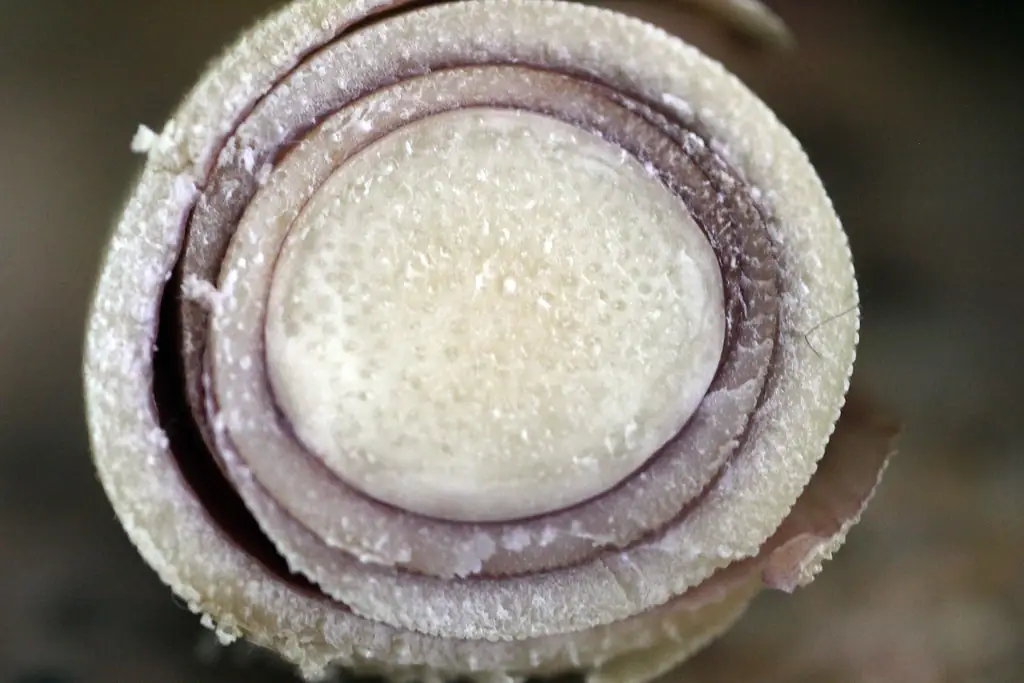
- Cooking: keep the bottom 10 cm (4 in), which has the best flavour (RHS). Peel off the woody outer layers, then bruise and simmer it, or slice the tender core.
- Tea: the upper leaves are usually too tough to eat, but the RHS notes they make a refreshing infused tea. The 2025 Xu et al. study found that leaf oil yield was about 54% higher than stem oil, with more citral and geraniol in the leaves, so the tops aren’t waste.
- Storage: Toronto Master Gardeners suggest keeping harvested stems in the fridge or freezing them.
- Safety: wear gloves. Leaf edges are finely serrated and sharp enough to cut skin (UW–Madison; RHS).
Frequent harvesting encourages new growth (Toronto Master Gardeners), so don’t be shy once the clump has several thick stems. Leave at least a few healthy stalks so the plant can keep photosynthesizing.
Troubleshooting Indoor Lemongrass: Symptoms and Fixes
Most problems when growing lemongrass indoors trace back to four things: cold, poor light, wrong watering, or dry air. Use this table to match what you see to the likely cause.
| What you see | Likely cause | What to do |
|---|---|---|
| Leaves browning from the tips, plant stalls | Too cold, or low winter light | Move to a warmer spot above 55°F (13°C) to grow (RHS); add 12–16 h of grow light (UC MG) |
| Base soft, mushy or smelly; leaves yellow and collapse | Overwatering, root rot | Let the mix dry on top; improve drainage; cut away rotten stalks (Illinois; UC MG) |
| Tiny yellow or white speckles; fine webbing | Spider mites (mostly an indoor problem) | Spray off with a strong jet of water or use insecticidal soap (USU) |
| Rusty orange-brown flecks or streaks on leaves | Rust (fungal) | Remove affected leaves; rust is a known lemongrass problem (RHS) |
| Reddish-brown spots on tips and margins; leaves dry early | Leaf blight | Hand-remove blighted leaves (USU) |
| Sticky leaves, tiny white insects fly up | Whitefly (common under glass) | Check leaf undersides and remove infested leaves; plants under glass are susceptible (RHS) |
| Gnats hovering over the soil | Fungus gnats in a mix kept too wet | Let the surface dry between waterings; see our fungus gnat guide |
| Store stalk shows no roots after 3 weeks | No living root plate | Discard and try a fresher stalk with an intact base (UW–Madison) |
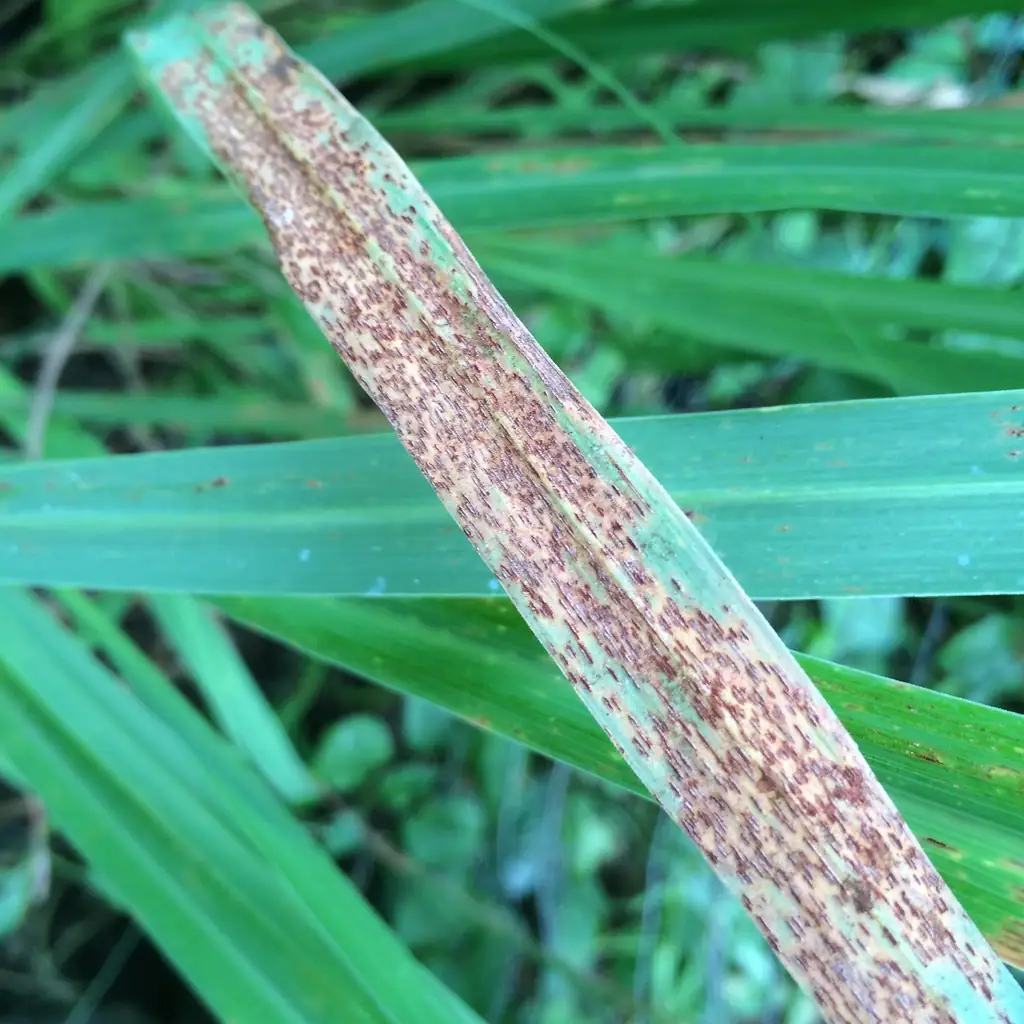
Leaf-tip browning on its own is common in winter and doesn’t mean the plant is dying. Trim the brown tips with clean scissors at an angle and focus on the conditions: warmth, light and steady (not soggy) moisture.
From the Lab Bench: Reading Lemongrass Like a Tropical Grass
The most useful mental model is that lemongrass is a tropical grass, not a Mediterranean herb. Rosemary, thyme and sage tolerate cool, dry winters. Lemongrass doesn’t. Its growth is tied tightly to warmth and light, which is why USU describes slow growth until summer heat, then a dramatic jump. When your indoor plant sits still in December, it isn’t sulking; it’s responding exactly as its physiology predicts.
That changes how you judge success when you grow lemongrass indoors. In winter, the right question isn’t “why isn’t it growing?” but “are the crowns firm and the roots healthy?” A firm, white-green base with a few green leaves is a winning plant in February. Pushing growth with extra fertilizer under weak light rarely helps, because the limiting factor is energy, not nutrients. That’s the reasoning behind the advice from Illinois and USU to feed less indoors.
Water is where most indoor plants are lost. Lemongrass likes moisture, so the instinct is to keep it wet. But a cool, dim plant transpires little, so the same watering that suited it outdoors in July leaves a waterlogged root zone in January. Match water to growth: generous when warm and bright, sparing when cool and dark.
Finally, think about the two overwintering routes as a trade-off between light and temperature. Keeping it warm demands good light, or it gets weak and leggy. Keeping it cool and dark avoids the light problem but puts the crown close to its damage threshold. If you can give it a bright window or a grow light, the warm route is the safer bet. If you can’t, saving a few healthy basal divisions (the USU trick) is better insurance than gambling with a whole clump in a cold garage.
FAQ
Can you grow lemongrass indoors all year?
Yes. Lemongrass is a tender perennial, so in a warm, bright spot it stays evergreen. Keep it above 55°F (13°C) to grow and give it about 6 hours of sun or 12–16 hours under a grow light. Expect slow growth in winter and faster growth in spring and summer.
How long does lemongrass take to root in water?
About two weeks according to Utah State University and UF/IFAS Extension, and two to three weeks according to UW–Madison. If a stalk shows no roots after three weeks, it probably lacks a living root plate and won’t root.
Can lemongrass live in water permanently?
Water is best used just for rooting. Once roots are about an inch long, pot the stalks in a well-drained, organic-rich potting mix so the plant can develop properly and be fed.
What temperature is too cold for lemongrass?
The RHS advises bringing it indoors before nights fall below 45°F (7°C) and keeping it above that over winter. Frost will kill or severely damage plants, according to UW–Madison Extension.
Why are my lemongrass leaves turning brown?
In winter, brown tips usually come from cold, low light or dry indoor air. Soft, brown bases point to overwatering and root rot. Rusty flecks suggest rust disease. Check the troubleshooting table above to match the symptom to the cause.
When can I harvest indoor lemongrass?
Once stalks are at least ½ inch (1.3 cm) thick. Pull or cut outer stalks as low as possible and use the bottom 4 inches (10 cm) for cooking. The leafy tops can be used for tea.
Is lemongrass safe for cats and dogs?
The ASPCA lists lemongrass as toxic to dogs, cats and horses, with stomach upset the usual sign in dogs and cats. Keep pots out of reach of pets that chew grasses.
Sources
- Royal Horticultural Society. Lemon grass: Grow Your Own guide.
- Utah State University Extension. How to Grow Lemongrass in Your Garden.
- University of Florida IFAS Extension, Nassau County. Fact sheet: Lemongrass (2017).
- University of Illinois Extension. Herb Gardening: Lemon Grass.
- UC Master Gardeners of Santa Clara County. Lemongrass.
- Mahr, S. University of Wisconsin–Madison Extension. Lemongrass (rev. 2026).
- Toronto Master Gardeners. Lemongrass (Cymbopogon citratus) gardening guide (2021).
- FAO Ecocrop. Data sheet: Cymbopogon citratus.
- Xu, L., Lu, N., Feng, Z., Ning, Z., Xie, C., & Huang, Y. (2025). Differential response of stem and leaf oil yield and main quality of Cymbopogon citratus to different radiation intensities. Food Science & Nutrition, 13(11), e71226. doi:10.1002/fsn3.71226 (via PubMed).
- ASPCA Animal Poison Control. Lemon Grass: toxic and non-toxic plants.