
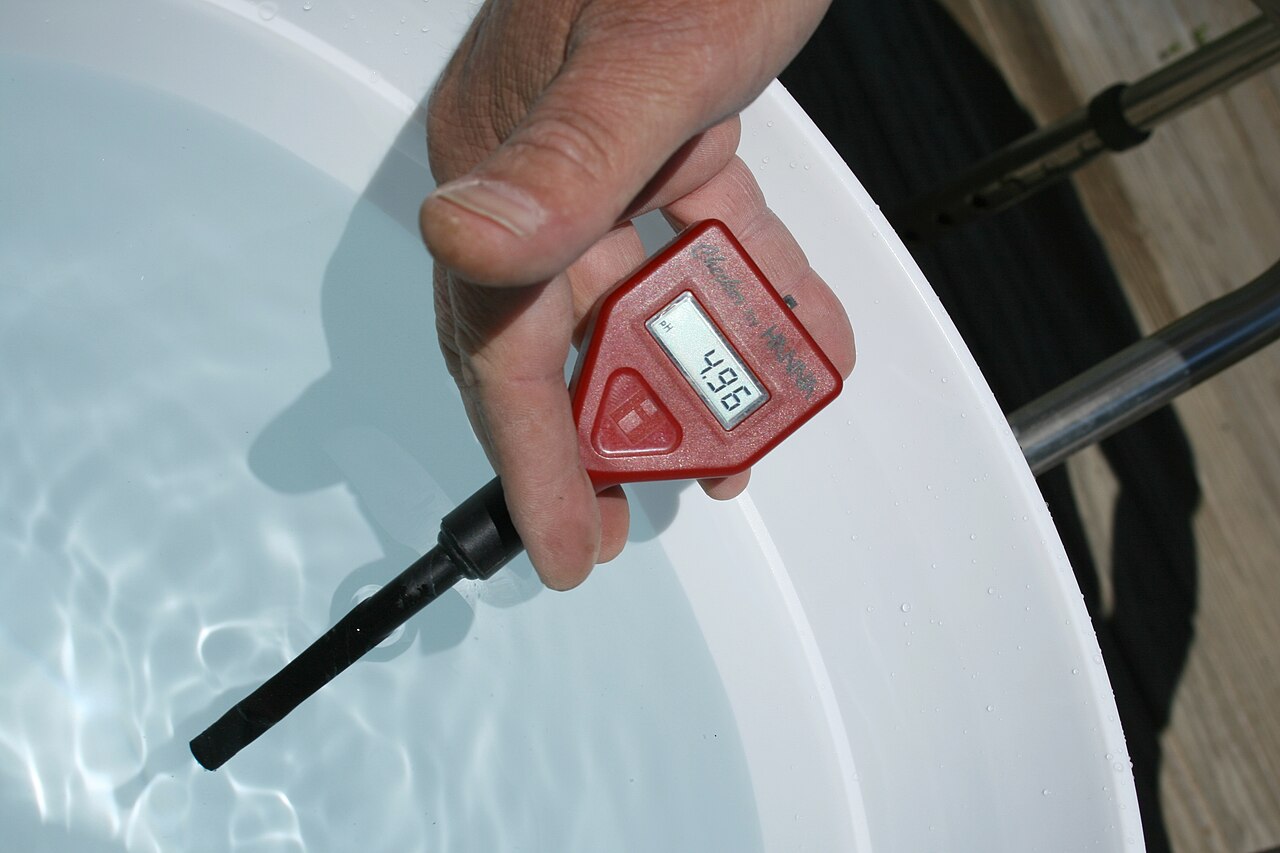
Short answer: To raise pH in hydroponics, add a potassium-based pH Up (potassium hydroxide, potassium carbonate or potassium bicarbonate) in small, diluted doses, mix for 15–30 minutes, and re-test before adding more. Aim for pH 5.5–6.5 for most crops, and stop at the bottom of your crop’s range instead of the middle. Avoid sodium bases such as baking soda in recirculating systems, because University of Missouri Extension warns that sodium can be toxic to plants.
Low pH is less common than high pH in home systems, but when it happens it tends to come back. This guide covers when you actually need to raise pH in hydroponics, which base to choose, how to dose without overshooting, and how to fix the cause so you are not correcting the reservoir every day.
Table of Contents
When should you raise pH in hydroponics?
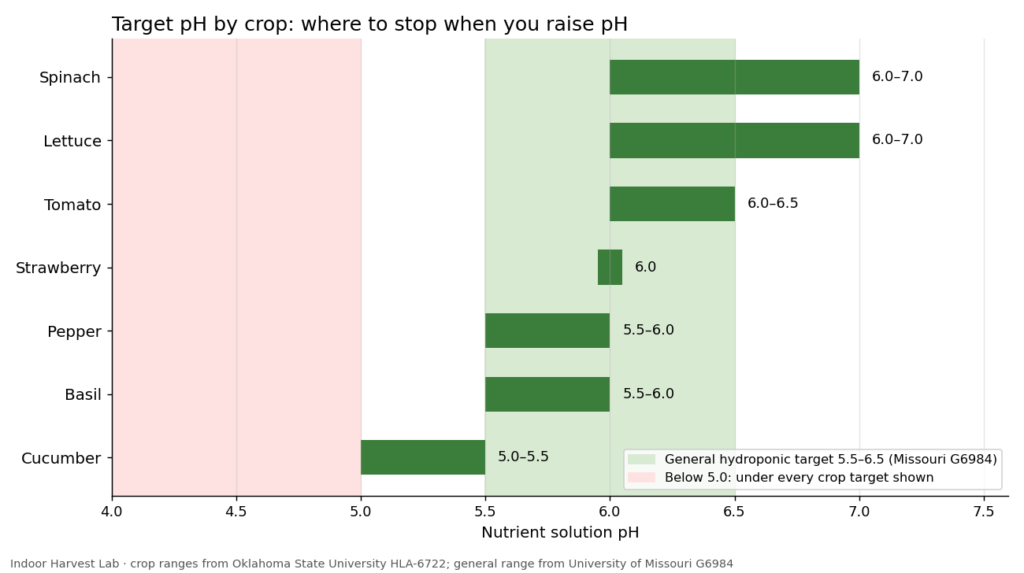
Most university guides put the working range between 5.5 and 6.5. Missouri Extension states that “the optimum pH for most hydroponic crops (with exceptions) is from 5.5 to 6.5,” and Oklahoma State University fact sheet HLA-6722 explains that this is where nutrients are most readily available to plants. Some crops sit a little higher or lower, so check the crop before you decide to raise pH in hydroponics.
| Crop | Target solution pH | Source |
|---|---|---|
| Lettuce | 6.0–7.0 (5.6–6.0 in a commercial raft system, 5.8 optimum) | OSU HLA-6722; Cornell CEA lettuce handbook |
| Spinach | 6.0–7.0 | OSU HLA-6722 |
| Tomato | 6.0–6.5 | OSU HLA-6722 |
| Strawberry | 6.0 | OSU HLA-6722 |
| Basil | 5.5–6.0 | OSU HLA-6722 |
| Pepper | 5.5–6.0 | OSU HLA-6722 |
| Cucumber | 5.0–5.5 | OSU HLA-6722 |
A practical rule for when to raise pH in hydroponics: if your reading is below the bottom of your crop’s range on two readings taken a few hours apart, raise pH. A single low reading right after you mixed fresh nutrients or topped up with acidic water often corrects itself, because plants taking up nitrate push pH upward over the following days (see the next section). For the full nutrient picture, pair these numbers with our hydroponic EC chart.
How urgent is a low reading?
Less urgent than many forums suggest. In a University of Arizona study published in HortScience (Gillespie, Kubota and Miller, 2020), basil grown for 20–28 days at pH 4.0, 4.5, 5.0 and 5.5 showed no significant growth inhibition at the lower values, although leaf phosphorus, calcium, magnesium, sulfur, boron, manganese and zinc declined. In that study pH 4.0 even suppressed Pythium root rot. That does not make low pH a goal for home growers: over a longer crop, falling calcium and magnesium uptake matters. It does mean you can raise pH in hydroponics slowly and carefully rather than in a panic.
Why hydroponic pH drops
Before you raise pH in hydroponics, find out why it fell. Otherwise you will keep adding pH Up and building salts in the reservoir.
- Ammonium or urea in the fertilizer. University of Minnesota Extension notes that ammonium- or urea-based fertilizers make the water more acidic, while nitrate-based ones make it more basic. Missouri Extension recommends fertilizers where less than 25% of total nitrogen comes from ammonium or urea when you need pH to rise.
- How roots take up nitrogen. A NASA-supported soybean study by Vessey and colleagues (1990) found that at pH 6.0 plants absorbed ammonium preferentially, and as root-zone pH fell, ammonium uptake decreased while nitrate uptake increased. Ammonium uptake acidifies the solution, which is why ammonium-rich mixes drift down.
- Very soft water. Reverse-osmosis, distilled and rain water have almost no alkalinity (carbonate buffer), so small acidic inputs move pH a long way. Minnesota Extension notes the opposite case: water with alkalinity over 75 ppm tends to push pH up.
- Organic media and additives. The UF/IFAS small-system lettuce guide (HS1422) warns that composted pine bark can lower solution pH.
- A meter that has drifted. Missouri Extension advises calibrating the meter once a week at pH 4 and pH 7. An uncalibrated pen can read low when the solution is fine.
Best pH Up options to raise pH in hydroponics
Use potassium-based bases. Missouri Extension recommends “potassium bicarbonate or potassium hydroxide (they provide potassium nutrient)” and says to avoid sodium bases. Oklahoma State adds potassium carbonate and commercial pH Up products, added slowly. The table compares the common choices; the base strength and potassium figures are calculated from each compound’s molar mass.
| Base | Strength per gram (mmol of base) | Potassium added per gram | Handling | Best use |
|---|---|---|---|---|
| Potassium hydroxide (KOH), most liquid pH Up | ~17.8 | ~0.70 g K | Very corrosive; heats up when dissolved; absorbs CO2 from air over time | Fast, small corrections; larger systems |
| Potassium carbonate (K2CO3) | up to ~14.5 | ~0.57 g K | Stable in air; milder to handle | Reservoirs that keep drifting down; adds buffering |
| Potassium bicarbonate (KHCO3) | ~10.0 | ~0.39 g K | Mild, food-grade forms sold | Home growers wanting a gentle, forgiving base |
| Potassium silicate | Varies by product | Varies | Unstable in open air | When you also want silicon |
| Baking soda (sodium bicarbonate) | ~11.9 | None (adds ~0.27 g sodium) | Easy to find | Not recommended for recirculating systems |
The Science in Hydroponics guide to pH Up options reaches the same ranking: hydroxides are the strongest and cheapest but dangerous to handle, potassium carbonate is stable and improves buffering against downward drift, and potassium is preferred over sodium. For a small home reservoir, potassium bicarbonate or a diluted commercial pH Up is the easiest way to raise pH in hydroponics without big swings.
What about baking soda?
Minnesota Extension’s small-scale guide does mention baking soda as a way to make water more basic, and it works chemically. The problem is what it leaves behind. Plants use very little sodium, so in a recirculating reservoir each dose stays in the solution and adds to the EC reading without feeding the crop. Missouri Extension specifically advises avoiding sodium bases. If baking soda is all you have, use it once, then replace the solution at the next change and switch to a potassium product. Whatever you buy, Minnesota Extension also advises choosing products labeled for food use.
How to raise pH in hydroponics step by step
The method below is the safest way to raise pH in hydroponics. It works for a countertop unit, a Kratky jar or a deep water culture bucket. The same logic applies at any size; only the volumes change.
- Calibrate first. Calibrate the pen at pH 7 and pH 4 (Missouri Extension’s weekly routine) and rinse it in clean water.
- Measure twice. Take a reading, wait an hour, and read again. Note the solution temperature and EC at the same time.
- Dilute the base. Mix concentrated pH Up into a cup of reservoir water (about 1 part product to 10 parts water) instead of pouring it straight in. Dilution prevents a local spike that can scorch roots near the dosing point.
- Add a small dose. Start with a quarter of the dose printed on the product label for your volume (or a small pinch of potassium bicarbonate), poured where the water is moving, away from roots.
- Mix and wait. Run the pump or air stone for 15–30 minutes. In a Kratky or wick system, stir gently.
- Re-test. If pH moved less than halfway to your target, repeat with the same dose. Never double the dose on a guess.
- Stop at the bottom of the range. For lettuce, stop at 6.0 rather than 6.5. Plants taking up nitrate will carry pH higher over the next day or two.
- Record the total. Write down how much base it took for your volume. Next time you raise pH in hydroponics you will know the dose and can add about 80% of it in one step.
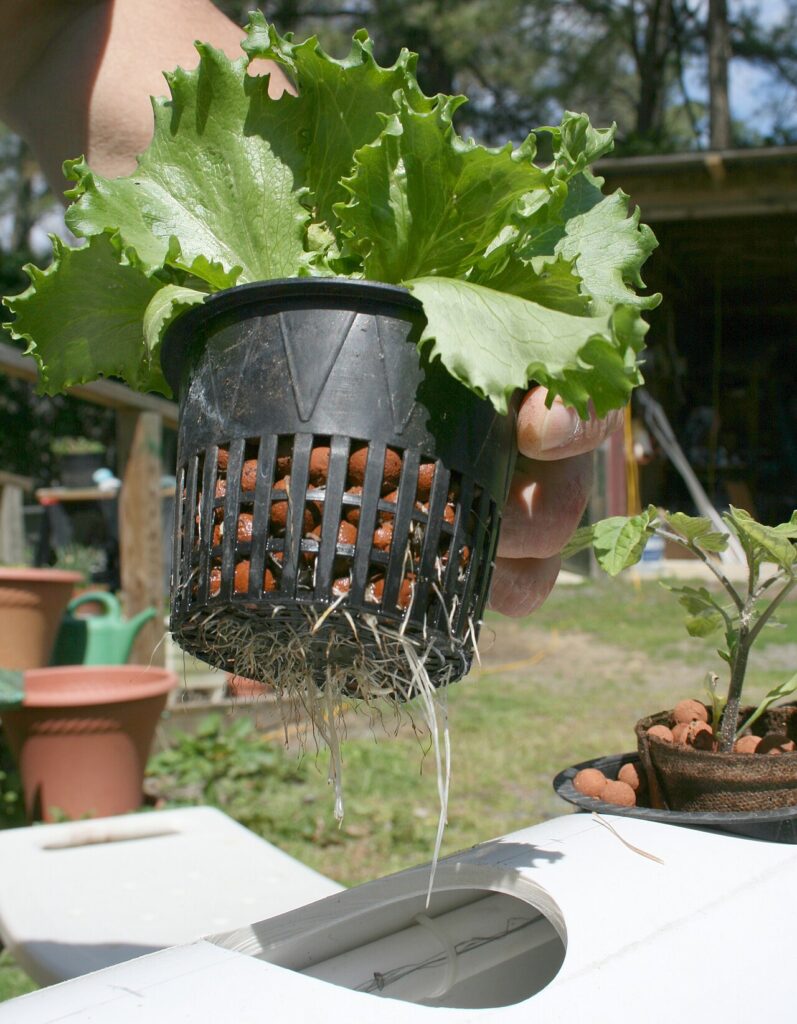
How much pH Up do you need to raise pH in hydroponics?
No fixed number is honest here. How much base it takes to raise pH in hydroponics depends on the buffering of your water and fertilizer, not just on the pH reading. Soft RO water with a phosphate-free mix may jump a whole unit with a few drops; tap water with some alkalinity and a phosphate-rich nutrient absorbs far more before it moves. That is why the step list starts small and why recording your own totals matters more than any online dose chart.
The strength column in the table helps you compare products when you raise pH in hydroponics. Gram for gram, potassium hydroxide neutralizes about 1.8 times as much acid as potassium bicarbonate, so if you switch products, cut your first dose accordingly. Commercial liquids vary in concentration, so read the label before assuming two brands behave alike.
Stop pH from dropping so you raise pH in hydroponics less often
If you need to raise pH in hydroponics more than once or twice between solution changes, fix the source:
- Check your fertilizer label. Look at the nitrogen breakdown. If ammonium plus urea is more than about a quarter of total nitrogen, Missouri Extension’s guidance suggests switching to a nitrate-dominant formula.
- Add some buffer to very soft water. Blending a little tap water into RO water, or using potassium carbonate as your pH Up, adds carbonate that resists downward drift.
- Keep EC in range. Overfeeding means more total uptake and larger pH swings. Use the ppm to EC conversion guide if your meter reads in ppm.
- Change the solution on schedule. Fresh solution resets both pH and the balance of ions that builds up as plants take what they need.
- Keep roots healthy. Keep the reservoir dark and aerated, and remove decaying plant material.
Mistakes to avoid when you raise pH in hydroponics
- Chasing the middle of the range. Aiming for 6.5 when 5.8 is fine means more base, more salts and a bigger chance of overshooting past 7.
- Undoing your own correction. Overshoot, add acid, overshoot again: every round adds ions. If you overshoot slightly, wait a day, because nitrate uptake often moves pH anyway. For the opposite direction, see our guide to lowering pH in hydroponics safely.
- Pouring concentrate onto roots. Potassium hydroxide solutions are strongly caustic. Always dilute first and dose into moving water.
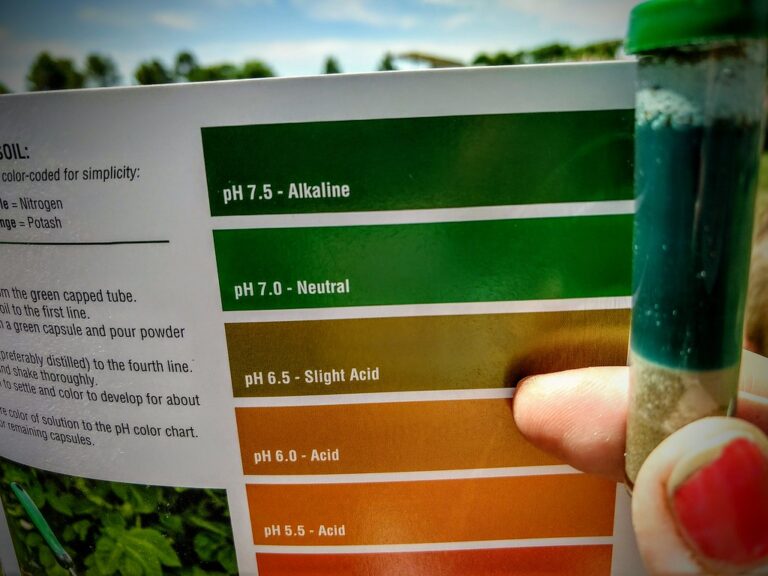
- Trusting color strips for fine work. Colour kits read in half-unit steps, which is coarse for hydroponics. A calibrated pen is the better tool.
- Using sodium or household cleaners. Baking soda adds sodium, and cleaning products can contain additives that are not safe for food crops.
- Ignoring the rock wool. New rock wool is naturally alkaline (UF/IFAS HS1422 recommends soaking it in a pH buffer solution first). If pH jumps right after you plant, the media, not the base, may be the reason.
Safety when you raise pH in hydroponics
Wear gloves and eye protection when handling potassium hydroxide or concentrated pH Up; the small amounts used to raise pH in hydroponics are still caustic before dilution. Add base to water, never water to dry flakes, because hydroxides give off heat as they dissolve. Store products capped and away from children and acids.
Where this applies
These steps apply to any recirculating or static hydroponic system with a reservoir. Your water supply changes the picture more than your climate does. Growers on soft municipal water, RO water or rain water will need to raise pH in hydroponics more often and should favor carbonate-based pH Up. Growers on hard, alkaline tap water rarely need pH Up at all and usually spend their time lowering pH instead. In media beds with composted bark or peat, expect a downward pull on pH as the media ages.
FAQ
What can I use to raise pH in hydroponics naturally?
Potassium bicarbonate is the gentlest common option and adds potassium, a plant nutrient. It is sold in food-grade form. Wood ash and crushed shells are not recommended in reservoirs because their dose and impurities are unpredictable.
Is baking soda safe to raise pH in hydroponics?
It raises pH, but it adds sodium, which Missouri Extension says can be toxic to plants and which accumulates in recirculating systems. Use a potassium base instead.
Why does my hydroponic pH keep dropping?
The usual causes are ammonium-rich fertilizer, very soft water with little buffering, acidic organic media, or an uncalibrated meter. Fix the cause and you will rarely need to raise pH in hydroponics.
How long after adding pH Up should I test again?
Let the solution mix for 15–30 minutes with the pump or air stone running, then read. Check again the next day, because plant uptake keeps changing pH.
Sources
- Cabrera-Garcia, J. Hydroponic Nutrient Solutions (G6984). University of Missouri Extension.
- Dunn, B. and Singh, H. Electrical Conductivity and pH Guide for Hydroponics (HLA-6722). Oklahoma State University Extension.
- Small-scale hydroponics. University of Minnesota Extension.
- Sandoya, G. V. et al. (2021). Growing Lettuce in Small Hydroponic Systems (HS1422). UF/IFAS Extension.
- Hydroponic Lettuce Handbook. Cornell University Controlled Environment Agriculture.
- Gillespie, D. P., Kubota, C. and Miller, S. A. (2020). Effects of low pH of hydroponic nutrient solution on plant growth, nutrient uptake, and root rot disease incidence of basil. HortScience 55(8): 1251–1258.
- Vessey, J. K. et al. (1990). Root-zone acidity affects relative uptake of nitrate and ammonium from mixed nitrogen sources. Journal of Plant Nutrition 13(1).
- Fernandez, D. A guide to different pH up options in hydroponics. Science in Hydroponics.
More in Hydroponic nutrients, pH and EC.
Featured image: “2009-03-30 Red pH meter reads 4.96” by Ildar Sagdejev (Specious), CC BY-SA 4.0.