
Short answer: deep water culture (DWC) grows plants with their roots hanging in a tank of nutrient solution that an air pump and air stone keep full of oxygen. For lettuce and herbs, keep the solution at an EC of about 1.2–2.0 mS/cm and a pH of 5.5–6.2, hold the water near 68–75 °F (20–24 °C), and keep dissolved oxygen above 6 mg/L. Run the air pump 24 hours a day and check EC and pH two to three times a week.
Deep water culture is the system most commercial lettuce ponds use, and it scales down to a single storage tote on a shelf. This guide covers what you need, a seven-step setup, and the two things that decide success in deep water culture: oxygen and water temperature. The numbers come from Virginia Tech, Cornell, Oregon State, the University of Florida and the University of Minnesota.
Table of Contents
How deep water culture works
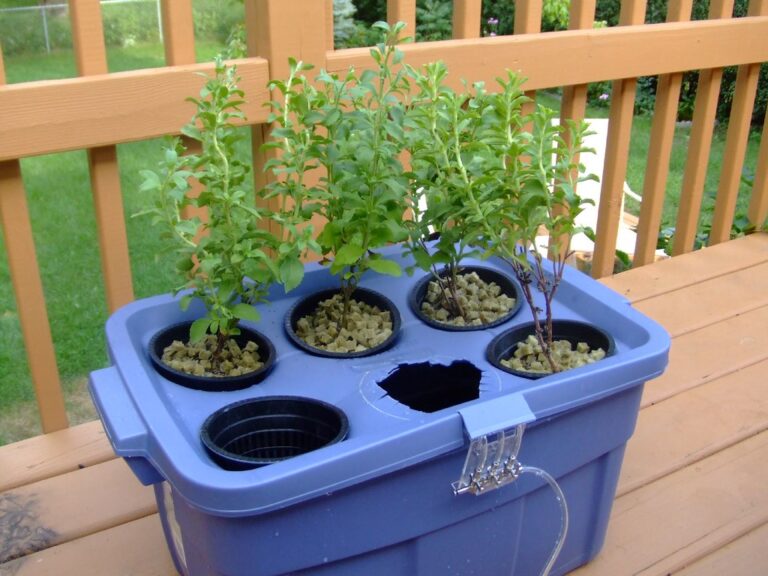
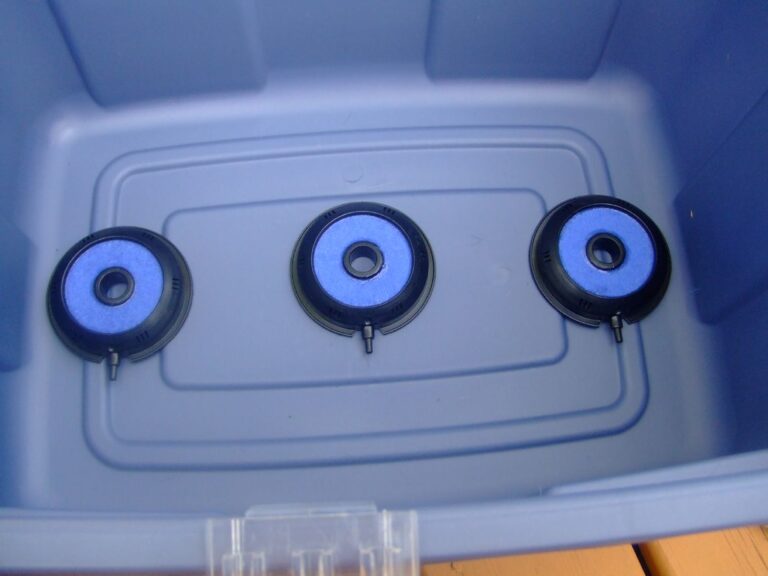
In soil, roots get oxygen from air spaces between particles. In DWC those spaces do not exist, so oxygen has to be pushed into the water. An air pump sends air through tubing to a porous air stone at the bottom of the tank, which releases it as fine bubbles. The University of Minnesota’s guide to small-scale hydroponics from UMN Extension describes the air stone as a synthetic stone full of pores that releases air as tiny bubbles.
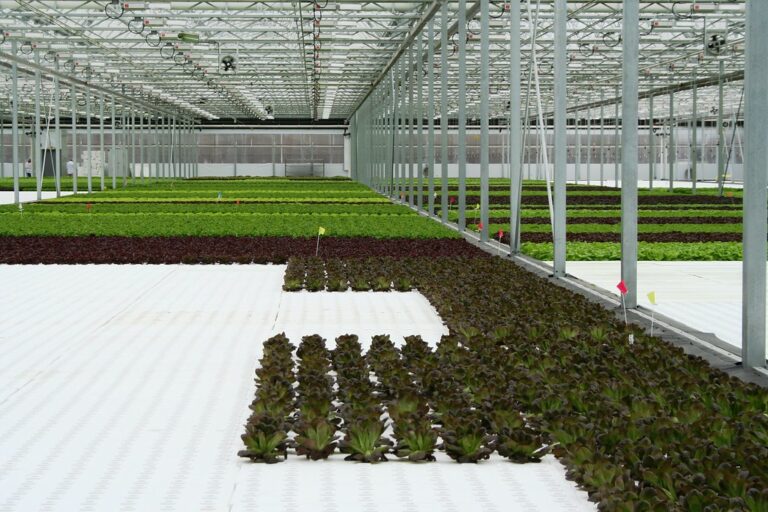
Plants sit in net pots held by a lid or a floating raft, with their roots growing down into the solution. Oregon State’s Oregon State Extension EM 9455 on deep water culture (2025) stresses that DWC systems require effective aeration, supplied by air pumps and air stones or, in larger farms, ozone injection.
Deep water culture vs Kratky vs NFT
| Feature | Deep water culture (DWC) | Kratky (passive) | NFT |
|---|---|---|---|
| Electricity | Air pump, runs 24/7 | None | Water pump |
| How roots get oxygen | Bubbles from an air stone | Humid air gap as the level falls | Thin film of moving water |
| Water volume | Large, stable | Fixed, filled once | Small, in channels and a tank |
| Best crops | Lettuce, leafy greens, herbs | Lettuce, herbs | Lettuce, leafy greens |
| Main risk | Warm water, pump failure | Running dry, heat | Pump failure dries roots fast |
If you want no pump at all, the Kratky method is the passive cousin of deep water culture. The University of Florida’s guide UF/IFAS HS1422 on growing lettuce in small hydroponic systems calls the floating raft version ideal for short-term crops such as lettuce, and describes NFT as recirculating solution through PVC pipes and a holding tank (our NFT hydroponics guide covers channel slope and flow rate). For larger plants in pots of clay pebbles or coir, ebb and flow hydroponics floods the roots a few times a day instead of keeping them in water. More setups are in our hydroponic systems section.
What you need for deep water culture
- An opaque container with a lid. A storage tote or bucket works. It must block light, or algae will grow in the solution.
- Net pots and a starter medium. Rockwool cubes, coco plugs or clay pebbles hold the seedling in the pot.
- An air pump, airline tubing and one or more air stones. A check valve in the line stops water siphoning back into the pump if the power goes off.
- Hydroponic nutrients. A complete hydroponic fertilizer, not a soil feed.
- An EC meter and a pH meter or kit, plus pH up and pH down.
- A thermometer for the water, and light: a sunny window only works for part of the year indoors, so most growers use a grow light.
Deep water culture setup in 7 steps
- Level the tank. Oregon State advises that the bottom of the reservoir be level to within one inch so the water reaches every plant evenly. Commercial ponds described by Virginia Tech’s deep water culture publication SPES-464 (2023) are 4–12 inches deep.
- Cut holes for net pots. Virginia Tech notes that lettuce rafts usually space plants 8 inches apart. Closer spacing works for baby leaf and small herbs.
- Fit the air system. Place the air stone on the bottom, run the tubing through a small hole in the lid, and keep the pump above the water line or add a check valve.
- Mix the solution. Fill with water, measure its EC, then add nutrients until the EC reads 1.2–2.0 mS/cm for leafy greens (Virginia Tech). Adjust pH last, to 5.5–6.2. Our hydroponic EC chart lists ranges for 20 crops.
- Start the air and transplant. Turn on the pump before the plants go in. Set seedlings in net pots so the bottom of each pot touches the solution. UMN Extension advises that roots should always touch the water but not be fully immersed, with about half the root mass in contact.
- Monitor. Virginia Tech recommends checking EC and pH two to three times a week in these systems. Check water temperature at the same time, and look at the roots.
- Top up and change the solution. Top up as the level drops. UMN Extension says a set-it-and-forget-it approach suits only short crops like lettuce, harvested 6 to 7 weeks after planting; for longer crops, change the water once or twice during the season.
Oxygen: the core of deep water culture
Roots breathe. Without oxygen they stop taking up water and nutrients and become open to disease. Cornell’s Cornell CEA hydroponic lettuce handbook (Brechner and Both, 2013) sets a dissolved oxygen target of 7 mg/L for lettuce ponds and warns of crop failure below 3 mg/L. A Cornell e-GRO alert on root rot (Mattson, 2018) recommends more than 6 mg/L and ideally saturation, about 8–9 mg/L. UF/IFAS gives 5 mg/L as good oxygenation.
Extension guides do not give a simple pump-size rule, because the needed airflow depends on the tank shape, the air stone and the water temperature. What you can measure is the result: a dissolved oxygen meter is the best check, and healthy DWC roots are white or cream and firm. If roots turn brown, add air stones or a larger pump and cool the water.
Water temperature for deep water culture
Warm water holds less oxygen, and warm, still water favours root rot. That is why temperature matters more in DWC than in almost any other system.
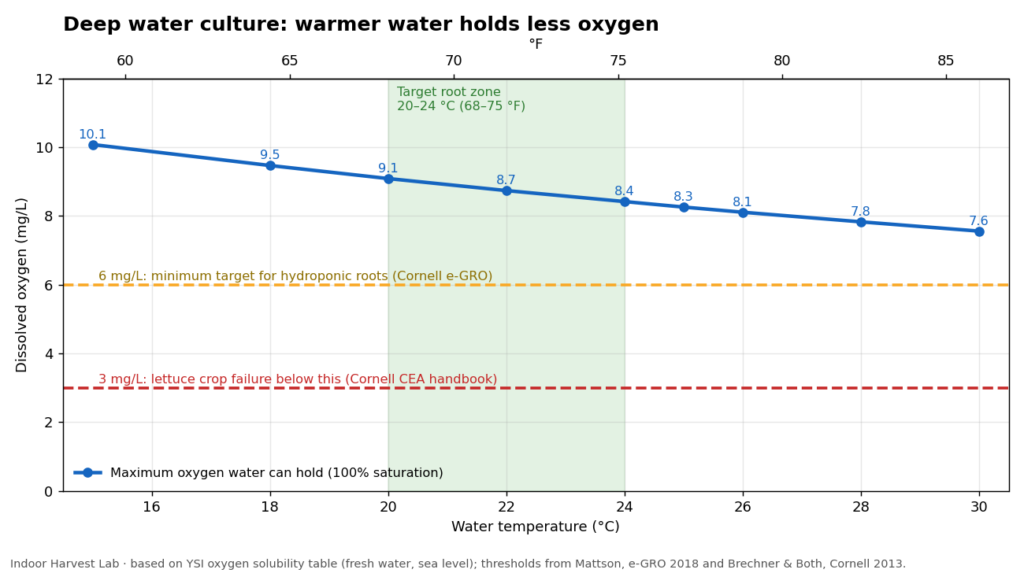
| Water temperature | Maximum dissolved oxygen (fresh water, sea level) | What it means |
|---|---|---|
| 15 °C (59 °F) | 10.1 mg/L | Below the UF/IFAS minimum of 65 °F |
| 20 °C (68 °F) | 9.1 mg/L | Ideal lower end |
| 24 °C (75 °F) | 8.4 mg/L | Ideal upper end |
| 26 °C (79 °F) | 8.1 mg/L | Above Cornell’s 25 °C limit for lettuce ponds |
| 30 °C (86 °F) | 7.6 mg/L | High root rot risk |
Oxygen values are from the YSI oxygen solubility table; real tanks hold less than the maximum unless aeration is strong. The recommended ranges agree closely: Cornell’s lettuce handbook says no higher than 25 °C (77 °F); the e-GRO alert targets 68–75 °F (20–24 °C) in the root zone; Oklahoma State’s Oklahoma State Extension HLA-6722 calls 72–75 °F optimal; and UF/IFAS allows 65–80 °F.
To keep a home DWC tank cool, keep it out of direct sun, put it on the floor of the coolest room, and use the largest reservoir you have space for, since a bigger volume changes temperature more slowly. Commercial growers use water chillers; the e-GRO alert suggests cooling ponds to about 68 °F when root rot is a problem.
Root rot in deep water culture
Pythium root rot is the main disease of deep water culture. The Cornell e-GRO alert on Pythium root rot describes brown, decaying roots with few side roots, and a “rat tail” look as the outer layer of the root sloughs off. Above ground, plants are stunted, turn yellow and wilt, sometimes permanently. Low dissolved oxygen increases infection, and different Pythium species are favoured by cool and by warm water.
The alert’s prevention list is short: keep the root zone at 68–75 °F, aerate well, sanitize tools and containers, inspect new plants, and remove infected plants at once. It also mentions biofungicides used as a preventive before problems start.
Deep water culture mistakes to avoid
- Turning the air pump off. Roots in still water use up the dissolved oxygen, so DWC needs air around the clock.
- Clear or light-coloured containers. Light reaching the solution lets algae grow in the tank and on the roots. Paint, wrap or cover the tank.
- Letting the water get warm. Above about 77 °F (25 °C) the oxygen margin shrinks and root rot risk rises.
- Submerging young seedlings too deep. The stem and crown should stay dry; only the bottom of the net pot touches the water at first.
- Adjusting pH before EC. Adding nutrients changes pH, so set EC first and pH second.
- Ignoring the roots. Lift one net pot each week. Roots tell you about oxygen and disease long before the leaves do.
Best crops for deep water culture
Virginia Tech lists low-growing leafy greens and culinary herbs as the best fit, naming butterhead, romaine, oakleaf and multileaf lettuce, plus sorrel, arugula, tatsoi, mâche and frisée. Fruiting crops such as strawberries, peppers, tomatoes and cucumbers are occasionally grown this way, but they need support, a larger tank and a stronger solution as they fruit.
Where this applies
DWC works in any climate indoors, but the room decides how easy it is. In warm climates or unheated summer apartments, water temperature is the limit: grow lettuce in the cooler months and basil in the warmer ones, and keep the tank in the coolest spot you have. In cold rooms the water can fall below 65 °F (18 °C) and growth slows; an aquarium heater can help. Tap water also varies by region, so measure its EC before mixing nutrients.
Deep water culture FAQ
Do you need an air stone for deep water culture?
Yes. Aeration is what separates deep water culture from the passive Kratky method. Without it, the roots sit in water that loses oxygen as the plants use it.
How often should I change the water in DWC?
For a single lettuce crop of 6–7 weeks, UMN Extension says you can leave it. For herbs and longer crops, change the solution once or twice during the season, or sooner if it smells or turns cloudy.
What is the best water temperature for deep water culture?
About 68–75 °F (20–24 °C). Try to stay below 77 °F (25 °C).
Can you grow tomatoes in deep water culture?
It is possible and occasionally done, but tomatoes grow large, need staking and feed heavily. Leafy greens and herbs are the easier choice for beginners.
Sources
- Mullins, Vallotton, Latimer, Sperry and Scoggins. Hydroponic Production of Edible Crops: Deep Water Culture (DWC) Systems, SPES-464. Virginia Cooperative Extension, 2023.
- Nelson, M., Langellotto, G. and Nackley, L. Hydro Hints: Deep Water Culture, EM 9455. Oregon State University Extension, 2025.
- Brechner, M., Both, A.J. and CEA staff. Hydroponic Lettuce Handbook. Cornell Controlled Environment Agriculture, 2013.
- Mattson, N. Pythium Root Rot on Hydroponically Grown Basil. e-GRO Edible Alert, Cornell University, 2018.
- Sandoya, G.V. et al. Growing Lettuce in Small Hydroponic Systems, HS1422. UF/IFAS Extension, 2021.
- Hoidal, N., Reardon, A., Worth, L. and Rogers, M. Small-scale hydroponics. University of Minnesota Extension, reviewed 2022.
- Dunn, B. and Singh, H. Electrical Conductivity and pH Guide for Hydroponics, HLA-6722. Oklahoma State University Extension, 2017.
- YSI. Oxygen Solubility Table.
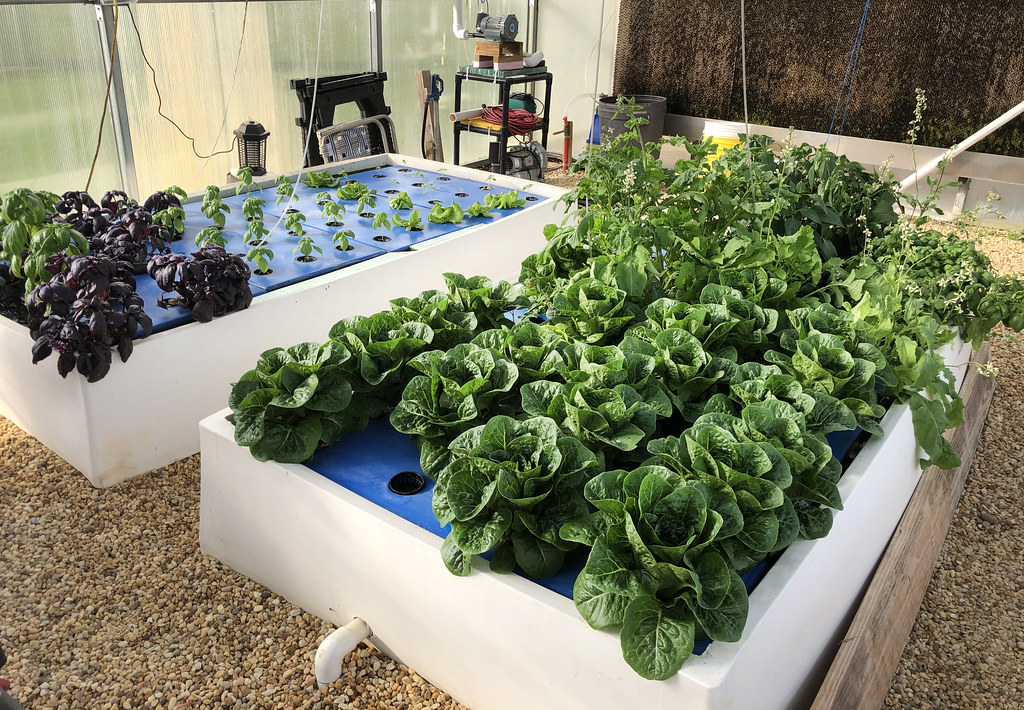
Featured image: “Deepwater Aquaponics Floating Rafts Growing Lettuce, Basil and Arugula” by Alabama Extension, CC0.