
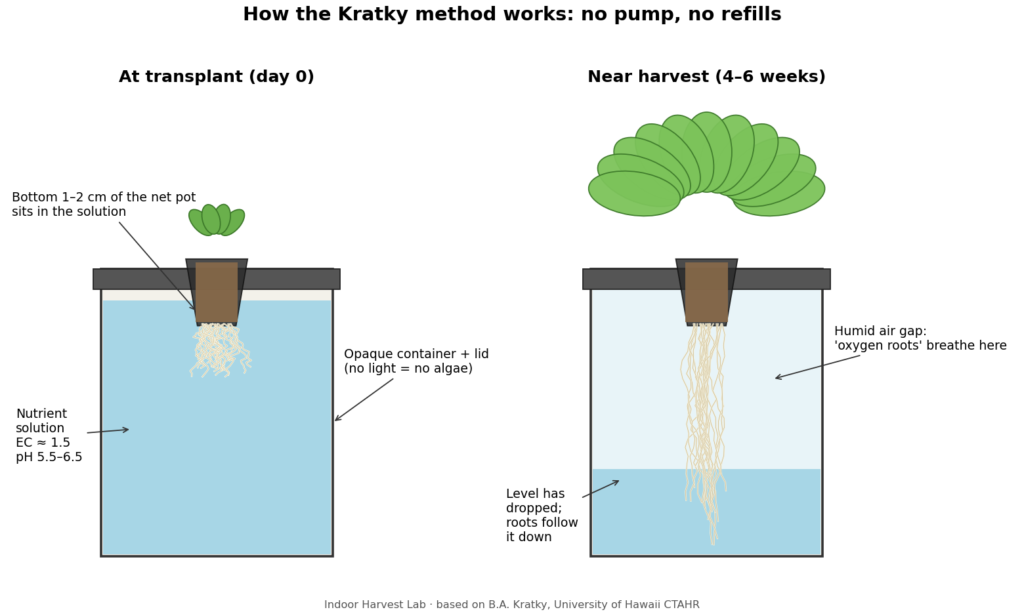
Short answer: the Kratky method is a passive form of hydroponics: you fill an opaque container once with nutrient solution, set a seedling in a net pot so only its bottom 1–2 cm touches the liquid, and never add a pump, air stone or refill. As the plant drinks, the level drops and a humid air gap opens up for the roots to breathe. A lettuce plant needs roughly 3–6 litres (about 1–1.5 gallons) of solution at an EC near 1.5 mS/cm and pH 5.5–6.5, and is ready 4–6 weeks after transplanting.
The Kratky method was developed by Dr. B.A. Kratky at the University of Hawaii, who published it for both home jars and commercial lettuce tanks. This guide turns his published numbers into a step-by-step Kratky method setup for a kitchen counter or a shelf under a grow light, and explains the few rules that decide whether it works or fails.
Table of Contents
How the Kratky method works
Most hydroponic systems keep roots healthy by moving water or bubbling air through it. The Kratky method does neither. Kratky describes it as a system that needs only an initial application of water and nutrients (University of Hawaii CTAHR, Acta Horticulturae 2009): no electricity, no pump, no aeration.
The trick behind the Kratky method is the falling water level. On day one the bottom of the net pot sits just in the solution, so the young roots can reach it. As the plant grows and transpires, the level drops. The roots follow it down, and the space that opens between the lid and the liquid stays very humid. Kratky calls the roots that grow in this zone “oxygen roots”: they take up air, while the roots lower down keep drinking. That split is why a Kratky jar can grow a full head of lettuce in still water that would drown the roots of the same plant in a sealed, completely full container.
North Dakota State University Extension puts it simply: the Kratky method uses capillary action and a growing air gap instead of high-tech equipment, which is why the Kratky method is the most common first hydroponic project for home growers.
What you need for the Kratky method
- An opaque container with a lid. A 1-gallon (about 4 L) jug, jar or tote per lettuce plant is the classic size. Clear glass works only if you wrap it in foil or paint it; light reaching the solution grows algae.
- A net pot. Kratky used 2-inch (5 cm) net pots in his commercial tanks; 2–3 inch pots fit most jar lids.
- A starter plug or medium. Rockwool cubes, peat plugs, or a fine peat-perlite mix like the ones Kratky used.
- A complete hydroponic fertilizer. Use one made for hydroponics (it contains calcium and magnesium). Garden fertilizers for soil are not complete enough.
- An EC/TDS meter and pH test. Not strictly required, but they remove most of the guesswork.
- Light. A bright south-facing window in summer, or an LED grow light for year-round crops (see the light section below).
Kratky method step by step
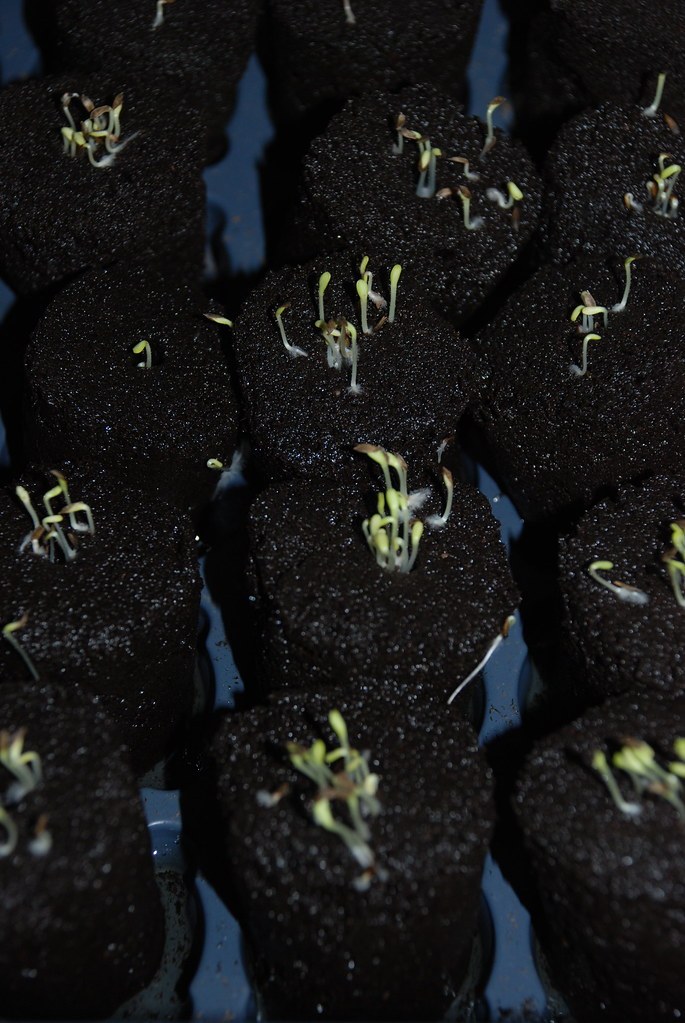
- Start seedlings in plugs. Sow 1–2 lettuce seeds per plug and keep them moist in a warm spot. Kratky transplanted 1–3-week-old seedlings and suggests sowing about 20% extra so you can keep only the strongest.
- Check your water. Measure the EC of your tap water. Anything already dissolved in it will concentrate as the plant drinks (see “What not to do” below). Low-EC tap water, filtered water or rainwater is best.
- Mix the nutrient solution. Follow the fertilizer label for leafy greens and aim for an EC of about 1.5 mS/cm (roughly 750 ppm on a 500-scale TDS meter). If your fertilizer comes in two parts, add each part to the water separately and stir between them; never mix the concentrates together.
- Check pH. The target for the Kratky method is pH 5.5–6.5. Many complete hydroponic fertilizers land in this range on their own; adjust only if you are clearly outside it.
- Fill the container. Fill it so that, with the lid on, the bottom 1–2 cm (about half an inch) of the net pot sits in the solution. This is the only time the level should be this high.
- Plant. Set the plug in the net pot, place it in the lid, and make sure the lid blocks light around the pot. Cover any gaps with foil or tape.
- Place it under light and leave it alone. Do not top up. Watch the level fall over the following weeks and harvest 4–6 weeks after transplanting, when the head reaches the size you want.
How much solution each crop needs
Container size is the most common mistake with the Kratky method. The container has to hold all the water the plant will drink before harvest, plus a small reserve. Kratky’s measurements give a clear guide.
| Crop | Container | Solution per plant | EC (mS/cm) | Refill? |
|---|---|---|---|---|
| Leaf, romaine or butter lettuce | 1 gal / 4 L jar or jug | About 3–4 L used by a 200 g head; plan 3–6 L | 1.5 (1.0–2.5 by season) | No, one fill per crop |
| Commercial lettuce tank | 5.5-inch-deep tank, lid with net pots | 1.5–2 gal (5.7–7.6 L) per plant | 1.5 | No; drain after each crop |
| Herbs (basil, mint, parsley) | Jar or 1 gal container | Depends on how long you harvest | Follow label for herbs | Yes, small top-ups, never above the root line |
| Cucumbers | 100–130 L (26–34 gal) container | Over 7 kg fruit from 120 L | 2.0–2.5 | Yes, keep level within about 3 cm |
| Tomatoes | 5 gal bucket minimum | 25–40 L of water per kg of fruit | Label rate for fruiting crops | Yes, keep level within about 3 cm |
Sources: Kratky 2004, 2009 and 2010 (University of Hawaii CTAHR); NDSU Extension 2025.
In Kratky’s small-bottle trials, the level in a 4-litre bottle fell 15–25 cm by harvest, and he recorded lettuce heads of 150–250 g using less than 20 litres of water per kilogram of lettuce. His suspended-pot paper notes that a crop is effectively finished when less than 10% of the original solution is left. If your jar runs almost dry before the head is ready, the container is too small for that variety or that light level.
Nutrients, EC and pH for Kratky lettuce
Kratky’s commercial recipe was a two-part mix: 8-15-36 fertilizer with magnesium sulfate in one stock tank and calcium nitrate in the other, diluted to a target EC of 1.5 mS/cm with a range of 1.0–2.5 depending on season. He warns against EC values above 3.0. The University of Florida’s guide to growing lettuce in small hydroponic systems (UF/IFAS HS1422) gives a similar optimum of 1.4–1.8 mS/cm for lettuce. For other crops, see our hydroponic EC chart for 20 food crops.
Why it matters in the Kratky method: you cannot correct the solution later without raising the level, so it has to be right on day one. Two practical rules follow:
- Mix a little on the low side in hot weather. Plants drink more water relative to nutrients when it is warm, so the solution concentrates as it falls. Kratky’s recommended range of 1.0–2.5 leaves room to mix toward the lower end in summer.
- Do not chase pH. In his suspended-pot work Kratky reported no need to alter pH when using commercial hydroponic fertilizers. Check it once; if it is between 5.5 and 6.5, leave it.
Light: how much a Kratky lettuce needs
The Kratky method removes the pump, not the need for light. Leggy, pale or loose lettuce in a Kratky method setup is almost always a light problem, not a nutrient one.
Cornell’s controlled-environment hydroponic lettuce handbook targets a daily light integral (DLI) of 17 mol/m²/day in commercial greenhouses, but only with strong air movement. Without it, the handbook notes that tipburn (brown, dead leaf edges) appears above roughly 12 mol/m²/day. For a home setup without fans, about 12 mol/m²/day is a sensible target. With a 16-hour photoperiod that works out to an average of roughly 200 µmol/m²/s of PPFD at leaf level. A small fan running near the plants lets you push the light higher without tipburn.
Roots, oxygen and the air gap
The air gap is what keeps roots alive in the Kratky method, so everything that shrinks it causes problems. The Cornell handbook gives the reason: in deep water culture lettuce ponds, dissolved oxygen should stay around 7 mg/L, and the crop fails if it drops below 3 mg/L. A container used for the Kratky method has no aeration at all, so the plant depends on the roots that sit in humid air above the solution.
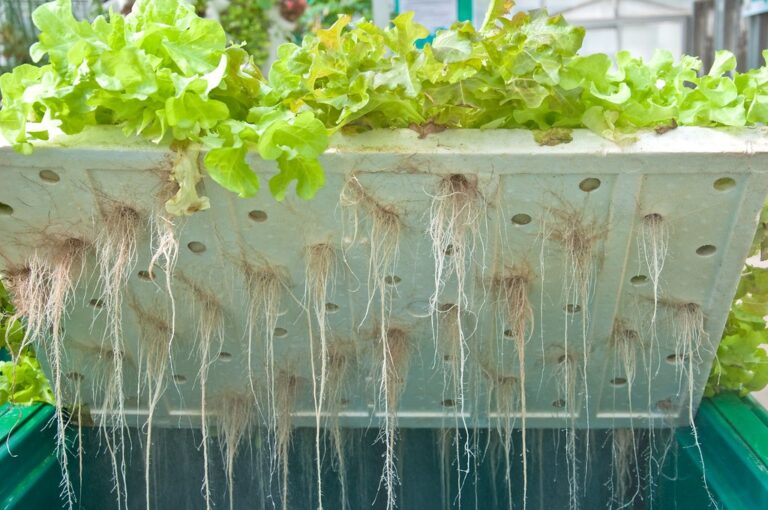
Healthy Kratky method roots in the solution are white to cream and look fuzzy. The upper roots in the air gap are often thicker and branchier. Brown, slimy roots with a sour smell usually mean the solution got too warm, light reached it, or the level was raised and the oxygen roots were drowned.
Kratky method mistakes to avoid
- Do not top up a lettuce jar. Kratky’s papers are clear that raising the solution level can injure plants: the roots that grew into the air gap are adapted to air, not water. Short crops such as lettuce should get one fill only.
- Do not let light reach the solution. Kratky’s bottles were covered or darkened to stop algae. Algae compete for nutrients and oxygen and clog roots.
- Do not use salty water. Salts concentrate as the plant drinks. Kratky’s example: water with an EC of 0.5 from contaminants becomes EC 2.0 once 75% of the solution has been used. Hard or salty tap water is a common hidden cause of burned leaf tips late in the crop.
- Do not use an oversized net pot hole. Light and mosquitoes get in through gaps around the pot. Kratky notes that mosquitoes can breed in non-circulating solutions and recommends Bacillus thuringiensis subsp. israelensis (Bti) products for control.
- Do not keep the solution hot. Kratky found his lettuce did best at 60–70°F (16–21°C) air temperature, tolerating the 80s°F. The Cornell handbook keeps solution temperature at or below 25°C (77°F). Warm solutions hold less oxygen.
Refilling long-season crops (herbs, tomatoes, cucumbers)
The “never refill” rule of the Kratky method is for lettuce and other short crops. For long-season crops grown with the Kratky method, the advice is different: once the plant is established, keep the solution level roughly steady, within about a 3 cm (1.2-inch) band, using a float valve or regular small additions. What you should avoid is flooding the air gap: add solution only up to where the level already sits, not back up to the lid.
Herbs such as basil, mint and parsley fit this long-season pattern because you cut them over many weeks. Top up with half-strength solution when the level has dropped a few centimetres, and change the solution completely if it turns cloudy or smells.
Common Kratky method problems and fixes
| Symptom | Likely cause | Fix |
|---|---|---|
| Seedling wilts in the first week | Net pot not touching the solution | Raise the level (only at this stage) so the bottom 1–2 cm of the pot is wet |
| Green film in the jar | Light reaching the solution | Wrap the container; seal gaps around the net pot |
| Brown, slimy roots | Warm solution, raised level, or algae | Keep the container cool and dark; start the next crop in fresh solution |
| Brown leaf edges (tipburn) | Too much light without airflow, or high EC late in the crop | Add a small fan; mix EC a little lower next time |
| Jar dry before harvest | Container too small | Use a bigger container (3–6 L per lettuce plant) |
| Pale, stretched plant | Too little light | Move closer to the window or add a grow light (about 12 mol/m²/day) |
Where this applies
The Kratky method numbers in this guide come from lettuce trials in Hawaii and from North American extension services. They hold for most indoor growing, but two things change with where you live. Tap water quality varies a great deal between regions and even between neighbourhoods, so measure your own water’s EC before relying on the one-fill approach. And in warm climates or hot apartments, solution temperature is the limiting factor: in summer, grow heat-tolerant loose-leaf types, keep the container out of direct sun, and consider moving the setup to the coolest room.
For more ways to grow without soil, browse our hydroponic systems section and the nutrients, pH and EC guides. How we choose and check sources is explained in our editorial policy.
Kratky method FAQ
Do you need an air pump for the Kratky method?
No. The Kratky method was designed to work without pumps, air stones or electricity. The roots get oxygen from the humid air gap that forms as the solution level falls.
Can you add water to a Kratky jar?
For lettuce and other quick crops, no: raising the level drowns the roots that grew into the air gap. For long-season crops such as tomatoes, cucumbers and herbs, keep the level steady with small additions rather than refilling to the top.
What grows best with the Kratky method?
Leafy lettuce, romaine and butter lettuce are the best fit because they finish before the container runs dry. Herbs work in jars with occasional top-ups. Tomatoes and cucumbers are possible, but need large containers (5 gallons for tomatoes and far more for cucumbers).
How long does lettuce take with the Kratky method?
About 4–6 weeks after transplanting a 1–3-week-old seedling, or roughly 6–7 weeks from seed in a 4-litre bottle, according to Kratky’s trials.
Sources
- Kratky, B.A. (2009). Three non-circulating hydroponic methods for growing lettuce. Acta Horticulturae 843, via University of Hawaii CTAHR.
- Kratky, B.A. (2010). A suspended net-pot, non-circulating hydroponic method for commercial production of leafy, romaine, and semi-head lettuce. University of Hawaii CTAHR, VC-1.
- Kratky, B.A. (2004). A suspended pot, non-circulating hydroponic method. University of Hawaii CTAHR.
- How, E. (2025). Dakota Gardener: Water you growing? NDSU Extension.
- Sandoya, G.V. et al. (2021). Growing lettuce in small hydroponic systems. UF/IFAS HS1422.
- Cornell University CEA program. Hydroponic lettuce handbook.
Featured image: “Hydroponically Grown Head of Green Butter Lettuce” by kurmanstaff, CC BY 2.0.