
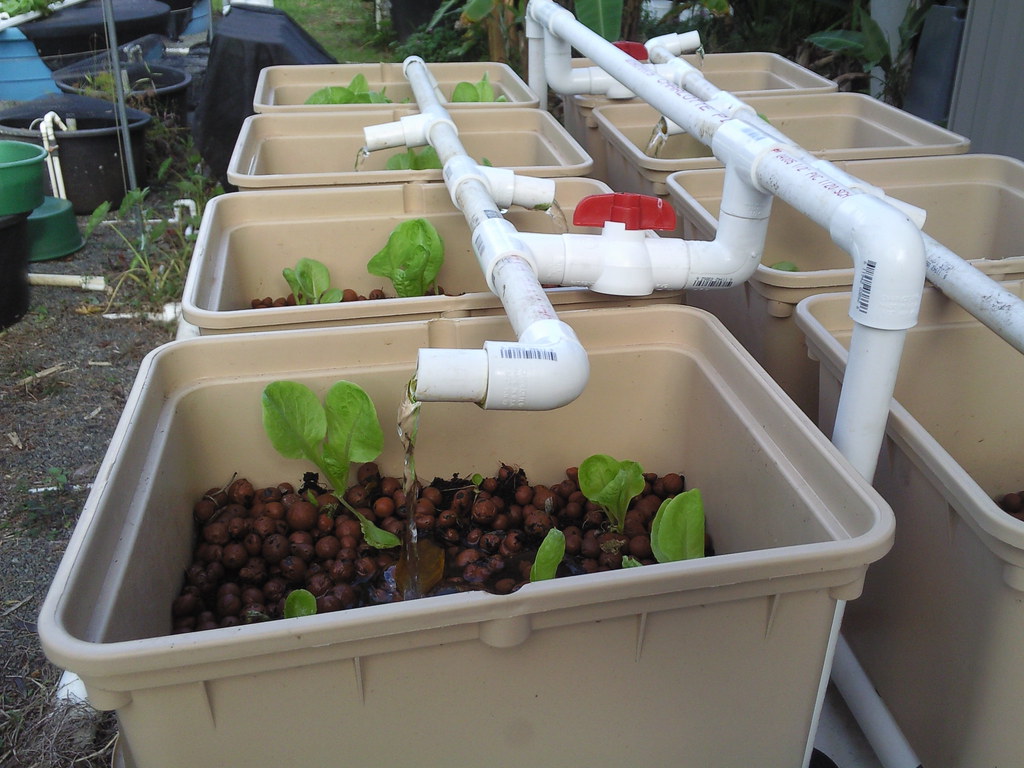
Short answer: an ebb and flow (flood and drain) system fills a tray of media-filled pots with nutrient solution, holds it briefly, then drains it back to a reservoir. A sound starting schedule is 2–4 floods a day of about 10–15 minutes, flooding to roughly 1 inch below the top of the media and letting it drain completely, then flooding again before the media starts to dry. Keep the solution around EC 1–3 mS/cm and pH 5.5–6.0.
Ebb and flow hydroponics is popular because it is forgiving: roots sit in a moist, airy medium instead of water, and the pump only runs a few minutes at a time. The trade-off is that timing, media and drainage all interact. This guide explains how an ebb and flow system works, what to buy, how to set the flood timer, which media to choose, and the mistakes that cause algae, salt build-up and root disease, using guidance from Oregon State University, the University of Minnesota, UMass, Cornell and peer-reviewed research.
Table of Contents
How ebb and flow hydroponics works
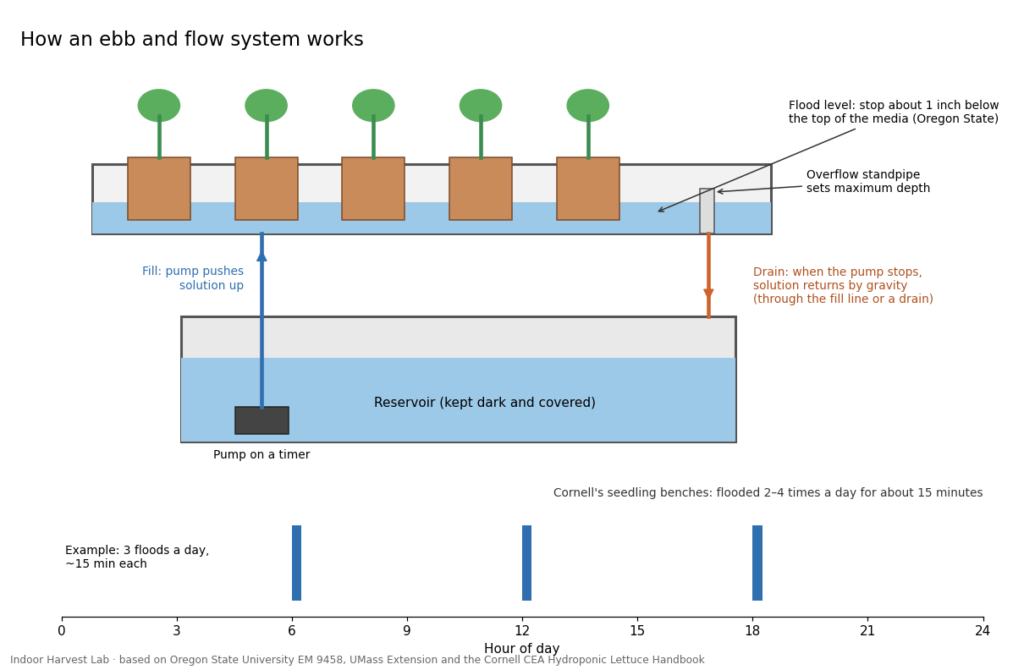
In an ebb and flow system, plants grow in pots or a bed of substrate inside a watertight tray. The nutrient solution lives in a separate reservoir. The University of Minnesota Extension describes the cycle simply: a pump moves solution from the reservoir into the growing tray, and it then drains back through the substrate to the reservoir, either through a porous tray bottom or a drain fitting and tubing.
Commercial greenhouses use the same idea on a large scale. UMass Extension describes ebb and flow benches that are pumped to a depth of 3/4 inch to 1 inch, held for about 10 minutes or long enough for the media to absorb the solution, and then drained quickly by gravity back to the tank. Because the solution is reused, UMass notes that water and fertilizer use drops by at least 50% compared with conventional systems.
Ebb and flow vs deep water culture vs NFT
| System | Where the roots are | Pump runs | Best suited to |
|---|---|---|---|
| Ebb and flow | In media that is flooded, then drained | A few minutes per flood | Herbs, greens, peppers, larger plants in deeper media |
| Deep water culture | Hanging in aerated water | Air pump 24 hours | Lettuce, salad greens, herbs |
| NFT | In a thin, moving film in channels | Continuously | Lettuce and other light leafy crops |
The practical difference is the medium. Between floods, ebb and flow roots breathe air held in the pore spaces of the substrate, and the moist media carries plants through the gap. Minnesota warns that pump-based systems depend on mechanical parts and plants can dry out quickly if one fails, so media that holds some water gives an ebb and flow system more margin during a power cut than a bare-root channel.
What you need for ebb and flow
| Part | What it does | What to look for |
|---|---|---|
| Flood tray | Holds the pots and the flood | Watertight, installed level, ideally with ridges or channels for fast drainage |
| Reservoir | Stores the solution between floods | Opaque and covered; big enough to fill the tray and still cover the pump |
| Submersible pump | Moves solution up to the tray | Fills the tray in a few minutes |
| Timer | Starts and stops each flood | A timer with short on-periods (minutes, not hours) |
| Fill/drain fitting and overflow | Let solution in, cap the depth, and let it drain | An overflow standpipe set just below the media surface |
| Pots and media | Anchor roots and hold moisture and air | Clay pebbles, rockwool, coir, or a mix (see below) |
| EC and pH meters | Track nutrient strength and acidity | Temperature-compensated EC meter; calibrated pH pen |
For large benches, UMass suggests a holding tank with about 1/2 gallon of capacity per square foot of bench. For a home tray the same principle applies: the reservoir must supply the whole flood without the pump running dry, and still have solution left over.
Ebb and flow flood timing: how often and how long
Flood timing is the setting people search for most, and the honest answer is that it depends on your media, plant size and room. Research programs give clear starting points, and Oregon State University’s ebb and flow guide gives a rule for adjusting them: “Flood to about an inch below the top of the media. Drain once the media is fully soaked. Media will be glistening. Flood again before the media begins to dry out and contract.”
| Source | Setting | Flood schedule |
|---|---|---|
| Cornell CEA lettuce program | Ebb and flood benches for germinating lettuce seedlings | 2 to 4 times a day, about 15 minutes each |
| Cornell CEA lettuce program | Germinating seed trays | 15 minutes every 12 hours until day 6 |
| UMass Extension | Greenhouse ebb and flow benches with potted crops | Flood 3/4–1 inch deep for about 10 minutes; once or twice a week to several times a day, depending on weather and crop size |
| Oregon State | Home and small-farm ebb and flow | Flood before the media begins to dry; deeper media allows longer flood cycles |
The Cornell Hydroponic Lettuce Handbook also notes that the pump can simply run on a time clock, which is exactly how a home ebb and flow tray works.
A practical way to set your ebb and flow timer:
- Start with three floods during the light period, each long enough to reach 1 inch below the media surface and soak it (often 10–15 minutes).
- Check the media by touch and look an hour before the next flood. If the top is already dry or pulling away from the pot, add a flood or move floods closer together.
- If the media is still glistening wet when the next flood starts, or roots look brown, reduce the number of floods.
- Re-check whenever plants grow much larger, the room warms up, or you change media.
Choosing media for ebb and flow
The medium decides how long plants can go between floods. Minnesota’s comparison of hydroponic substrates is a useful guide:
| Medium | Strengths | Watch out for | Ebb and flow fit |
|---|---|---|---|
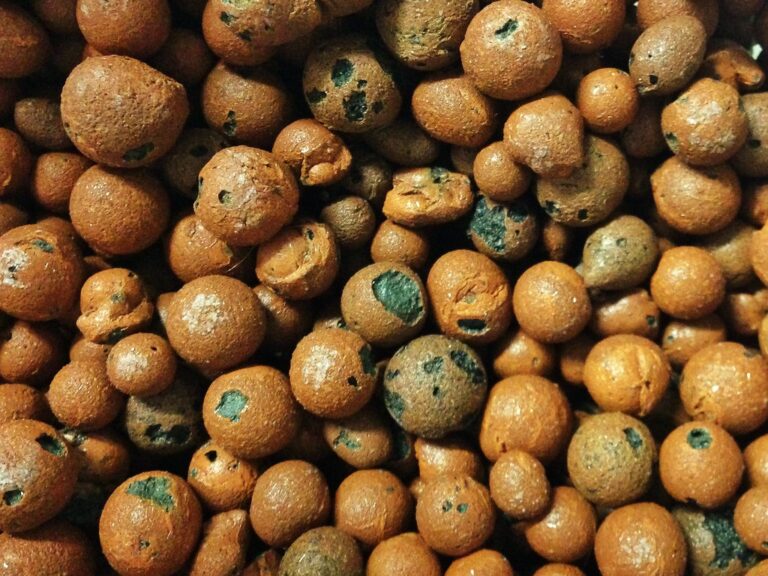
| Clay pebbles (LECA, hydroton) | Large air spaces, reusable, easy to clean | Limited water holding | Very good; may need more frequent floods |
| Rockwool | Holds water and air well; many sizes | Alkaline, can affect pH; irritates skin and lungs | Good, especially for starting plants |
| Coconut coir | Good water retention | Variable product; organic, so more potential for pests and pathogens | Good; allows fewer floods |
| Perlite | Holds oxygen, inexpensive | Light enough to float; fine particles can block fittings | Use in pots or mixed, not loose in a flooding tray |
| Pumice | Airy, lightweight | Can float; sharp edges | As for perlite |
| Gravel | Cheap, drains well | Heavy; can shift pH | Workable in small, sturdy trays |
Whatever you choose, Minnesota recommends soaking the substrate in water for 24 hours and changing the water before transplanting, and cleaning and sanitising any reused substrate to prevent pathogen build-up.
How to set up ebb and flow in 6 steps
- Level the tray. UMass stresses that ebb and flow benches must be installed perfectly level so the depth is uniform. Check with a spirit level in both directions.
- Fit the plumbing. Install the fill fitting and an overflow standpipe cut about 1 inch below the planned media surface. Place the reservoir below the tray so it can drain by gravity.
- Prepare the media and plants. Rinse and soak media for 24 hours. Transplant rooted seedlings (for example in rockwool plugs) into net pots or pots filled with the medium.
- Mix the solution. Fill the reservoir, measure the water’s starting EC, then add nutrients. Set EC first and pH second, as Oklahoma State Extension advises.
- Test a flood by hand. Run the pump and time how long the tray takes to reach the overflow, then how long it takes to drain. This tells you how long each timer period needs to be.
- Set the timer and observe. Start with 2–4 floods a day and adjust using Oregon State’s “flood before it dries” rule.
Nutrients, EC and pH in ebb and flow
An ebb and flow system uses the same nutrient ranges as other hydroponic methods. In a study of basil, kale, chipotle pepper and cherry tomato grown in a recirculating ebb-and-flow system at the University of Illinois, Wortman (2015, Scientia Horticulturae) describes hydroponic solution as typically held at EC 1–3 dS/m (the same as mS/cm) and pH 5.5–6.
When the solution was instead held at low EC (under 1) and high pH (about 7.2), like a small aquaponic system, marketable yield fell by 44% for basil and 76% for kale, and less than 32% for tomato and pepper. The author links the size of the loss partly to root contact area and fertigation frequency, which is a reminder that an ebb and flow system, with roots touching solution only during floods, needs a properly strong solution.
Salts also behave differently when you water from below. In UMass research on subirrigated potted crops, EC was higher than with overhead watering and highest near the top of the growth medium, because water evaporates from the surface and leaves nutrient residues behind. UMass Extension calls regular EC testing “very important” with subirrigation, and Oregon State notes that shallow flood cycles help prevent salt accumulation near the base of plants. If you see white crust on the media surface, test EC and consider an occasional top rinse with plain water.
For crop-specific targets, see our hydroponic EC chart; if your meter shows ppm, the ppm to EC conversion guide explains the scales; and if pH drifts up, see how to lower pH in hydroponics.
Best crops for ebb and flow
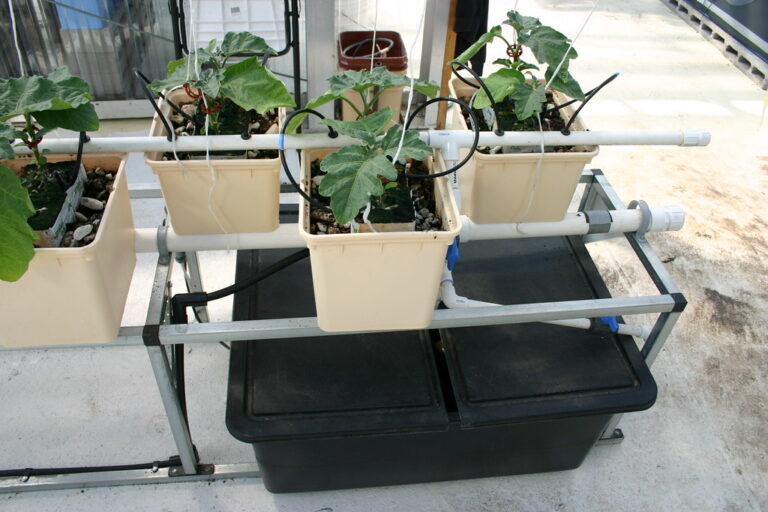
Oregon State lists peppers, basil, cilantro, mint, radishes, spinach, Swiss chard and arugula among the crops suited to ebb and flow, along with bedding flowers. The Illinois study grew basil, kale, chipotle pepper and cherry tomato in ebb-and-flow trays. Because Oregon State notes that deeper growing media allow longer flood cycles and give larger crops such as tomatoes more root space, ebb and flow is one of the easier hydroponic systems for fruiting plants, provided the pots are deep and well supported.
Ebb and flow mistakes to avoid
- An unlevel or slow-draining tray. UMass explains that channels in the bench bottom let water drain rapidly so the surface dries, which reduces algae and disease. Puddles left between floods do the opposite.
- Light on wet media and solution. UMass advises enclosing solution containers and piping in black plastic or painting them black to stop algae. Oregon State even suggests an “algae trap” chamber that draws algae away from the growing area.
- Floating media. Loose perlite or pumice can lift and wash into fittings when the tray floods.
- Flooding too often. Media that never drains leaves roots short of air. Follow Oregon State’s rule and let media drain fully.
- Treating the system as self-cleaning. The e-GRO alert on Pythium root rot warns that recirculating nutrient solution is a way for pathogens to spread, especially in closed-loop systems. UMass recommends removing dead plant material from growing areas, tanks and plumbing after each crop, then disinfecting.
- No overflow. A stuck timer or float without an overflow standpipe can flood pots to the brim or spill solution.
Where this applies
The schedules above come from greenhouses and grow rooms in the northern United States. In a hot, dry room or a sunny greenhouse, media dries faster and plants drink more, so expect to need more floods; in cool, humid rooms, fewer. UMass’s own range, from once or twice a week to several times a day for potted crops, shows how much weather and plant size change the answer. If power cuts are common where you live, choose a medium with more water-holding capacity, such as coir or rockwool, so plants can ride out a missed flood. And because tap water chemistry varies from place to place, measure your water’s EC and pH before mixing nutrients.
Ebb and flow FAQ
How often should an ebb and flow system flood?
Start with 2–4 floods a day, the range Cornell uses for its seedling benches, then adjust so the media never dries out between floods but still drains fully.
How long should each flood last?
Long enough to reach about 1 inch below the top of the media and soak it: roughly 10 minutes on UMass benches and about 15 minutes at Cornell. Time your own tray, because pump size and tray volume change it.
Should an ebb and flow system flood at night?
Plants use much less water in the dark, so media usually stays moist longer at night. Apply the same test: if the media is still moist at lights-on, night floods are not needed.
What is the best medium for ebb and flow?
Clay pebbles are the most common choice because they drain freely and can be reused; mixing in some coir or starting plants in rockwool adds water-holding capacity.
Is ebb and flow good for beginners?
Yes, if you are comfortable with a pump, a timer and a level tray. For the very simplest start, the Kratky method needs no pump at all.
Ebb and flow hydroponics rewards a little observation in the first weeks: once the flood timing matches your media and plants, it runs with very little attention. Browse more setups in our Hydroponic Systems guides.
Sources
- Nelson, M., Langellotto, G. and Nackley, L. Hydro hints: Ebb and flow. Oregon State University Extension, EM 9458 (2025).
- Hoidal, N., Reardon, A., Worth, L. and Rogers, M. Small-scale hydroponics. University of Minnesota Extension (reviewed 2022).
- Bartok, J.W. Subirrigation Systems. UMass Extension Greenhouse & Floriculture (2009).
- Cox, D.A. Subirrigation for Greenhouse Crops. UMass Extension Greenhouse & Floriculture.
- Brechner, M. and Both, A.J. Hydroponic Lettuce Handbook. Cornell University CEA Program (2013).
- Wortman, S.E. (2015). Crop physiological response to nutrient solution electrical conductivity and pH in an ebb-and-flow hydroponic system. Scientia Horticulturae 194: 34–42.
- Raudales, R.E. and McGehee, C. Pythium Root Rot on Hydroponic Lettuce. e-GRO Alert 1(4) (2016).
- Dunn, B. and Singh, H. Electrical Conductivity and pH Guide for Hydroponics. Oklahoma State University Extension, HLA-6722 (2017).
Featured image: “Photo1602” by Kanu Hawaii, CC BY 2.0.