
It’s late November. The garden is done, the last chilies are drying on the counter, and you’re wondering whether that leggy pepper plant on the windowsill could actually keep producing until spring. Or maybe you never had a garden at all and simply want to grow peppers indoors for fresh jalapeños in January.
Short answer: yes, you can grow peppers indoors all year if you treat them like the sun-loving, warmth-loving plants they are. Give them 14–16 hours of strong light a day (a bright south window rarely does it in winter, so plan on a grow light), keep nights between 60 and 75°F (16–24°C), use a pot of at least 10–14 inches, and tap the flowers so they pollinate. Compact chilies are the easiest; big bell peppers are possible but slower and harder.
This guide pulls together university extension advice and controlled-environment research into one plan. By the end you’ll know which peppers to pick, how strong your light needs to be, why flowers drop off indoors and how to stop it, and what to do week by week from seed to first harvest.
Can you grow peppers indoors year-round?
You can, and peppers are better suited to it than most fruiting crops. Pepper plants are perennials in their native tropics; we only treat them as annuals because frost kills them. Indoors there’s no frost, so a healthy plant can keep flowering and fruiting for months. Ontario’s agriculture ministry notes that peppers are even more sensitive to cold than tomatoes, and suffer chilling injury when temperatures sit between 32 and 50°F (0–10°C) for a long time (OMAFRA). A heated home solves that problem automatically.
The catch is light. The Brooklyn Botanic Garden puts it plainly: growing chilies indoors is a challenge because, like tomatoes, they need an environment that’s warmer and brighter than most homes (Brooklyn Botanic Garden). Expect indoor plants to stay smaller than garden plants and the fruit to be a bit smaller too. That’s fine. A compact plant that fits on a shelf is exactly what you want.
Best peppers to grow indoors
Small-fruited, compact chilies are the winners. New Mexico State University’s Chile Pepper Institute recommends dwarf ornamental chilies for indoor growing (NMSU Chile Pepper Institute), and the Brooklyn Botanic Garden lists piquíns, chiltepins, habaneros and Thai peppers as types that do well in containers. Those small chilies grow about 6–12 inches tall and just as wide, and they flower and fruit over a long season, which gives you more chances at a harvest (BBG).
| Pepper type | Indoor fit | Why | Pot to plan for |
|---|---|---|---|
| Ornamental / dwarf chilies (Capsicum annuum) | Excellent | Bred to stay compact; fruit held above the leaves | 10–12 in |
| Thai, piquín, chiltepin | Excellent | Small plants, long flowering season | 10–12 in |
| Habanero, Scotch bonnet (C. chinense) | Good | Prefer moderate heat and higher humidity; slow to ripen | 12–14 in |
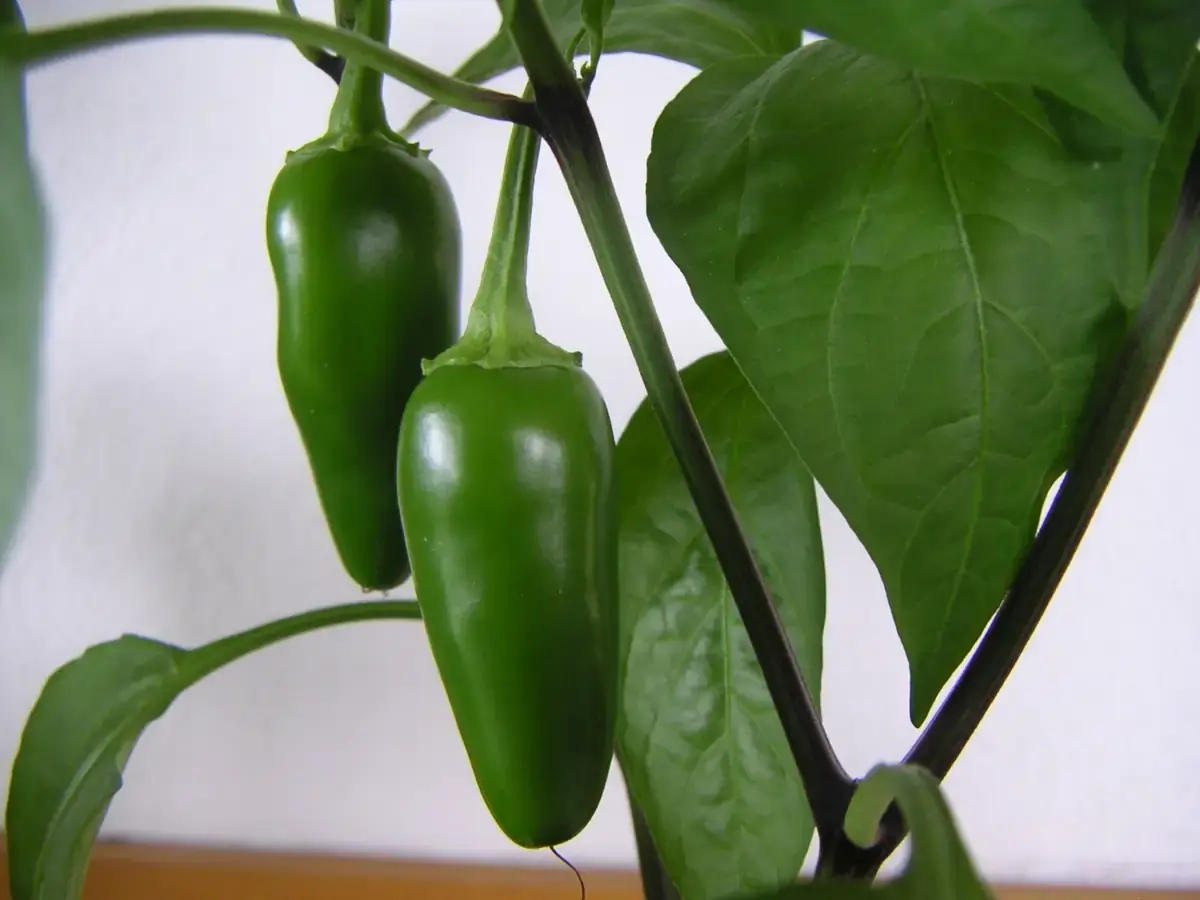
| Jalapeño, cayenne, serrano | Good | Medium plants; hot peppers are more forgiving than bells | 14 in / 5 gal |
| Bell and large sweet peppers | Possible, harder | Big plants, heavy fruit, long season to color up | 16–18 in |
North Carolina A&T’s extension team adds a useful note: hot peppers are more forgiving than bell peppers when grown in containers (NC A&T Extension). If this is your first indoor pepper, start with a chili and graduate to bells later.
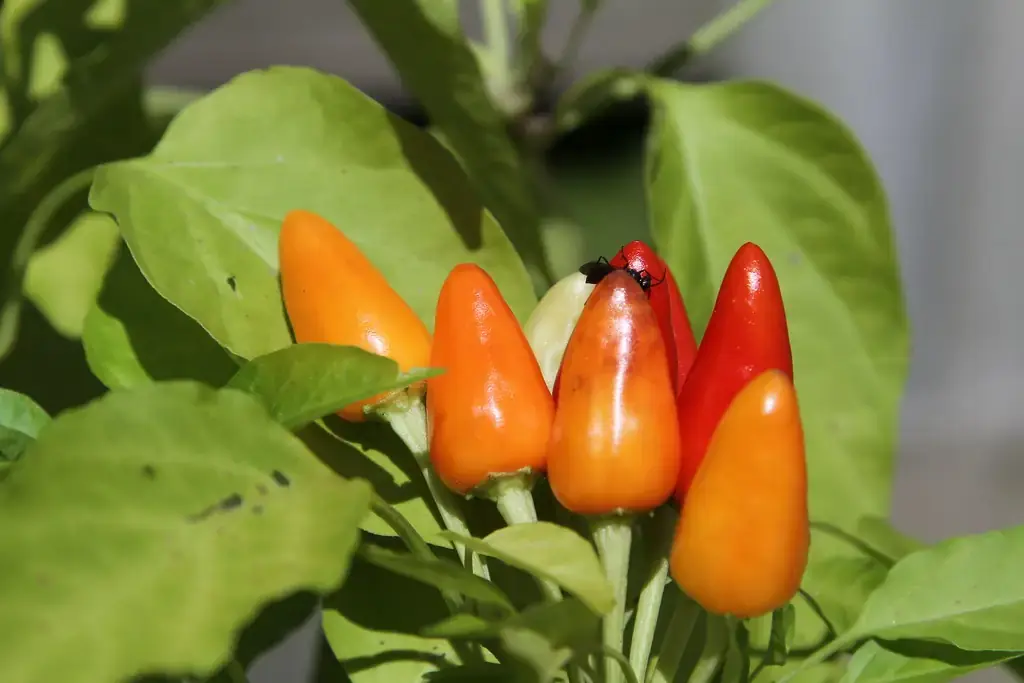
Already have plants in the garden? Digging up a small chili and bringing it inside is a quick head start. Our guide to overwintering peppers indoors covers the dig-up, pruning and pest check in detail, so this article focuses on keeping plants productive indoors rather than just alive.
Numbers to hold for indoor peppers
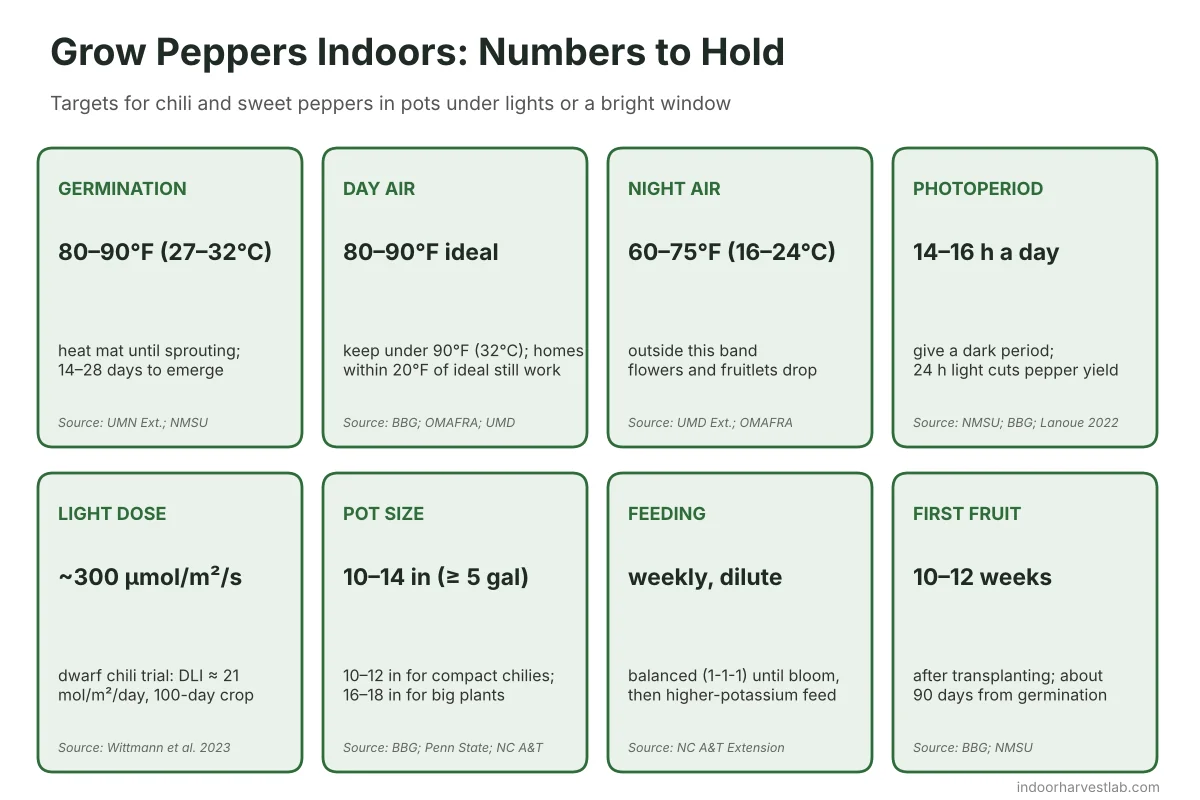
When you grow peppers indoors, they’re forgiving about most things and fussy about a few. These are the targets that matter, each traced to a source you can check.
| What | Target | Notes | Source |
|---|---|---|---|
| Germination temperature | 80–90°F (27–32°C) on a heat mat | Then about 70°F (21°C) soil once seedlings are up | UMN Extension |
| Days to emerge | 14–28 days | Hot peppers are often at the slow end | NMSU |
| Day air temperature | 80–90°F ideal; stay under 90°F (32°C) | Above 90°F days, pollen can become sterile and flowers drop | BBG; OMAFRA |
| Night air temperature | 60–75°F (16–24°C) | Nights below 60°F or above 75°F cause flower and fruit drop | UMD Extension; OMAFRA |
| Prolonged cold to avoid | Below 50°F (10°C) | Chilling injury: puckered leaves, stunting | OMAFRA |
| Light hours | 14–16 h per day | Keep a real dark period; 24 h light reduces pepper yield | NMSU; BBG; Lanoue et al. 2022 |
| Light intensity | About 300–365 µmol/m²/s | A dwarf chili trial ran 300 µmol/m²/s at a DLI of about 21 mol/m²/day | Wittmann et al. 2023 |
| Pot size | 10–12 in (small chilies) to 14 in or 5 gal; 16–18 in for big plants | Pots at least as tall as they are wide | BBG; Penn State; NC A&T |
| Feeding | Weekly, water-soluble, after the first 2 weeks | Balanced (1-1-1) until flowering, then a higher-potassium feed | NC A&T |
| Time to first fruit | 10–12 weeks after transplanting | About 90 days after germination | BBG; NMSU |
Light: how to grow peppers indoors under grow lights
If you remember one thing from this article, make it this: light is the limiting factor. The Brooklyn Botanic Garden calls light the most important factor in growing chilies, and says a windowsill plant needs at least six hours of bright direct sun just to survive (BBG). Penn State Extension gives the same six-hour minimum for container peppers outdoors (Penn State Extension). In a northern winter, even a south window falls well short of that most days.
How many hours of light do indoor peppers need?
Aim for 14–16 hours a day. NMSU’s Chile Pepper Institute recommends 14–16 hours under grow lights (NMSU), and the Brooklyn Botanic Garden suggests 16 hours when plants rely on artificial light alone, on a timer so they get a regular rest (BBG).
Don’t be tempted to leave the light on around the clock. Peppers are one of the crops that are susceptible to photoperiod injury under 24-hour lighting; their leaves may show only mild symptoms, but yield still drops because the plant can’t use the extra photons (Lanoue et al. 2022, Frontiers in Plant Science). In a vertical-farm trial with a dwarf chili, stretching the light period beyond 20 hours at the same daily light total gave no advantage either (Wittmann et al. 2023). Longer is not better. A dark night is part of the recipe.
How strong should the light be?
Hours alone don’t tell you whether a light is strong enough. What the plant “counts” is the daily light integral (DLI): the total photons it receives in a day. Purdue Extension classes crops needing 12–18 mol/m²/day as high-light crops and those needing more than 18 as very high-light crops (Purdue Extension HO-238). Fruiting peppers sit at the top of that scale.
The most useful indoor data point comes from a German vertical-farming study. A dwarf chili (Capsicum annuum) grown for 100 days in a multilayer LED system at 300 µmol/m²/s and a DLI of about 21 mol/m²/day stayed a manageable 20–27 cm (8–11 in) tall, had only about 1% damaged fruit, and reached a yield of up to 30 kg per m² per year under white LEDs with a little added 400 nm UV (Wittmann et al. 2023, Acta Horticulturae 1369). That tells you what a well-lit indoor chili can do.
To translate a DLI into a grow-light setting, use: PPFD = DLI × 1,000,000 ÷ (hours × 3,600). At 16 hours, a DLI of 18 needs about 312 µmol/m²/s at the leaves and a DLI of 21 needs about 365. At 14 hours you need roughly 357 and 417. The chart below does the maths for you.
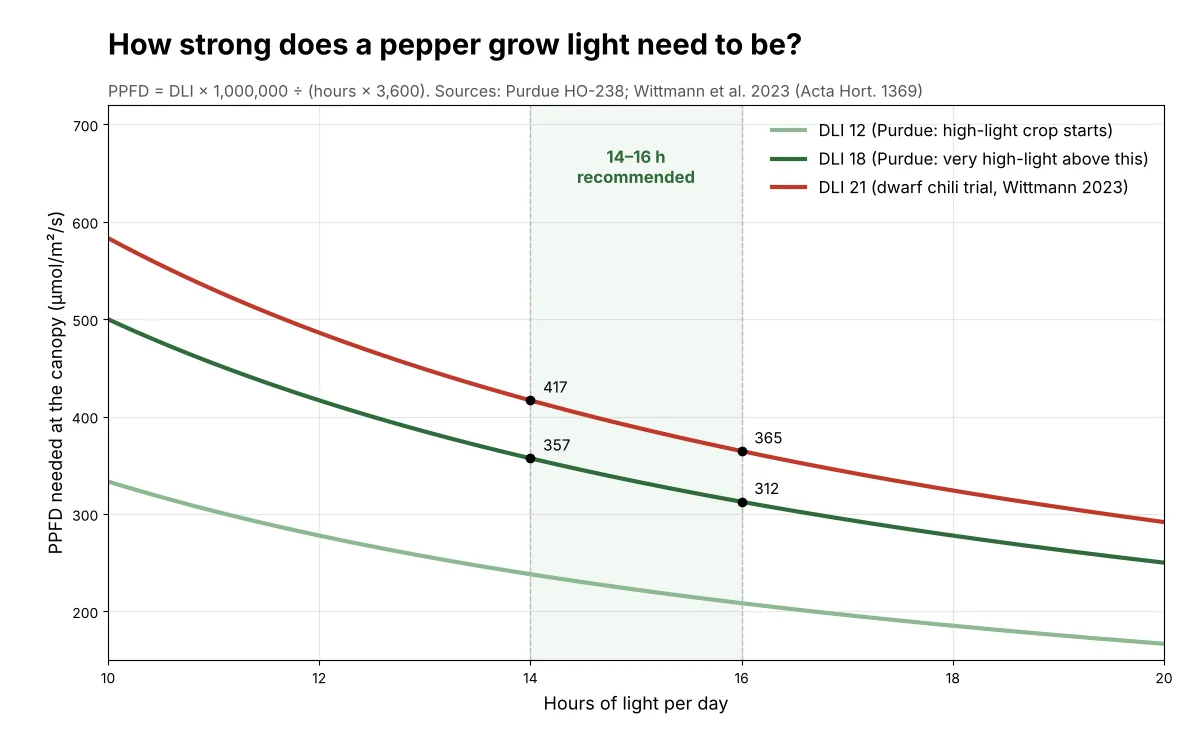
In plain terms: a small LED panel that delivers 300–400 µmol/m²/s over the plant’s footprint is the target. Most cheap clip-on lights and seed-starting strips can’t do that for a fruiting plant. They’re fine for seedlings, but a fruiting pepper needs a stronger fixture. Our PPFD chart explains how to check what your light actually delivers, and our grow light buying guide covers wattage, coverage and spectrum.
Window, grow light, or both?
- Window only: workable from late spring to early fall in a south- or west-facing window (NMSU). In winter, expect slow growth, pale leaves and few flowers. The Brooklyn Botanic Garden notes windowsill chilies often slow down, drop some leaves and turn pale in winter; let them rest rather than overfeeding.
- Window plus light: if a windowsill plant looks like it is just hanging on, BBG recommends supplementing with artificial light. A light on a timer for the morning and evening hours stretches a short winter day.
- Grow light only: the most predictable route for winter fruit. You control both the hours and the intensity, and the plant doesn’t care whether it’s snowing outside.
Watch the plant, too. NMSU points out that a pepper short of light tells you: stems get thin and the plant leans toward the source (NMSU). Minnesota Extension says the same thing about seedlings: without bright light directly overhead, stems stretch and fall over (UMN Extension).
Temperature, flower drop and hand pollination
Here’s the frustrating scene many indoor growers know: the plant is green and bushy, it’s covered in flowers, and then the flowers turn yellow and fall off one by one. Almost always, that’s temperature or pollination, not disease.
Why indoor pepper flowers fall off
University of Maryland Extension gives the clearest thresholds: night temperatures below 60°F or above 75°F, or day temperatures above 95°F, can make pepper flowers and small fruit drop (UMD Extension). Ontario’s agriculture ministry lists slightly tighter limits: daytime temperatures above 90°F (32°C) cause pollen sterility and flower drop, and nights below 60°F (15.5°C) or above 75°F (24°C) give poor fruit set (OMAFRA).
Indoors, the night problem usually comes from two places. A plant pressed against a cold winter window can sit far below the room temperature at night. A plant in a small grow tent with the light on can run hot. Put a cheap min/max thermometer at leaf height for a week and you’ll know which one you have.
Cold nights also affect fruit that does set. OMAFRA notes that nights of 45–50°F (7–10°C) while flowers develop can make the fruit smaller or misshapen (OMAFRA).
Do pepper plants need to be pollinated indoors?
Pepper flowers are self-fertile: each flower has both male and female parts, and most can set fruit with their own pollen. But there’s a catch. Like other members of the nightshade family, peppers need physical shaking from wind or buzzing bees to release pollen from the anthers. In still-air greenhouses, insect activity is generally needed for good fruit set, and research has found bumblebee pollination increased fruit weight, fruit size and seed number in greenhouse hot peppers (Pollinator Partnership Canada, greenhouse pepper guide).
Your living room has no wind and no bees, so you become the pollinator. It takes seconds.
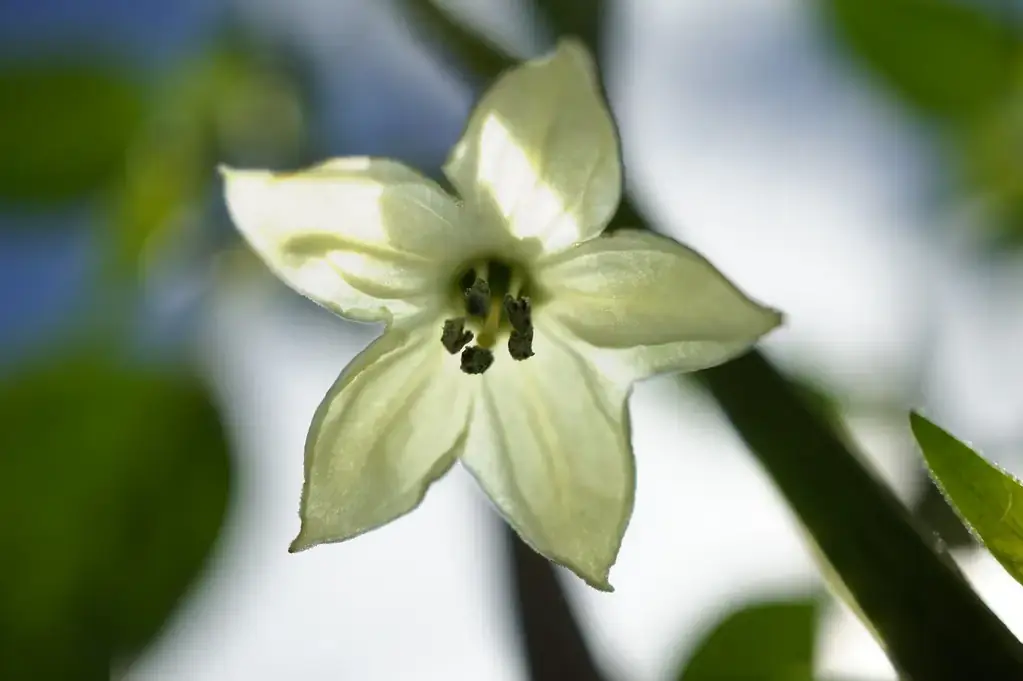
- Pick the right time. Work when several flowers are fully open, ideally late morning when the room is warm and the air is dry.
- Shake or tap. Flick each flowering branch gently, or tap the main stem a few times. This mimics wind.
- Buzz it. For more stubborn plants, touch the back of an open flower with a vibrating electric toothbrush for a second or two. The vibration imitates a bumblebee’s buzz pollination.
- Or brush it. A small soft paintbrush swirled inside each open flower moves pollen onto the stigma. Do it every day or two while the plant is in bloom.
- Add moving air. A small oscillating fan on low gives constant gentle movement, helps pollination and also strengthens stems.
If flowers still drop after you’ve fixed temperature and pollination, look at the other causes Maryland Extension lists: soil that stays too wet or too dry, too much shade, and too much nitrogen fertiliser (UMD Extension).
How to grow peppers indoors from seed to harvest
Here’s how to grow peppers indoors from start to finish, in order. The step-by-step suits a winter start, but it works in any month because indoors you set the season.
Step 1: Start seeds warm
Sow seeds ¼ inch deep in a sterile, soilless germination mix and keep the tray at 80–90°F (27–32°C) on a heat mat until seedlings emerge (UMN Extension). Heat mats dry the mix faster, so check moisture daily. Germination can take anywhere from 14 to 28 days (NMSU), so don’t give up on a slow tray. For temperatures by variety and the paper-towel trick, see our guide to germinating pepper seeds.
Step 2: Give seedlings strong overhead light
As soon as the first loops appear, move the tray off the heat mat and under bright overhead light. Minnesota Extension notes that a soil temperature around 70°F (21°C) is ideal once seedlings are up, and that seedlings without enough overhead light stretch and topple (UMN Extension). Thin or transplant when true leaves appear so seedlings sit 2–3 inches apart.
Step 3: Pot up in stages
Move each seedling into a 3–4 inch pot once it has a couple of sets of true leaves, then into its final container when roots circle the pot. The Brooklyn Botanic Garden notes indoor chilies may need transplanting more than once on the way to full size (BBG). Our guide to potting up seedlings explains the timing and how to avoid transplant shock.
Step 4: Choose the final pot and mix
For compact chilies, a 10–12 inch pot is usually enough; larger peppers want 16–18 inches (BBG). Penn State suggests a 14-inch pot for peppers and says containers should be at least as tall as they are wide (Penn State Extension), while NC A&T recommends at least 5 gallons and one or two plants per container (NC A&T Extension). Every pot needs drainage holes.
Use a soilless potting mix, not garden soil. BBG suggests peat or composted bark mixed with equal parts vermiculite or perlite. NC A&T advises avoiding mixes very high in peat moss because they compact over a long season, and prefers bark-based blends. Penn State says finished compost can make up to half of the mix.
Step 5: Water by feel, not by schedule
Water when the top of the mix feels slightly dry, until water runs out of the drainage hole, and never leave the pot sitting in a full saucer: NMSU warns that standing water and overwatering cause root rot (NMSU). BBG’s rule is to keep indoor chilies on the slightly damp to dry side. Constantly wet mix is also how fungus gnats take hold indoors.
Step 6: Feed steadily
Most potting mixes contain a starter charge of fertilizer that lasts about two weeks. After that, NC A&T recommends feeding weekly with a water-soluble fertilizer: a balanced 1-1-1 ratio (such as 20-20-20) until flowering, then a higher-potassium feed, which most tomato fertilizers provide (NC A&T Extension). If weekly feeding feels like a lot, BBG suggests every three weeks or following the label. Either way, a plant that is resting in low winter light needs less, not more.
Step 7: Pinch, prune and support
NC A&T notes that peppers need very little pruning: remove suckers up to the first flower cluster, and take off old leaves below the first fruit once you start harvesting. Use a small cage or stake for heavier varieties (NC A&T Extension). Minnesota Extension advises pinching off flower clusters that appear on young plants before they’re set out (UMN Extension); the indoor version is to pinch the first few flowers on a very small plant so it builds leaves and roots before carrying fruit. If a plant gets leggy, BBG suggests cutting it back and waiting for new growth.
Step 8: Pollinate, then harvest
Once flowers open, hand-pollinate every day or two as described above. The Brooklyn Botanic Garden says chilies start to mature about 10–12 weeks after transplanting and keep bearing for several months (BBG). Pick them glossy green or wait for the final color. Regular picking matters: Maryland Extension notes that failing to harvest regularly can signal plants to slow flower and fruit production (UMD Extension).
| Stage | Approximate timing | Main job |
|---|---|---|
| Germination | Days 0–28 | Heat mat at 80–90°F; keep mix moist |
| Seedling | Weeks 2–6 | Strong overhead light; thin to 2–3 in apart |
| Potting up | Weeks 4–8 | 3–4 in pot, then final 10–14 in pot |
| First flowers | About weeks 8–12 | Pinch first few on small plants; start pollinating |
| First harvest | About 90 days from germination; 10–12 weeks after transplant | Pick regularly to keep flowers coming |
| Ongoing | Months | Feed, pollinate, prune lightly, rest in low light |
Indoor pepper problems: symptoms and fixes
When you grow peppers indoors, most problems come back to the same four things: light, temperature, water and pollination. Use this table to narrow it down fast.
| What you see | Likely cause | What to do |
|---|---|---|
| Flowers turn yellow and drop | Nights below 60°F or above 75°F; days above 90°F; no pollination | Move away from cold glass at night; check heat in the tent; hand-pollinate daily |
| Tall, thin stems leaning to the window | Not enough light | Add a grow light overhead; aim for 14–16 h and ~300+ µmol/m²/s |
| Puckered leaves, stunted growth | Chilling below 50°F for a long time | Pull plants back from windows; keep the room above 60°F |
| Pale leaves and leaf drop in winter | Low winter light; plant slowing down | Supplement light; feed less; prune back if leggy |
| Dark, sunken patch at the fruit’s base | Blossom-end rot from uneven watering and calcium supply | Water evenly; don’t let pots swing between bone-dry and soaked |
| Wilting with wet mix; brown, soft roots | Overwatering, saucer left full, root rot | Let the top dry; empty saucers; check drainage holes |
| Sticky leaves, clustered small insects | Aphids | Squash by hand or use insecticidal soap per label |
| Small flies over the pot | Fungus gnats in constantly wet mix | Let the surface dry; use sticky traps |
Two notes on that table. First, NC A&T lists aphids among the main pepper pests and blossom-end rot as a result of uneven watering and calcium deficiency (NC A&T Extension). Second, if you grow peppers next to tomatoes under the same light, the same rules apply. Our guide to growing tomatoes indoors covers the shared setup.
From the lab bench
Step back from the individual tips and the research tells a fairly simple story about how to grow peppers indoors well.
Peppers are a light-budget crop. Every fruit is built from sugars the leaves make from light. The dwarf-chili vertical-farm work shows a compact pepper can be very productive indoors, but it was running at a DLI of about 21 mol/m²/day. A typical winter windowsill gives a fraction of that. When an indoor pepper flowers and then drops everything, part of the reason is often that it simply can’t afford to feed fruit. More photons fix more problems than any fertilizer.
More hours is not the same as more light. It’s tempting to make up for a weak light by running it 20 or 24 hours. The research points the other way for peppers: continuous light reduces yield, and stretching the day at the same daily total didn’t help the dwarf chili. If your plant needs more light, raise the intensity (a stronger fixture, or the same fixture closer to the canopy) and keep 14–16 hours.
Night temperature is the hidden variable. Most people check how warm the room feels in the daytime. Peppers care just as much about the night, and the fruit-set window of roughly 60–75°F is narrower than many guides imply. A plant against single-glazed glass in December may be at 50°F at 3 a.m. while the thermostat reads 68°F. One night-time reading at leaf height often explains weeks of dropped flowers.
Pollination indoors is a mechanics problem, not a biology problem. The flowers are self-fertile; the pollen just needs to be shaken loose. That’s why a few seconds of tapping or a fan does so much. If you remember the bumblebee research, the goal isn’t only more fruit but better-filled fruit with more seeds, which tends to mean larger peppers.
Pick the plant for the space. The single biggest predictor of success is choosing a compact chili rather than a full-size bell. It needs less light area, less pot volume and less time to fruit. Start there, learn your light and temperatures, and then try the bigger peppers.
FAQ
Can you grow peppers indoors without a grow light?
In summer, in a bright south- or west-facing window, yes. In winter, most windows don’t give enough light for good flowering and fruit, so plants slow down and may drop leaves. A grow light running 14–16 hours a day is the reliable route to winter peppers.
How many hours of light do pepper plants need indoors?
Give 14–16 hours a day under grow lights, with a dark period every night. Peppers are sensitive to continuous 24-hour light, which can reduce yield.
What temperature is best for growing peppers indoors?
Keep days in the 70s to high 80s °F and under 90°F (32°C), and nights between 60 and 75°F (16–24°C). Nights outside that band, or days above 90°F, cause flowers and small fruit to drop. Avoid long periods below 50°F (10°C).
Why are the flowers falling off my indoor pepper plant?
The usual causes are night temperatures below 60°F or above 75°F, days above 90°F, and lack of pollination in still indoor air. Too much nitrogen, too little light and uneven watering can also cause flower drop.
Do indoor pepper plants need to be hand-pollinated?
Pepper flowers are self-fertile, but they need movement to release pollen. Indoors, gently tap or shake flowering stems, buzz open flowers with an electric toothbrush, or swirl a small brush inside them every day or two.
What size pot do peppers need indoors?
Compact chilies do well in 10–12 inch pots. Jalapeños and similar plants prefer a 14-inch pot or about 5 gallons, and big bell peppers need 16–18 inches. Every pot needs drainage holes.
How long does it take to grow peppers indoors?
Seeds take 14–28 days to germinate, and plants usually start producing about 90 days after germination, or 10–12 weeks after transplanting into their final pot. A healthy indoor plant can keep fruiting for months.
Sources
- University of Minnesota Extension. Growing peppers in home gardens.
- New Mexico State University, Chile Pepper Institute. Growing chile pepper plants indoors.
- Belsinger, S. Growing chile peppers indoors. Brooklyn Botanic Garden.
- University of Maryland Extension, Home and Garden Information Center. Poor blossom and fruit set of vegetables (updated 2023).
- Ontario Ministry of Agriculture, Food and Agribusiness. Extreme temperature effects on tomato and pepper crops (updated 2024).
- Lanoue, J., Little, C. and Hao, X. (2022). The power of far-red light at night: photomorphogenic, physiological, and yield response in pepper during dynamic 24 hour lighting. Frontiers in Plant Science 13:857616.
- Wittmann, S., Jüttner, I. and Mempel, H. (2023). Fruit vegetables in indoor farming: potential of chili pepper production. Acta Horticulturae 1369: 31–40.
- Purdue University Extension. HO-238-W: Measuring daily light integral in a greenhouse.
- Penn State Extension. Container vegetable gardening: four keys to success.
- North Carolina A&T State University Cooperative Extension. Growing fruiting vegetables in containers: tomato, pepper and eggplant.
- Pollinator Partnership Canada (Seeds of Diversity). Greenhouse sweet and hot peppers (Capsicum annuum): pollination best practices.