
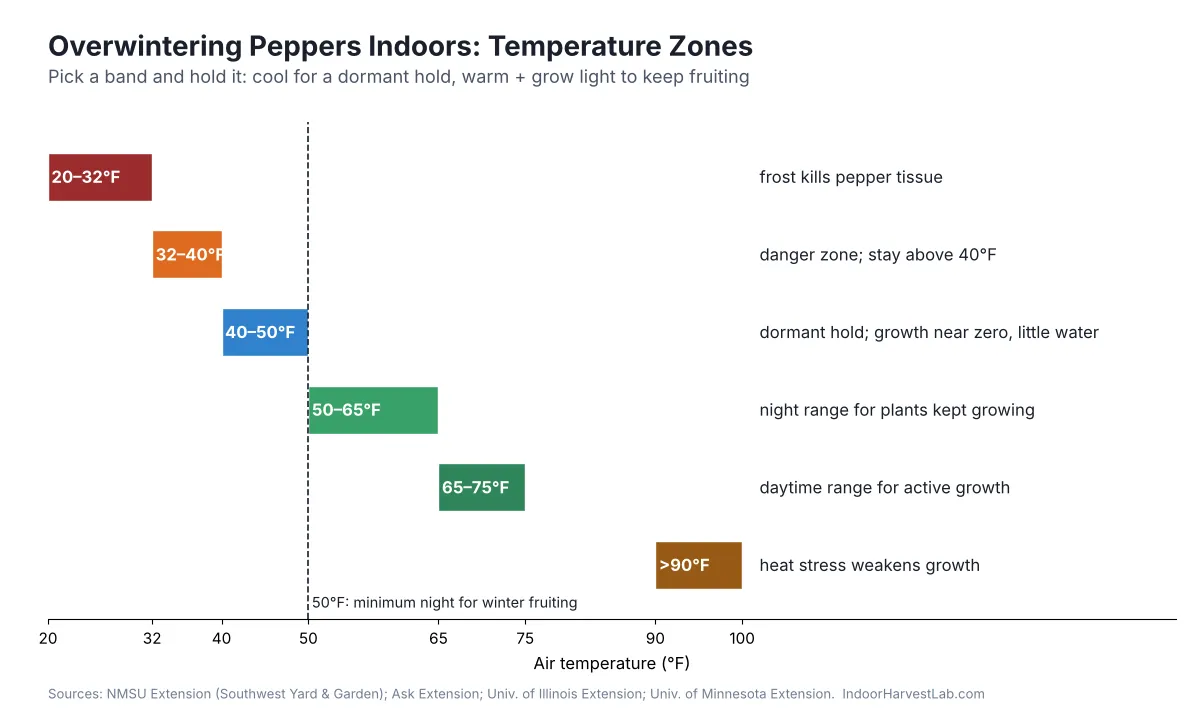
Overwintering peppers indoors works because peppers are tender perennials, not true annuals: bring the plant in before nights fall below about 55°F (13°C), clean it of pests, and either hold it cool and nearly dry as a dormant stump or keep it warm under a grow light so it keeps producing. Keep it above 40°F (4°C) at all times, and above 50°F (10°C) at night if you want winter fruit. In spring the plant restarts from an established root system, which gives you an earlier harvest than a new seedling.
This guide to overwintering peppers indoors gives you the decision between the two methods, the exact temperature, light and watering numbers to hold, a step-by-step pruning and pest-clean routine, and a troubleshooting table for the problems that kill most overwintered pepper plants. Every figure is traced to university extension or peer-reviewed sources listed at the end.
Table of Contents
Can you grow peppers indoors over winter?
Yes, growing peppers indoors over winter is realistic. Chile and bell peppers (Capsicum species) are frost-tender perennials in their native tropical range; frost, not age, is what ends them in a temperate garden. New Mexico State University Extension notes that chile plants “can be grown year-round” indoors and describes containers of chiles kept indoors for several winters in 3- and 5-gallon pots, moved outside each summer.
Cold is the real limit. A 2026 review in Plant Cell Reports describes how cold stress damages membrane integrity, photosynthesis and redox balance in Capsicum annuum, and notes that pepper’s natural cold tolerance is limited. That is why the timing of the move indoors matters more than any other step.
Two practical points shape your expectations for overwintering peppers indoors. First, Ask Extension specialists note that sweet peppers are less hardy than hot peppers, so bells are the harder overwintering project. Second, winter fruit needs artificial light; a windowsill alone usually keeps a pepper alive but not productive.
Which peppers are worth saving?
Almost any healthy pepper can be carried through winter, but overwintering peppers indoors repays the effort most with these plants:
- Hot and ornamental chiles (cayenne, Thai, habanero types, ornamental C. annuum): compact, tolerant of pruning, and the most rewarding to keep.
- Slow, long-season types such as superhots: overwintering saves months of the long seedling stage they need.
- Rare or saved varieties: keeping the plant protects a line that you may not be able to buy as seed again.
- Large bell peppers: possible, but they take more space and are less hardy. Many growers simply restart these from seed in late winter (see our seed germination temperature chart).
Two ways to overwinter pepper plants: dormant vs active
Ask Extension describes two paths: let the plant go dormant (trim it back, keep it cool, limit water) or keep it growing with warm temperatures and artificial light so it can keep flowering. When overwintering peppers indoors, choose one method and set up the room for it; a plant stuck halfway, warm but dark, is the most likely to stretch, drop leaves and attract pests.
| Factor | Dormant hold (“stump” method) | Active growth (keep fruiting) |
|---|---|---|
| Goal | Keep roots and main stems alive until spring | Keep the plant leafy and producing |
| Pruning | Cut back hard to the main stem and first branches | Light shaping only |
| Air temperature | Cool, above 40°F (4°C); about 50°F (10°C) helps | Days about 65–75°F (18–24°C); nights above 50°F (10°C) |
| Light | Bright window is enough | Grow light 14–16 h per day |
| Water | Sparingly; let the mix dry well | When the top of the mix is slightly dry |
| Fertilizer | None until spring | Light, balanced feed about monthly |
| Fruit in winter | No | Yes, with hand pollination |
| Best for | Garages, basements, cool spare rooms | Grow tents, shelves with LED lights |
If you have no grow light, choose the dormant hold. If you already run a light shelf for growing herbs indoors in winter, a pepper or two fits the same setup and can stay in active growth. The same warm, bright shelf also suits growing ginger indoors, another tropical plant that wants steady warmth all winter.
Overwintering peppers indoors: the numbers to hold
These are the targets that decide success when overwintering peppers indoors. Where sources give a range rather than a single number, the range is shown.
| Parameter | Target | Source |
|---|---|---|
| Move indoors | When nights fall consistently below 55°F (13°C) | UMN Extension; Illinois Extension |
| Absolute minimum | Above freezing; preferably above 40°F (4°C) | NMSU Extension |
| Night temperature for winter fruit | Above 50°F (10°C) | Ask Extension |
| Day temperature (active plants) | About 65–75°F (18–24°C); nights about 10°F cooler | Illinois Extension; Ask Extension |
| Heat ceiling | Days above 90°F (32°C), or nights below 60°F or above 70°F, weaken growth | UMN Extension |
| Window light | South-facing window with about 4 hours of direct sun | NMSU Extension |
| Grow-light photoperiod | 14–16 hours per day; lamp at least 6 in (15 cm) above the plant | NMSU Chile Pepper Institute |
| Daily light integral (DLI) | 12–16 mol/m²/day for good-quality pepper plants | Purdue/Clemson (HO-238) |
| Container | 3- to 5-gallon pots used for multi-year plants | NMSU Extension |
| Quarantine | Keep away from other houseplants for 3–4 weeks | Illinois Extension |
Turning DLI into a light setting
DLI is just light intensity multiplied by time. The formula is DLI = PPFD (µmol/m²/s) × hours × 0.0036. To deliver the 12–16 mol/m²/day that Purdue lists for pepper over a 16-hour photoperiod, you need roughly 210–280 µmol/m²/s at canopy height; over 14 hours the figure rises to about 240–320 µmol/m²/s. A dormant plant needs far less, because it is not trying to build new leaves.
If your lamp has a published PPFD map, set the hanging height from it. Our guide to grow light distance explains how PPFD falls as you raise a fixture, and the same logic applies to a pepper canopy.
How to overwinter pepper plants step by step
Start the process of overwintering peppers indoors while the plant is still outdoors and healthy. Moving a cold-shocked, pest-covered plant indoors is how most attempts fail.
Step 1: Time the move
Watch the forecast in early autumn. University of Illinois Extension advises moving tender plants inside when temperatures consistently drop below 55°F, and University of Minnesota Extension uses the same 55°F night threshold to bring young pepper plants indoors. Do not wait for the first frost warning; by then the plant has usually had several chilling nights.
Step 2: Dig up or select the plant
Container plants are easiest. For in-ground plants, dig a wide root ball and pot it into a container with drainage holes, using fresh potting mix rather than garden soil. NMSU Extension’s example of 3- to 5-gallon containers is a sensible size for a plant you plan to keep for several seasons.
Step 3: Clean off pests before it comes inside
Inspect the undersides of leaves and the stem joints for aphids, whiteflies, mealybugs, scale and spider mites, the pests Illinois Extension lists for plants coming in from outdoors. Spray them off with a hose, repeating if needed; if that fails, use insecticidal soap, neem or pyrethrin products according to the label. Flush the pot with water to drive out earwigs and ants.
Step 4: Prune to match your method
For a dormant hold, Ask Extension advises trimming plants back. Remove all fruit and most leafy growth, keeping the main stem and the lowest few branch junctions (the “Y” shape), where new shoots will break in spring. Pruning removes most of the leaves that pests hide on and cuts the water demand of a plant that will get little light.
For active growth, prune lightly: remove damaged leaves, crossing branches and any growth that will not fit under your light.
Step 5: Acclimate, then quarantine
Illinois Extension suggests a week in shade outdoors, then gradually longer periods indoors over several days. Once inside, keep the pepper away from other houseplants and seedlings for 3–4 weeks so any surviving pests do not spread.
Step 6: Set the winter conditions
Put dormant plants in a cool, bright spot that stays above 40°F (4°C). Put active plants under a grow light on a timer at 14–16 hours, with nights above 50°F (10°C). Use the numbers table above as your checklist, and remember the one rule that decides success with overwintering peppers indoors: cool and dim or warm and bright, never warm and dim.
Winter and spring care for overwintered peppers
Watering a dormant pepper
A pruned plant in a cool room uses very little water. Ask Extension advises limiting watering during dormancy. Check the mix with a finger regularly and water only when it is dry well below the surface, then let the pot drain completely and empty the saucer. Constantly wet, cool mix is the main route to root rot and fungus gnats, which thrive when the surface soil stays moist.
Watering an active pepper
The NMSU Chile Pepper Institute advises watering when the top of the soil is slightly dry to the touch. A plant under a strong light in a warm room may need water weekly or more; one near a cool window much less. Let the plant, not the calendar, set the schedule.
Light
NMSU Extension recommends a south-facing window with about 4 hours of sun and notes that plants nearest the window still set some chiles in winter. Short winter days rarely deliver the 12–16 mol/m²/day pepper prefers, so for active growth add an LED and run it 14–16 hours a day. Our guide to how many hours of light plants need covers timers and photoperiod basics.
Fertilizer
Feed only what is growing. Illinois Extension advises stopping fertilizer until spring for overwintered plants, which fits a dormant pepper. An actively growing plant under lights is different: NMSU guidance suggests a balanced or flowering-type fertilizer about monthly, and the Chile Pepper Institute warns: “Don’t apply too much too often.” Use a half-strength dose if you are unsure.
Pollination indoors
Pepper flowers are self-compatible, but overwintering peppers indoors means there is no wind or insects to move pollen. Ask Extension advises hand-pollinating any flowers that open. Gently tap each open flower or brush inside it with a small, soft paintbrush while the plant is flowering.
Troubleshooting overwintered pepper plants
Most problems with overwintering peppers indoors trace back to a mismatch between temperature, light and water. Use this table to diagnose before you change anything.
| Symptom | Likely cause | What to do |
|---|---|---|
| Leaves drop within days of moving inside | Shock from lower light and drier air; often normal | Keep conditions steady; new leaves usually follow if stems stay firm and green |
| Speckled, bleached leaves; fine webbing | Spider mites (UMN Extension) | Wash leaves thoroughly; insecticidal soap or plant oil per label; isolate the plant |
| Sticky leaves, curled new growth | Aphids, which colonize peppers in large numbers | Rinse, wipe with alcohol on a cotton swab, or use insecticidal soap |
| Tiny white insects fly up when touched | Whiteflies | Yellow sticky cards; wash leaves; soap or neem per label |
| Small dark flies around the pot | Fungus gnats from wet mix | Let the surface dry between waterings; sticky traps; Bacillus thuringiensis soil drench |
| Long, pale, stretched shoots | Too little light for the temperature (the same cause as leggy seedlings) | Add a grow light or move the plant somewhere cooler to slow growth |
| Stems turn soft, brown or shriveled from the top | Cold damage or root rot | Cut back to firm green tissue; water less; keep above 40°F (4°C) |
| Flowers drop without setting fruit | No pollination, or nights too cold or warm | Hand-pollinate; keep nights above 50°F (10°C) and days below 90°F (32°C) |
A stem that is green and firm when you scratch it with a fingernail is alive, even with no leaves. Do not throw a bare plant out until spring growth has had a chance to appear.
Waking up overwintered peppers in spring
The spring restart is where overwintering peppers indoors pays back the effort. Several weeks before your outdoor planting date, move dormant plants into warmth and under a grow light, and resume normal watering. Once new shoots appear, start light feeding again. This is also a good time to pot up into fresh mix if roots fill the container.
Do not rush the plant outdoors. University of Minnesota Extension advises transplanting peppers only after night temperatures stay above 50°F. Harden the plant off over about a week, exactly as you would a seedling, because leaves that grew indoors are not adapted to full sun and wind.
| Month (US zones 5–7) | Dormant plant | Active plant |
|---|---|---|
| Late Sep–Oct | Clean, prune hard, bring in below 55°F nights | Clean, prune lightly, bring in under lights |
| Nov–Jan | Cool, bright, little water, no feed | 14–16 h light; hand-pollinate; feed about monthly |
| Feb–Mar | Move to warmth and light; resume watering | Continue; pot up if root-bound |
| Apr–May | Harden off; plant out when nights stay above 50°F | Harden off; plant out when nights stay above 50°F |
From the lab bench
The reason overwintering peppers indoors pays off is physiological, not magic. A pepper’s first months are spent building roots and a branch framework; a plant that survives winter skips that stage, so its spring energy goes straight into new shoots and flowers. That is the logic behind the earlier harvest growers report, and it is strongest for slow, long-season chiles.
The most common error is running a warm room with weak light. Warmth drives respiration and shoot growth, while weak light cannot supply the sugars to pay for it, so the plant stretches and weakens. That imbalance is why the two methods are paired: cool plus low light (dormant) or warm plus strong light (active). Keeping temperature and light matched in this way prevents most problems.
Pest pressure deserves equal respect. A warm, still, dry indoor room favors spider mites and aphids, and they spread to houseplants and seedlings. Treat the clean-up, pruning and 3–4 week quarantine as part of the method, not an optional extra. Finally, keep expectations honest: virus-infected plants (twisted leaves, bumpy fruit, as UMN describes) are not worth carrying through winter, because they stay infected.
Peppers are the start of a full year of indoor fruit. Browse more crops in our Indoor Edibles guides.
FAQ
Can I bring pepper plants indoors for winter?
Yes. Peppers are tender perennials, so a healthy plant brought in before nights drop below about 55°F (13°C) can survive the winter. Clean it of pests, prune it to suit your method, and keep it above 40°F (4°C).
What temperature is too cold for overwintering peppers?
Frost kills pepper tissue, and NMSU Extension advises keeping plants above freezing and preferably above 40°F (4°C). For flowering and fruit in winter, keep nights above 50°F (10°C).
Do overwintered peppers need light?
Yes, but how much depends on the method. A pruned, dormant plant does fine in a bright window. A plant you want to keep fruiting needs a grow light for 14–16 hours a day.
How often should I water a dormant pepper plant?
Rarely. Water only when the mix is dry well below the surface, which in a cool room can mean weeks between waterings. Always let the pot drain and never leave it in a full saucer.
Should I cut back pepper plants before bringing them inside?
For a dormant hold, yes. Trim back to the main stem and first branch junctions and remove all fruit. For active growth, prune only lightly to fit the plant under your light.
Can you overwinter bell peppers indoors?
You can, but sweet peppers are less hardy than hot peppers and take more space. Many growers keep their chiles and restart bells from seed in late winter.
Why is my overwintered pepper dropping leaves?
Some leaf drop after moving indoors is normal and comes from lower light and drier air. If stems stay green and firm, the plant is alive. Check for spider mites and overwatering if the drop continues.
Sources
- University of Minnesota Extension. Growing peppers in home gardens.
- Johnson, K. (2022). Tips for moving houseplants indoors and overwinter care. University of Illinois Extension, Good Growing.
- New Mexico State University Extension (2014). Southwest Yard & Garden, October 18, 2014: overwintering chile plants indoors.
- Chile Pepper Institute, New Mexico State University. Growing chile pepper plants indoors.
- Ask Extension. Overwintering pepper plants indoors (FAQ 855650).
- Torres, A.P., Currey, C.J., Lopez, R.G. and Faust, J.E. (2010). Measuring Daily Light Integral (HO-238-B-W). Purdue University Extension.
- University of Minnesota Extension. Managing insects on indoor plants.
- Ullah, I. et al. (2026). Engineering cold stress resilience in Capsicum annuum through functional genomics and precision breeding. Plant Cell Reports 45(10). doi:10.1007/s00299-026-03965-9