
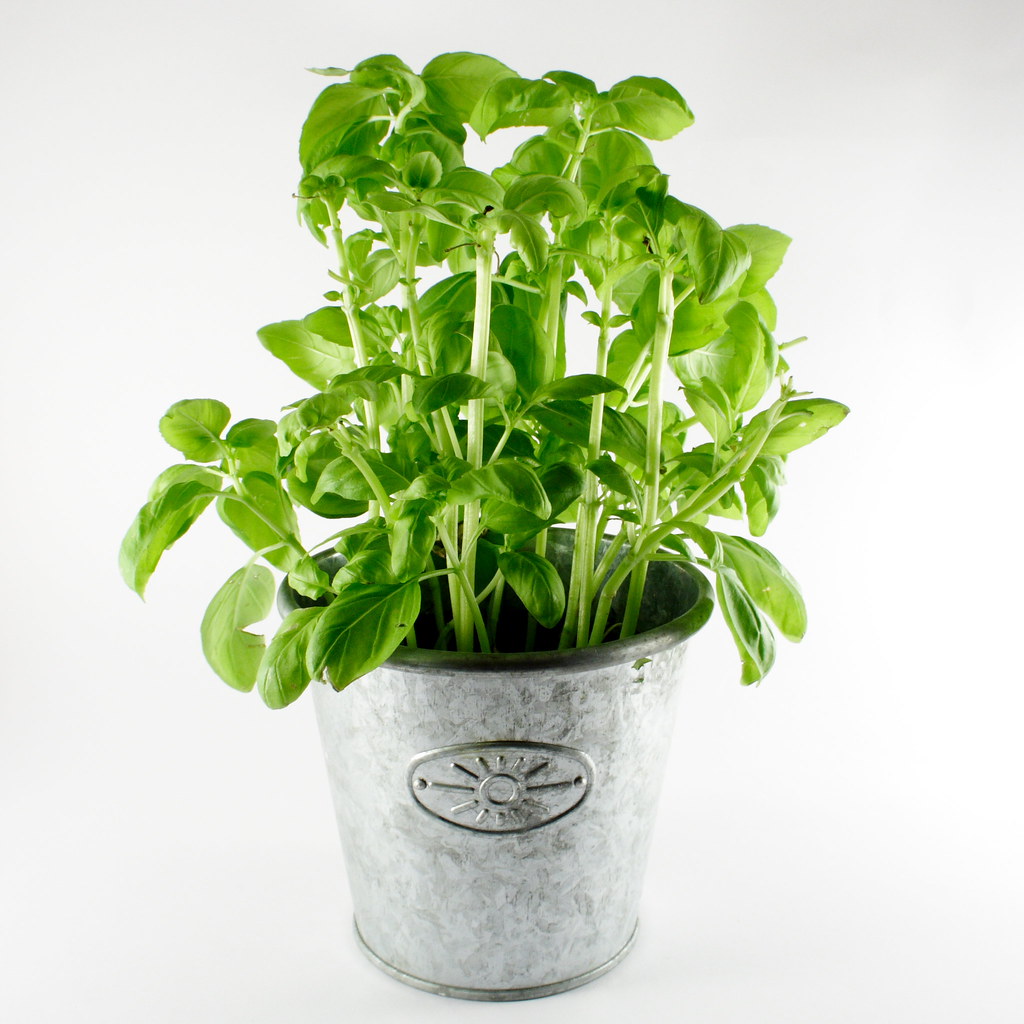
Short answer: to grow basil indoors year-round, give it the brightest light you have (a south window for 6–8 hours, or LED grow lights for about 14–16 hours a day), keep it warm at 65–70°F by day and never below 50°F, use a draining pot of moist potting mix, feed lightly, and pinch the stem tips every week. Basil indoors fails mostly from too little light and cold windowsills, not from watering.
Sweet basil is a warm-season annual, so an indoor pot is really a small, controlled summer. This guide turns extension advice and a vertical-farming light study into settings you can copy, whether you grow basil indoors on a sill, under a shop light or in a jar of water.
Table of Contents
What basil indoors needs at a glance
| Factor | Target | Source |
|---|---|---|
| Window light | 6–8 hours of bright light; herbs in general want 6 hours of direct sun | UMN Extension; Penn State Extension |
| Grow light (fluorescent) | 6–12 in below two 40-watt cool white tubes, 14–16 hours a day | Penn State Extension |
| Daily light integral | 12.9 mol/m²/day suggested for indoor production (about 224 µmol/m²/s for 16 hours) | Dou et al. 2018 |
| Temperature | 65–70°F day, 55–60°F night; basil will not survive below 50°F | Penn State Extension |
| Potting mix pH | 6.0–7.5 | UMN Extension |
| Water | Never let the mix dry out completely; pot must drain | Penn State Extension |
| Fertilizer | Low dose of water-soluble fertilizer every 2 weeks (Penn State) or half strength every 4–6 weeks (UMN, indoor plants) | Penn State; UMN |
| Hydroponic EC / pH | EC 1.0–1.6 mS/cm, pH 5.5–6.0 | Oklahoma State HLA-6722 |
Light: the main limit for basil indoors
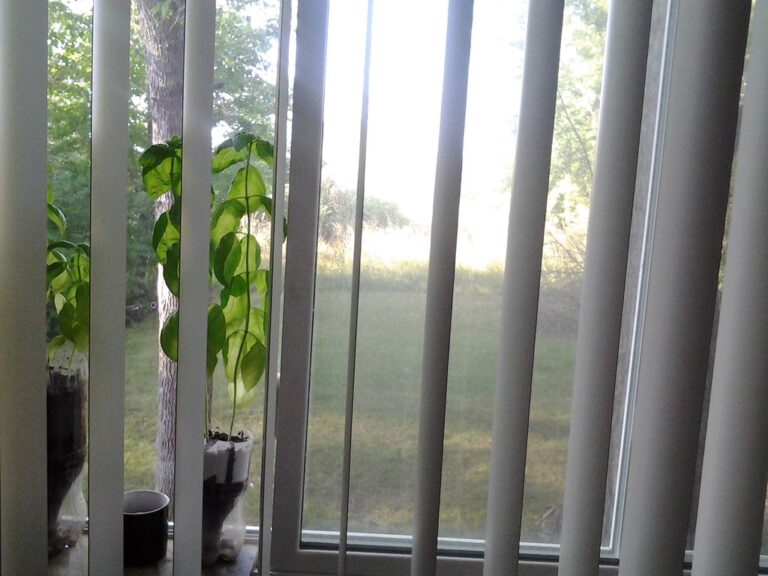
University of Minnesota Extension says basil needs at least six to eight hours of bright light per day. Penn State Extension adds that herbs in poor light “become thin and spindly, produce smaller leaves, and have a reduced aroma”. That is exactly what most windowsill basil indoors looks like by midwinter: tall, pale stems leaning at the glass.
Window or grow light for basil indoors?
| Setup | Works well when | Watch for |
|---|---|---|
| South window (north of the equator) | Spring to autumn, unobstructed sky, plant close to the glass | Cold glass at night in winter; weak winter sun; turn the pot for even growth |
| East or west window | Summer, as a stopgap | Leggy stems, small leaves, little aroma |
| Fluorescent or LED shop light | Any season; timer set to 14–16 hours | Lamp too far away; lights set for too few hours |
| Countertop hydroponic unit | Small harvests, compact varieties | Plants outgrowing the light height |
For grow lights, Penn State’s rule is to keep herbs 6–12 inches below two 40-watt cool white fluorescent tubes for 14–16 hours. UMN suggests running lights 10–12 hours daily for basil in winter. Both work as a starting point; if stems stretch, lower the lamp or add hours. Our guides to grow light distance and hours of light explain how distance and time trade off.
How much light basil indoors needs, in numbers
If your LED lists PPFD (photosynthetic photon flux density), you can aim higher. Dou, Niu, Gu and Masabni (2018, HortScience) grew sweet basil indoors under five daily light integrals (DLI) from 9.3 to 17.8 mol/m²/day, all with a 16-hour photoperiod at about 24.5°C day and 21.3°C night. Shoot fresh weight was 54% higher at 12.9, and about 78% higher at both 16.5 and 17.8, than at 9.3. The authors suggested 12.9 mol/m²/day as the best balance of yield, quality and energy cost.
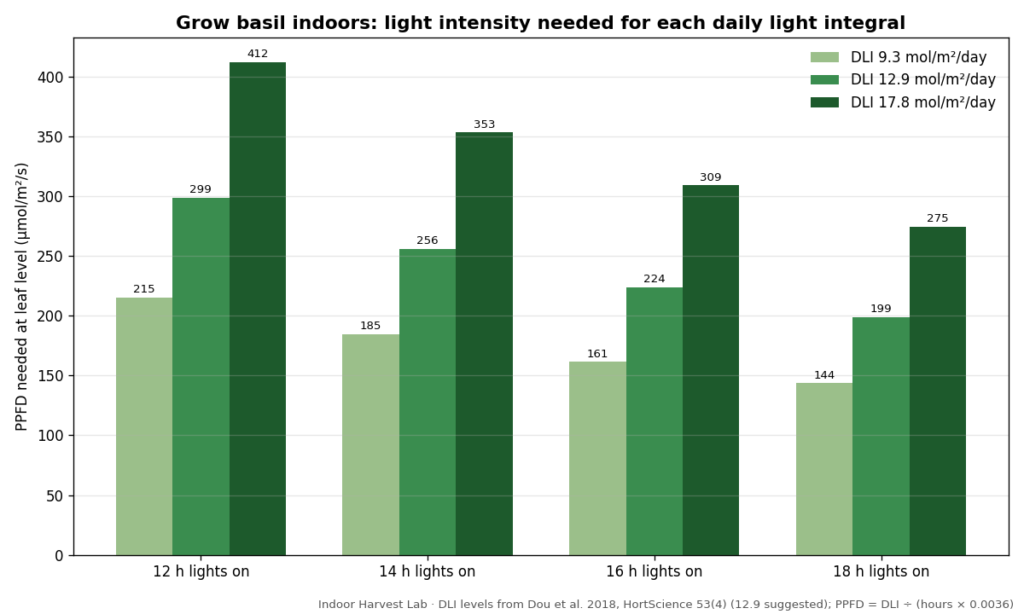
The chart converts those DLI targets into the PPFD you need at leaf level: PPFD = DLI ÷ (hours × 0.0036). With 16 hours of light, 12.9 mol/m²/day needs about 224 µmol/m²/s; with only 12 hours, you need about 299. Longer days let a weaker, cheaper light reach the same total, which is why most people who grow basil indoors under LEDs run 14–16 hours.
Temperature and humidity for basil indoors
Basil indoors is cold-sensitive. Penn State recommends at least 65–70°F during the day and 55–60°F at night for indoor herbs, and notes that basil cannot survive below 50°F and should not be kept on a winter windowsill. The Rutgers basil postharvest fact sheet (FS1283) describes chilling damage as blackening of leaves, stem discoloration and loss of aroma, with injury below about 50°F.
On a cold night the air next to single-pane glass can fall well below the room reading. Pull basil indoors back from the window after dark in winter, or grow it under lights on a shelf away from the glass.
For humidity, Penn State warns that very dry air dries leaves, while too much humidity invites problems; grouping pots raises humidity and a small fan or an open window lowers it. Moving air also keeps leaves dry, which matters for downy mildew (below).
How to grow basil indoors: step by step
- Choose a pot with drainage holes. Penn State stresses containers with drainage and a mix that drains well. Larger pots dry out less often than small ones.
- Start from seed or split a store pot. UMN says to cover basil seed with one-fourth inch of soil and expect germination in five to seven days. Basil is a warm-germinating herb, so a mix at 65–75°F (see our seed germination temperature chart) speeds things up. A supermarket pot is usually many seedlings in one small container; tease it apart into a few small clumps and pot each separately.
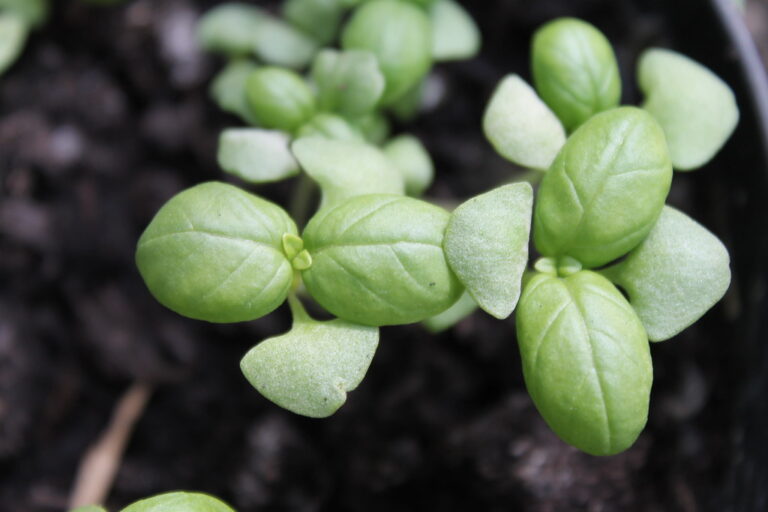
- Thin seedlings. UMN recommends thinning once seedlings have two to three pairs of true leaves. Keep the strongest one or two per pot.
- Set the light. South window as close to the glass as night temperatures allow, or lamps on a timer for 14–16 hours.
- Water evenly. Water when the surface starts to dry and let excess drain away. Penn State says never to allow the mix to dry out completely, but a pot standing in water leads to root rot.
- Feed lightly. Use a water-soluble fertilizer at a low dose every 2 weeks (Penn State) or half strength every 4–6 weeks (UMN). Penn State notes that feeding more often can reduce aroma and taste.
- Pinch every week. Start once the plant has leaves to spare (see the next section).
Pinching and harvesting basil indoors
Colorado State University Extension’s PlantTalk recommends pinching back the branches, removing half of each new stem of growth every week, and harvesting as soon as the plant has leaves to spare. Pinching also prevents flowers, which reduce leaf yield.
- Cut or pinch just above a pair of leaves. Two new side shoots grow from that node, so the plant gets bushier each time.
- Take from the top, not by stripping big lower leaves; the lower leaves feed the plant.
- Remove flower spikes as soon as you see them.
- Harvest shortly before you use the leaves, and do not refrigerate them. Rutgers gives 55°F as the optimal storage temperature for fresh basil, so a cool counter beats the fridge.
Basil indoors in water or hydroponics
Basil is one of the easiest crops in small hydroponic systems. Oklahoma State University’s HLA-6722 fact sheet lists basil at an EC of 1.0–1.6 mS/cm and pH 5.5–6.0. A passive jar or tote using the Kratky method works for a few plants; for more, an aerated deep water culture bin keeps roots healthier. Check the full hydroponic EC chart if you grow other herbs in the same reservoir.
Cuttings of basil indoors also root in plain water. That is fine for starting new plants, but plain water has no nutrients, so pot the rooted cuttings or move them into a nutrient solution once roots appear.
Problems with basil indoors
| Symptom | Likely cause | Fix |
|---|---|---|
| Tall, thin stems, small leaves, weak smell | Too little light | Move to the brightest window or add a grow light for 14–16 h |
| Black or dark patches after a cold night | Chilling below about 50°F | Keep away from winter glass and drafts |
| Yellowing between veins, gray-purple fuzz under leaves | Downy mildew | Remove affected plants; dry leaves, more airflow; resistant varieties next time |
| Wilting with wet mix, brown roots | Waterlogged pot, poor drainage | Empty saucers; repot into a draining mix |
| Flower spikes, fewer new leaves | No pinching | Pinch weekly and remove flowers |
| Seedlings collapse at soil level | Damping-off | See our damping-off guide |
Downy mildew
According to Cornell’s basil downy mildew fact sheet, the disease causes yellowing between leaf veins with purplish gray spores on the undersides, favoured by high humidity and wet leaves. It is also seed-borne. Cornell lists resistant sweet basils including Devotion, Obsession, Passion, Thunderstruck, the Prospera series, Pesto Besto and Amazel, while noting that a newer pathogen race overcomes some resistance. Indoors, the best defence is dry leaves: water the mix, not the foliage, and keep air moving.
What not to do
- Do not leave basil indoors on a cold winter windowsill overnight.
- Do not keep a crowded supermarket pot of basil indoors as it is; the seedlings compete for light and water.
- Do not run grow lights for only a few hours; basil needs a long, bright day.
- Do not let the plant flower if you want leaves.
- Do not overfeed; Penn State links frequent fertilizing to weaker aroma and taste.
- Do not store cut basil in the fridge.
Where this applies
These settings for basil indoors hold in any home, because indoors you control light and temperature. What changes with location is the window. At high latitudes, winter sun is low and short, so a window alone rarely keeps basil indoors productive from late autumn to late winter; plan on a grow light. In the tropics or a warm apartment, light is easier but heat and humidity rise, so airflow matters more. Note that “south window” is for the northern hemisphere; south of the equator, use a north-facing window.
More indoor herb guides are in our indoor herbs section.
FAQ
Can you keep basil indoors all year?
Yes, if it gets enough light and warmth. In winter that usually means grow lights for 14–16 hours and a room that stays above 55–60°F at night. Plants eventually become woody and flower, so sowing a new pot every few months keeps harvests steady.
How often should I water basil indoors?
There is no fixed schedule. Water when the surface of the mix begins to dry, before the pot dries out completely, and empty the saucer. Warm, bright rooms and small pots need water more often.
Why is my indoor basil dying?
The usual causes are low light (leggy, pale growth), cold (black patches after a chilly night), overwatering (wilting in wet mix) and downy mildew (yellow between veins with gray-purple fuzz beneath). Use the problem table above to match the symptom.
How long do basil seeds take to sprout indoors?
UMN says five to seven days when sown one-fourth inch deep in warm mix.
Related guides: how to grow cilantro indoors without bolting · hours of light · all indoor herb guides · growing mint indoors
Related guides: How to Grow Lettuce Indoors Under Lights (Light, Temperature and Harvest)
Sources
- Schuh, M. & Mah Kooyman, S. Growing basil in home gardens. University of Minnesota Extension.
- Sánchez, E.S. & Kinley, E. (2024). Growing Herbs Indoors. Penn State Extension.
- Dou, H., Niu, G., Gu, M. & Masabni, J.G. (2018). Responses of sweet basil to different daily light integrals in photosynthesis, morphology, yield, and nutritional quality. HortScience 53(4): 496–503.
- Colorado State University Extension. Basil. PlantTalk Colorado.
- McGrath, M.T. (2023). Basil Downy Mildew. Cornell Vegetables.
- Rutgers Cooperative Extension (2018). FS1283: Basil Postharvest Handling and Food Safety.
- Dunn, B. & Singh, H. Electrical Conductivity and pH Guide for Hydroponics (HLA-6722). Oklahoma State University Extension.
Featured image: “Basil Plant” by futureshape, CC BY 2.0.