
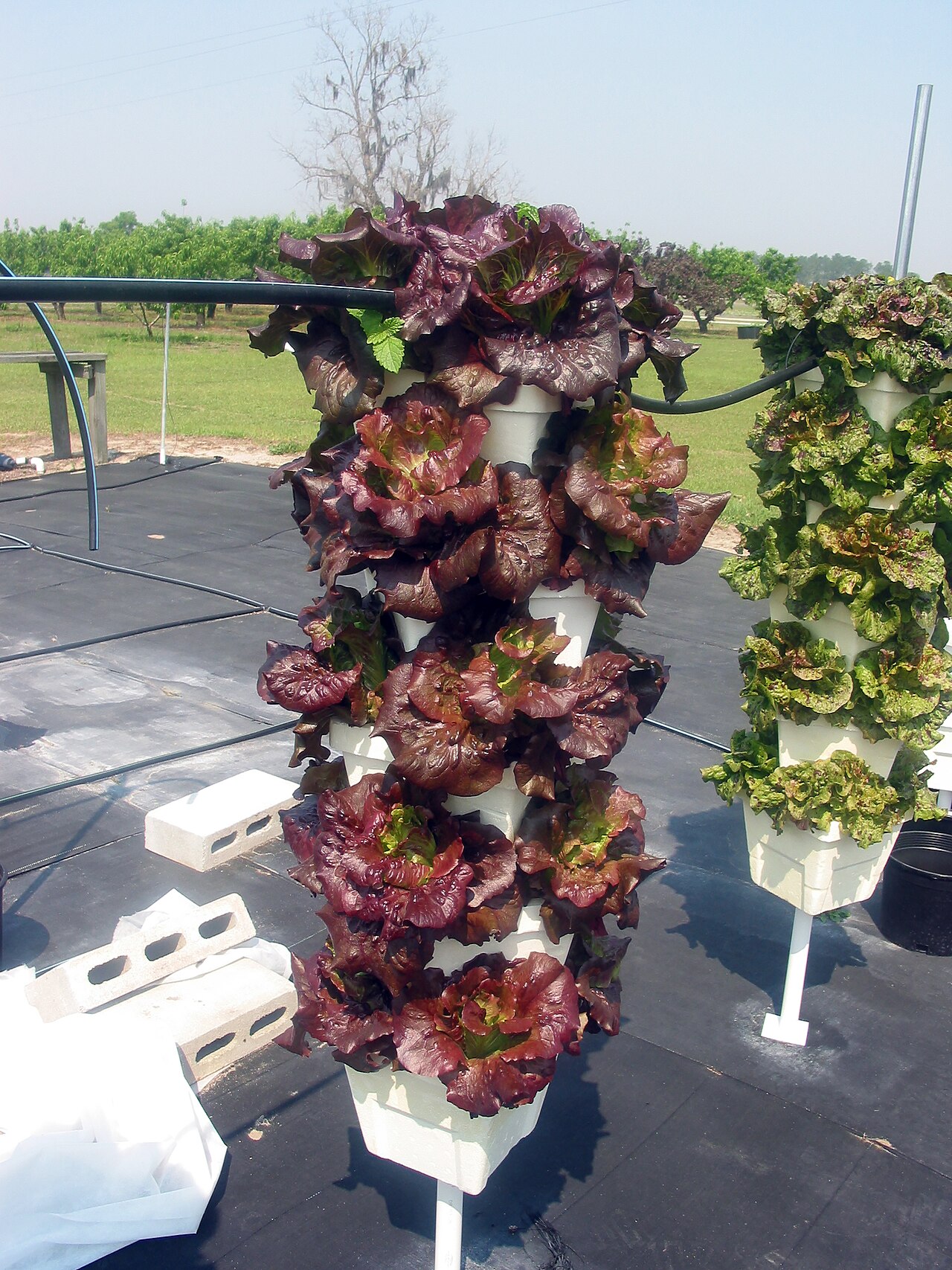
Short answer: A hydroponic tower grows leafy greens, herbs and strawberries well: lettuce, spinach, kale, Swiss chard, basil, parsley and cilantro are the safest picks. Large or vining crops such as full-size tomatoes, cucumbers and squash, and root crops such as carrots and potatoes, do poorly in a hydroponic tower garden because the pockets are small and the plants shade or outgrow the column. Expect the top plants to grow faster than the bottom ones unless your light reaches the whole tower evenly.
Towers are popular because they fit many plants into a small floor space. That strength comes with trade-offs that marketing pages rarely mention: uneven light down the column, one shared nutrient solution for every crop, and roots that depend on the pump running. This guide uses university trials and extension fact sheets to show what a hydroponic tower is good at, where it struggles, and how to plan one that stays productive.
Table of Contents
How a hydroponic tower garden works
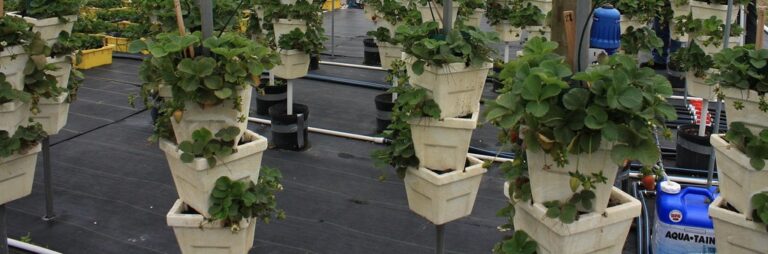
A hydroponic tower is a vertical column with planting pockets on its sides. A pump in the reservoir at the base lifts nutrient solution to the top, and it trickles down past the roots before draining back to the tank. The UF/IFAS Extension Lee County overview of hydroponic methods describes it as plants in stacked tiers with water “circulated from the base to the top and allowed to trickle down through each level.”
Oklahoma State University fact sheet HLA-6724 gives a useful reference design for a home-built hydroponic tower:
- A 5 × 5-inch vinyl fence post, with the finished tower 5–6 feet tall so every pocket is within reach.
- 28 plants per tower in 3-inch net pots; two towers fit in a 5 × 5-foot space (56 plants).
- A 400-gallon-per-hour submersible pump in a 45-gallon reservoir.
- A timer: lettuce ran continuously, while strawberries used 7–10 one-hour cycles per day.
Commercial towers work the same way at a smaller scale, often with an aeroponic spray or a drip ring at the top. Either way, the roots hang in a moist, airy space rather than sitting in a tank of water, which is the key difference from a deep water culture bucket or a passive Kratky jar.
What grows well in a hydroponic tower (and what doesn’t)
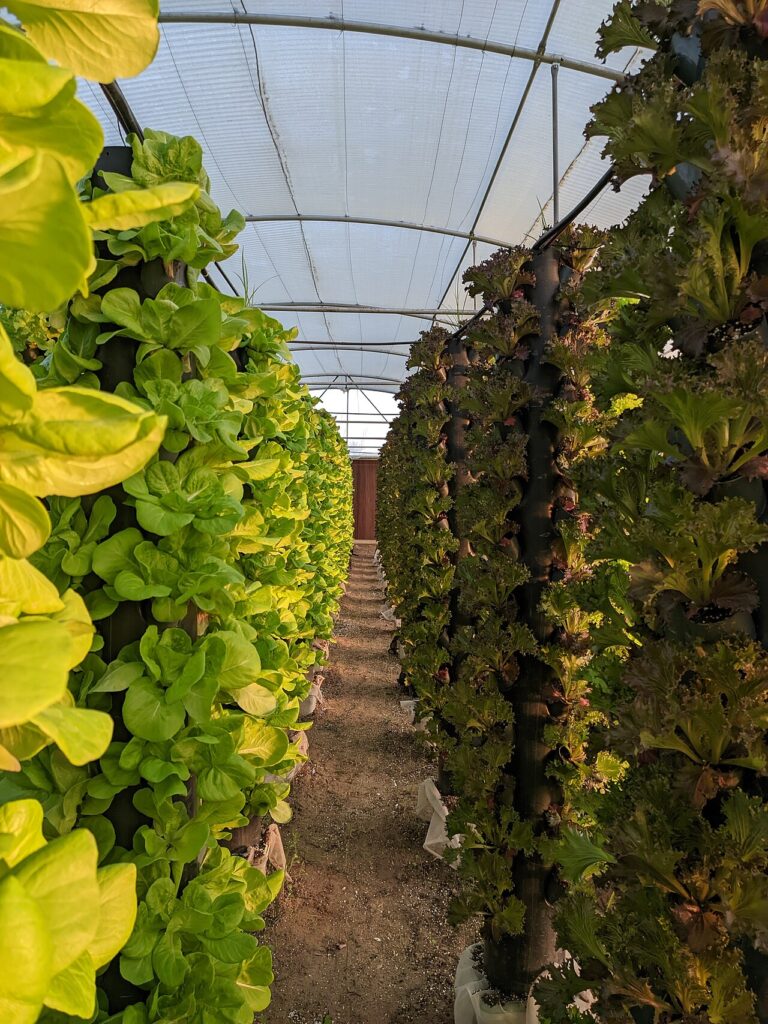
The best hydroponic tower crops are compact, fast and harvested as leaves. Oklahoma State lists lettuce, Swiss chard, herbs, spinach, kale, broccoli, strawberries and petunias for its tower. The UF/IFAS St. Lucie County extension article on vertical towers names lettuce, spinach, kale, basil, cilantro, strawberries and cherry tomatoes as the best options. The Lee County article, on the other hand, says large plants like tomatoes cannot be grown effectively in towers. The table combines both views.
| Crop | Fit for a hydroponic tower | Why |
|---|---|---|
| Loose-leaf and butterhead lettuce | Excellent | Small, fast, cut-and-come-again; the crop most towers are designed around |
| Kale, Swiss chard, spinach, Asian greens | Very good | Leafy, compact; harvest outer leaves to keep plants from shading the pocket below |
| Basil, parsley, cilantro, mint, chives | Very good | Frequent pinching keeps them small; basil prefers a lower EC than spinach (see chart) |
| Strawberries | Good | Listed by both OSU and UF/IFAS; need more light than greens and pollination indoors |
| Broccoli, cauliflower | Possible, but slow | Large leaves shade neighbors and one head per pocket is a low return on space |
| Cherry tomatoes, dwarf peppers | Marginal | Possible with compact varieties and outside support; heavy, tall and hungry for light and nutrients |
| Full-size tomatoes, cucumbers, squash, melons | Poor | Too big and heavy for small pockets; vines smother the tower |
| Carrots, potatoes, onions for bulbs, beets | Poor | Need a deep, supportive root zone that a tower does not provide |
A simple rule: if you harvest it as leaves or small fruit within a few weeks, it probably suits a hydroponic tower garden. If it needs staking, grows a big root or bulb, or takes months to fruit, grow it in a bucket, bed or ebb and flow tray instead.
What research says about hydroponic tower yields
A hydroponic tower really does produce more per square foot of floor, but not every pocket performs the same.
- More crop per floor area. A UK trial by Touliatos, Dodd and McAinsh (2016, Food and Energy Security) grew ‘Little Gem’ lettuce in vertical columns and in a horizontal system with the same root volume and plant density. The vertical system produced more lettuce per unit of floor area.
- Less light and less growth lower down. In the same trial, light intensity (PPFD) and shoot fresh weight “decreased significantly” from the top of the columns to the base. The authors suggested better artificial lighting could raise yields further.
- The same pattern in home-style towers. At Tennessee State University, Nandwani and colleagues (2019) grew four lettuce types in 158 cm aeroponic towers and recorded a significant decline in fresh weight from top to bottom. Plants given the lower of two nutrient doses (200 mL versus 400 mL of solution) grew far better; ‘Red Salad Bowl’ averaged 62.55 g versus 9.7 g, which the authors linked to osmotic stress from excess nutrients.
- Realistic lettuce yields. In UF/IFAS trials of stacked-pot towers (Hochmuth and colleagues, 2014), towers holding 20 lettuce plants yielded roughly 7.6 to 10.8 pounds per tower per crop across coconut fiber, pine bark and perlite media.
The takeaway for a hydroponic tower garden at home: stronger is not always better with nutrients, and the bottom third of the tower is where yields fall first.
One tower, one reservoir: matching crops
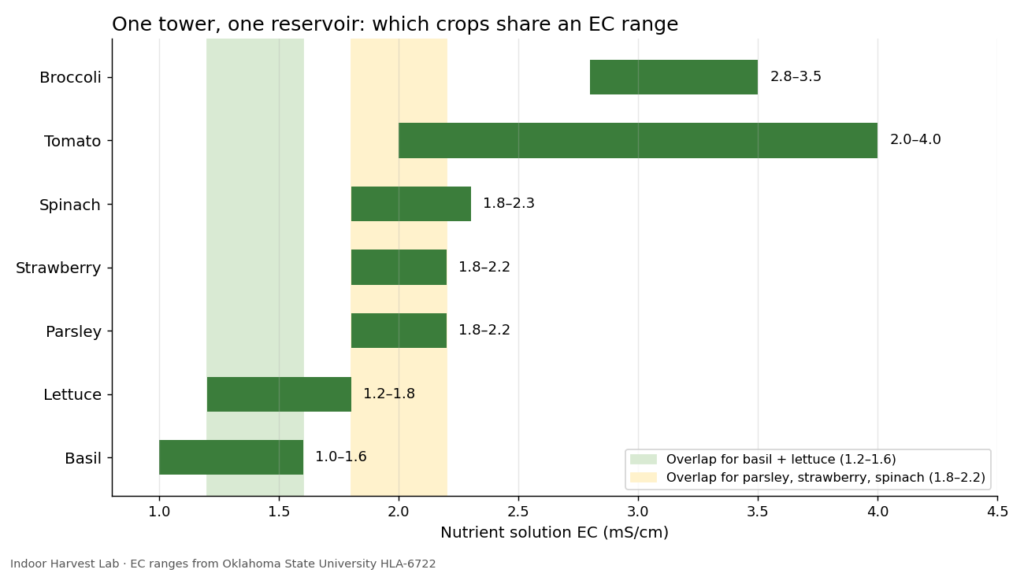
Every pocket in a hydroponic tower drinks from the same tank, so every crop gets the same EC and pH. The Lee County article lists this as a drawback: towers restrict plant variety because all tiers share one environment. Pick crops whose needs overlap.
Oklahoma State fact sheet HLA-6722 gives these targets:
| Crop | EC (mS/cm) | pH |
|---|---|---|
| Basil | 1.0–1.6 | 5.5–6.0 |
| Lettuce | 1.2–1.8 | 6.0–7.0 |
| Parsley | 1.8–2.2 | not listed |
| Spinach | 1.8–2.3 | 6.0–7.0 |
| Strawberry | 1.8–2.2 | 6.0 |
| Tomato | 2.0–4.0 | 6.0–6.5 |
| Broccoli | 2.8–3.5 | not listed |
Lettuce and basil share a comfortable band around EC 1.2–1.6. Spinach, parsley and strawberries sit together around 1.8–2.2. Mixing lettuce with tomatoes or broccoli forces a compromise that suits neither. If you want both groups, run two towers or grow the heavy feeders elsewhere. Our hydroponic EC chart lists more crops, and the ppm to EC guide helps if your meter reads ppm.
Light: the real limit of a hydroponic tower garden
A tower is round, so light from one side leaves the back in shade, and light from above reaches the top pockets most. Both university trials above found lower yields near the base of each hydroponic tower. Indoors, a hydroponic tower needs light from all sides: vertical LED bars or tubes arranged around the column work far better than a single panel overhead.
How much light? The Cornell CEA Hydroponic Lettuce Handbook targets a daily light integral of 17 mol/m²/day for lettuce, and warns that for some cultivars about 15 mol/m²/day is the maximum before tipburn appears unless air circulation is good. Fruiting crops such as strawberries and tomatoes generally need more. On a sunny patio, turn the tower a quarter turn every few days so each side gets its share.
How to plan and plant a hydroponic tower
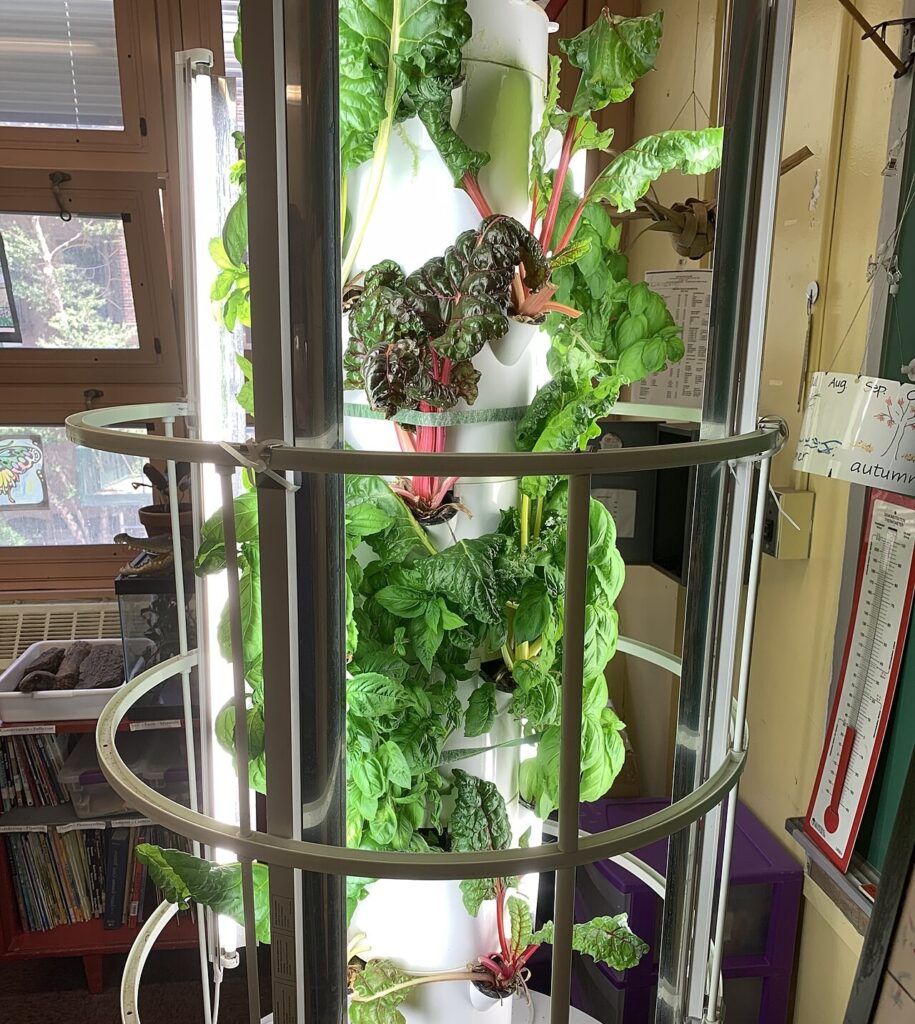
- Choose one crop group. Greens and basil together, or strawberries with spinach and parsley. Avoid mixing low- and high-EC crops.
- Start seedlings first. Sow in rock wool or plugs and move them to the tower when roots show through the bottom of the cube.
- Put light-hungry crops at the top. Strawberries and basil go high; lettuce and other greens, which tolerate lower light, go in the lower pockets. This follows the top-to-bottom light gradient measured in the trials above.
- Set the pump timer by crop. Oklahoma State ran lettuce continuously and strawberries 7–10 one-hour cycles a day. Commercial towers usually specify their own cycle; follow it.
- Mix nutrients at the low end of the range. Start near the bottom of the shared EC band and raise it only if growth is pale and slow; the Tennessee State results show that too much can hurt.
- Check pH and EC twice a week. Keep pH in range; if it drifts low, see how to raise pH in hydroponics, and if it climbs, how to lower it.
- Harvest outer leaves weekly. Regular cutting keeps plants compact and stops upper plants shading lower ones.
- Clean between crops. Oklahoma State recommends cleaning the tower with bleach after each round of crop, then rinsing well.
What not to do with a hydroponic tower
- Don’t let the pump stop for long. Tower roots hang in air with only a film of water, so there is no standing water to buffer a failed pump or a power cut, unlike DWC. Check the pump daily and consider a timer with a battery backup.
- Don’t splash the leaves. Oklahoma State notes that water splashing on leaves can cause fungal disease and even kill plants; it used an aluminum splash shield.
- Don’t overfeed. A higher EC is not a shortcut to bigger plants; the Tennessee State towers did far better on the lower dose.
- Don’t grow vines in the pockets. Full-size tomatoes and cucumbers become heavy, shade the whole column and may tip a lightweight tower.
- Don’t ignore leaks. Oklahoma State lists avoiding water leakage as a key maintenance point; check joints and the drain return.
- Don’t rely on one overhead light indoors. The bottom pockets will stretch and yield little.
Where this applies
Indoors, light is the main limit, and a hydroponic tower garden needs lamps around it. Outdoors in warm climates, heat is the bigger issue: the thin film of water around tower roots warms quickly, and a sun-baked reservoir holds less oxygen, so shade the tank and site the tower where it gets morning sun and afternoon shade in hot summers. In windy spots, towers can dry or tip, so anchor the base. In cold regions an outdoor tower is a spring-to-fall system, while an indoor tower under lights can run year-round.
FAQ
Can you grow tomatoes in a hydroponic tower?
Compact cherry tomatoes can be grown with outside support, and UF/IFAS St. Lucie lists them as an option, but another UF/IFAS article says large tomatoes cannot be grown effectively in towers. Tomatoes also want a higher EC (2.0–4.0) than lettuce or basil, so they fit poorly in a shared tower. A bucket system suits them better.
How many plants fit in a hydroponic tower?
The Oklahoma State design holds 28 plants per 5–6-foot tower, and the UF/IFAS stacked-pot towers held 20 lettuce plants. Whatever the pocket count, give large plants such as kale or strawberries every other pocket.
Are hydroponic towers worth it?
They are worth it if you mainly want salad greens, herbs and strawberries in a small footprint and can provide light to all sides. The Lee County article notes a higher upfront cost than horizontal systems, so if you want tomatoes or peppers, a horizontal or bucket system is usually better value.
Why are the plants at the bottom of my tower smaller?
Mostly light. In a hydroponic tower, the lower pockets get the least of it; research on vertical columns found both light and plant weight decreased from top to base. Add side lighting, rotate the tower and put shade-tolerant greens low.
Sources
- Singh, H. and Dunn, B. Building a Vertical Hydroponic Tower (HLA-6724). Oklahoma State University Extension.
- Dunn, B. and Singh, H. Electrical Conductivity and pH Guide for Hydroponics (HLA-6722). Oklahoma State University Extension.
- Touliatos, D., Dodd, I. C. and McAinsh, M. (2016). Vertical farming increases lettuce yield per unit area compared to conventional horizontal hydroponics. Food and Energy Security 5(3): 184–191.
- Nandwani, D. et al. (2019). Evaluation of nutrient solution on the growth and yield performance of organic lettuce grown in vertical towers. Journal of Agronomy & Agricultural Science. Tennessee State University.
- Hochmuth, R. et al. (2014). Lettuce in Soilless Media in Vertical Hydroponics. UF/IFAS Suwannee Valley Agricultural Extension Center.
- Rezazadeh, A. (2025). Vertical Hydroponic Towers: A Space-Saving Revolution in Sustainable Farming. UF/IFAS Extension St. Lucie County.
- Outerbridge, D. (2025). Hydroponic Production Methods, Part 2. UF/IFAS Extension Lee County.
- Hydroponic Lettuce Handbook. Cornell University Controlled Environment Agriculture.
More in Hydroponic systems.
Featured image: “Vertical Hydroponics Lettuce” by Battledp, CC BY-SA 4.0.