
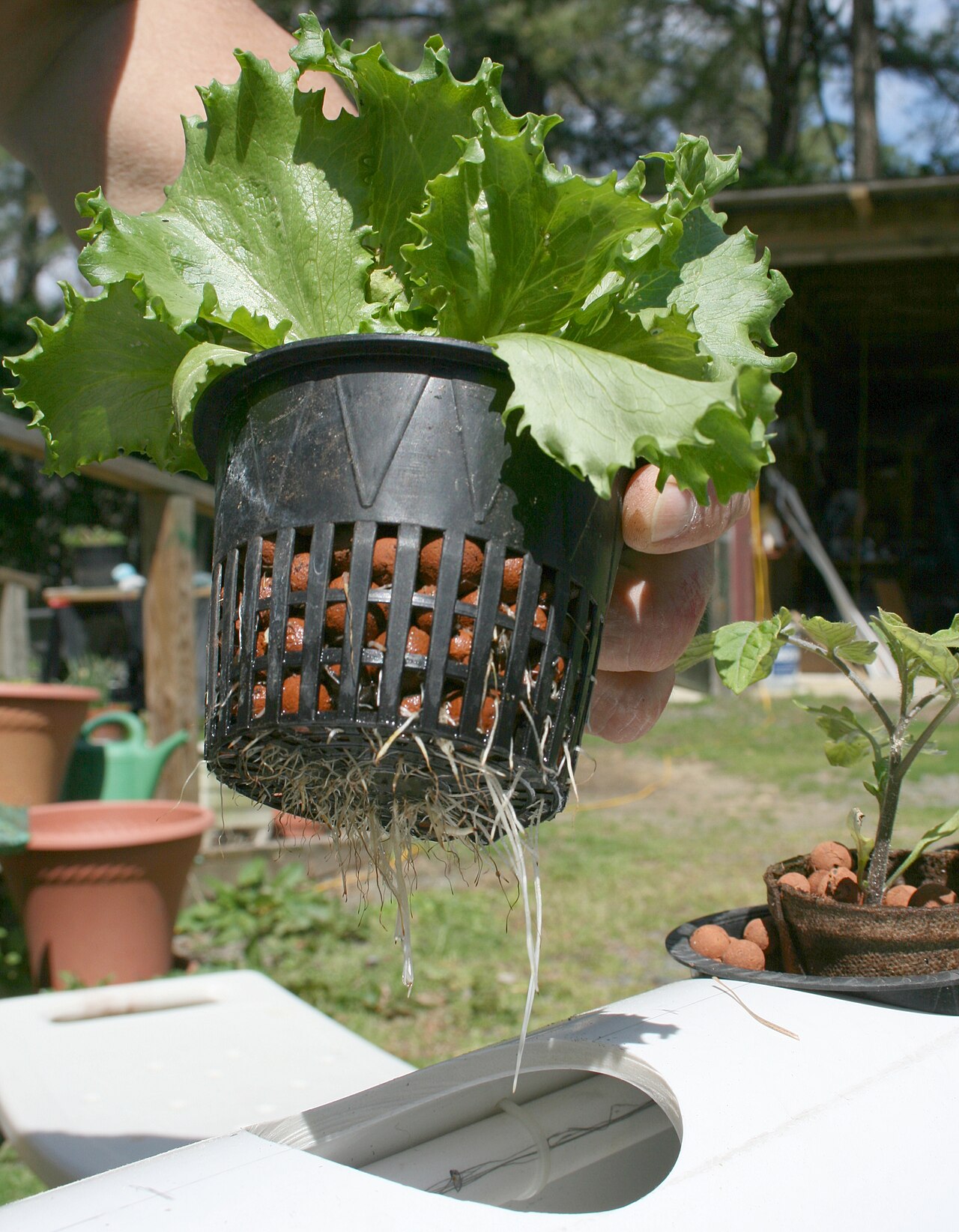
You lift the net pot expecting the usual bright white tangle, and your stomach drops. The roots are brown, coated in slime, and the reservoir smells sour. Sound familiar? Almost every hydroponic grower meets this moment sooner or later, and the plants that survive belong to the growers who act within a day or two.
Short answer: Hydroponic root rot is almost always Pythium, a water mold that thrives in warm, low-oxygen nutrient solution. You identify it by roots that turn brown or gray, feel soft and slimy, and smell sour, while healthy roots stay white to cream and firm.
To rescue a plant: trim off all rotted roots, cool the solution to 68 to 72 °F (20 to 22 °C), oxygenate it hard (above 6 ppm dissolved oxygen, ideally saturated at 8 to 9 ppm), clean and sanitize the whole system, and refill with fresh solution. To prevent hydroponic root rot, hold the root zone at 68 to 75 °F (20 to 24 °C), keep oxygen high, and never let one infected plant share a reservoir with healthy ones.
Every deep water culture and Kratky grower meets hydroponic root rot eventually. The good news: caught early, most plants recover, and the prevention numbers are simple. This guide gives you the diagnosis table, the rescue steps, and the exact temperatures and oxygen levels that Cornell, the University of Georgia and Penn State recommend.
Table of Contents
What hydroponic root rot is (and what it is not)
Hydroponic root rot is a disease, not a deficiency. The usual cause is Pythium, a fungus-like organism called a water mold. Several Pythium species attack hydroponic crops; P. aphanidermatum and P. dissotocum are the two most reported, and both produce zoospores, microscopic spores that swim through the nutrient solution from root to root and plant to plant (Cornell University, via Urban Ag News). That swimming stage is why one slimy plant can take down a whole shared reservoir in days.
As Pythium colonizes a root, the outer tissue browns, dies and sloughs off, leaving the inner strand exposed in what pathologists call a rat tail. Above ground, plants stall, yellow in ways that mimic nutrient deficiency, and wilt at midday before wilting becomes permanent. If your leaves look deficient but the roots look rotten, treat the roots, not the EC. (True deficiency patterns are covered in our hydroponic EC chart and cal-mag guide.)
What hydroponic root rot is not: brown staining from organic nutrients, green algae coating, or the cream-colored fuzz of healthy root hairs. The triage table below separates them.
The three conditions that cause it
Pythium spores are nearly everywhere; disease happens when conditions let them win. Three conditions do almost all the damage, and almost every case of hydroponic root rot in a home system traces back to one of them.
Warm water
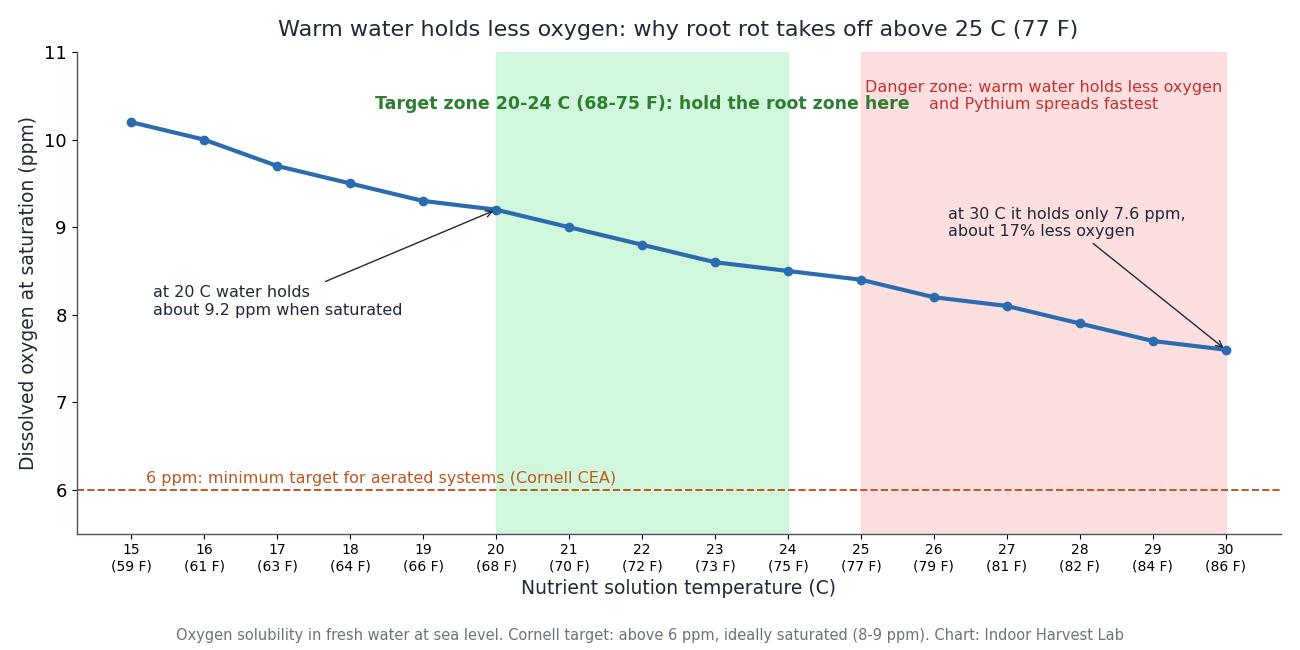
Hold the root zone at 68 to 75 °F (20 to 24 °C): that is the target range from Cornell’s hydroponics program, which also found that chilling pond water to about 68 °F reduced, though did not eliminate, P. aphanidermatum in baby-leaf spinach (Urban Ag News). The University of Georgia’s extension pathologists give the same advice for summer: chill solution to 68 to 72 °F (20 to 22 °C) (e-Gro / University of Georgia).
A 2026 review in Frontiers in Plant Science adds the striking detail: pepper roots colonized at 16 to 18 °C can look perfectly healthy, then rot within hours when the solution rises to 24 to 28 °C. Warm water does not just favor the pathogen; it switches the disease on.
Low dissolved oxygen
Roots need oxygen, and Pythium zoospores hate it. Cornell’s recommendation is aeration sufficient for more than 6 ppm dissolved oxygen, ideally saturated at 8 to 9 ppm; the Cornell lettuce handbook puts crop failure below 3 ppm (Cornell CEA Lettuce Handbook). Here is the trap: warm water physically holds less oxygen. Cooling solution from 25 °C toward 18 to 22 °C raises oxygen solubility by roughly 15 to 20% (Frontiers in Plant Science), so temperature and oxygen are the same problem seen from two sides.
Heat spikes and shared reservoirs
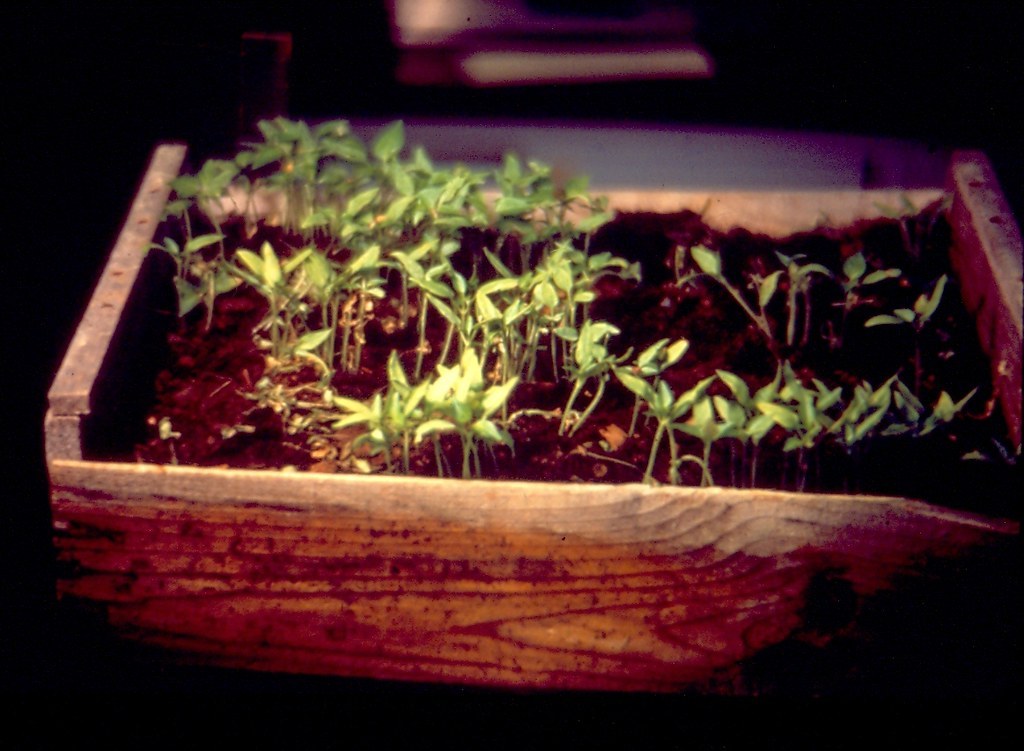
A reservoir that sits in afternoon sun or under hot grow lights can spike past 80 °F (27 °C) even in a cool room, and every plant sharing that water is exposed together. Zoospores swim, so shared systems spread hydroponic root rot fast; Penn State Extension’s guidance is to discard infected plants at first sight, disinfect benches, tools and reservoirs, cover ebb-and-flow reservoirs against debris, and screen return water (Penn State Extension). The same pathogen collapses seedlings in soil flats, which is why our damping-off guide recommends the same hygiene.
How to read your roots: symptom triage
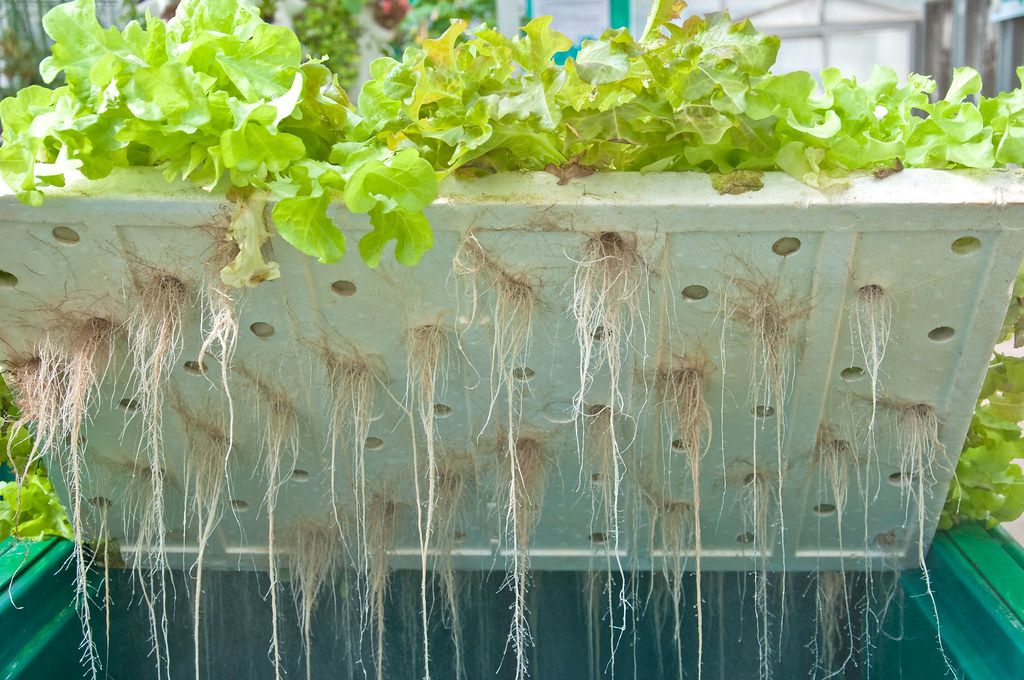
Lift the lid and look weekly; in warm weather, when hydroponic root rot moves fastest, look twice a week. Healthy hydroponic roots are white to cream, firm, and fuzzy with fine root hairs, with a mild earthy smell. Use this table before you reach for any additive:
| What you see | Color | Texture | Smell | What to do |
|---|---|---|---|---|
| Healthy roots | White to cream | Firm, fine root hairs | Mild, earthy | Nothing |
| Pythium root rot | Brown, gray or black | Soft, slimy; outer tissue slips off leaving a bare strand | Sour or swampy | Rescue steps below |
| Nutrient staining | Tan to dark tea | Firm and intact | Normal | Nothing; organic or humic supplements stain roots |
| Algae coating | Green film | Slippery surface, roots firm underneath | Grassy | Block light leaks into the reservoir |
| Transplant shock | Dulled, some dieback at tips | Mostly firm | Normal | Hold conditions steady for a week |
Diagnostic criteria from Cornell, University of Georgia and Penn State Extension publications.
The smell test is the fastest honest check: a reservoir going sour smells wrong before the roots look catastrophic. Brown but firm, odorless roots after you added a seaweed or humic supplement are stained, not rotten.
Hydroponic root rot rescue: step by step
If the triage says rot, act the same day. Plants with some firm white root remaining usually recover; plants with a fully brown, hollow root mass usually do not.
Step 1: Isolate, cool and re-oxygenate
Move affected plants out of any shared reservoir immediately. Drop the solution temperature toward 68 to 72 °F (20 to 22 °C): frozen water bottles floated in the reservoir work for small systems, a chiller for big ones. Add or upsize air stones so the surface visibly boils; in deep water culture, a generous air pump is the cheapest insurance you can buy. Oxygen is treatment here, not just comfort.
Step 2: Trim the rot
With clean scissors, cut away every root that is brown, soft or slimy, back to firm white tissue. Rinse the remaining roots gently in cool water. Do not be timid: rotted tissue left on the plant re-seeds the system with spores. Disinfect the scissors between plants.
Step 3: Clean and sanitize the system
Empty the reservoir. Scrub off biofilm, then sanitize hard surfaces: Penn State recommends thorough disinfection of reservoirs, tools and benches (Penn State Extension), and the University of Georgia notes that plastic rafts clean more reliably than porous polystyrene (e-Gro / UGA). A household-bleach solution (about 1 tablespoon per gallon of water), 10 minutes of contact, then a thorough rinse, is standard grower practice for home systems. Wash or replace net pots, and discard any shared media.
Step 4: Rebuild with fresh solution
Refill with fresh, correctly mixed nutrient solution at the right temperature, restart full aeration, and return the trimmed plants. Skip additives for the first days; let clean, cool, oxygenated water do the work. New white root tips within 5 to 10 days mean you won, and that same-day reset is what turns hydroponic root rot from a lost crop into a lost week. Beneficial-microbe products labeled for hydroponics are a reasonable preventive at this stage, and Cornell notes biofungicides work as prevention, not cure (Urban Ag News).
Prevention: the numbers to hold
| Factor | Target | Source |
|---|---|---|
| Root-zone temperature | 68 to 75 °F (20 to 24 °C); 68 to 72 °F in summer | Cornell; University of Georgia |
| Danger threshold | Keep solution below 77 °F (25 °C) | Frontiers in Plant Science review |
| Dissolved oxygen | Above 6 ppm; ideally 8 to 9 ppm (saturated) | Cornell; UGA |
| Solution changes | Fresh solution on a schedule, topped off between changes | See our water change guide |
| Hygiene | Discard infected plants fast; sanitize tools and reservoirs between crops | Penn State; UGA |
System design matters too. DWC depends entirely on its air pump, so a pump failure in warm weather is an emergency. The Kratky method has no aeration at all and relies on its expanding air gap, which is why it struggles in hot rooms. In NFT, keep channels shaded and flow continuous so the thin film does not heat up or stall. Whatever the system, start with clean water; our tap water guide covers what to check.
What not to do
- Do not treat hydrogen peroxide as a cure. Growers dose diluted peroxide against active hydroponic root rot, but this is grower practice, not extension guidance, and it burns root hairs and beneficial microbes along with the rot. Use the rescue steps above; peroxide at best buys time.
- Do not chase rot with silicon or micronutrient cocktails. A controlled hydroponic-lettuce study found such dosing ineffective at best, as summarized in this synthesis of the root-rot literature. Temperature and oxygen fix the cause; additives do not.
- Do not over-sterilize a running system. A nuke-and-pave reservoir every few days strips beneficial microbes and stresses roots. Sanitize between crops, not during them.
- Do not replant into an uncleaned system. Spores persist in biofilm; Step 3 is not optional.
- Do not wait on a shared reservoir. One slimy plant today is five slimy plants next week.
Where this applies
The temperature and oxygen numbers hold for any water-based system, but the risk profile shifts with your climate and gear. In hot summers or warm climates, a chiller stops being optional for DWC and raft systems; in cool basements, hydroponic root rot is rare and slow. Small reservoirs heat and cool fast, which makes them forgiving in winter and dangerous in a sunny window. Outdoor and greenhouse systems face extra spore pressure from soil splash and debris, so the Penn State hygiene rules matter more there. If you run a Kratky jar in a hot room, accept the higher risk or move it somewhere cooler; there is no pump to save you.
FAQ
Can a plant recover from hydroponic root rot? Yes, if caught early. Trim to firm white root, cool and oxygenate the solution, sanitize the system, and most plants push new white roots within 5 to 10 days. A plant whose entire root mass is brown and hollow is rarely worth saving.
What causes root rot in hydroponics? The water mold Pythium, almost always. It infects when the solution is warm and low in oxygen, and its swimming spores spread it through shared water.
What water temperature prevents root rot? Hold 68 to 75 °F (20 to 24 °C), and 68 to 72 °F in summer. Disease accelerates above about 77 °F (25 °C), and colonized roots can rot within hours at 75 to 82 °F (24 to 28 °C).
Does hydrogen peroxide kill root rot? Partially, and temporarily. It kills surface microbes on contact but does not fix the warm, low-oxygen conditions that caused the rot, and it damages root hairs. Treat it as a stopgap, not a cure.
Why are my hydroponic roots brown but not slimy? Probably staining, not rot. Organic and humic supplements dye roots tan or tea-colored while they stay firm and odorless. Rot is brown plus soft, slimy and sour-smelling.
Is root rot contagious between plants in one reservoir? Yes. Pythium zoospores swim, so every plant sharing the water is exposed. Isolate infected plants immediately and sanitize the whole system before replanting.
Related guides: Deep Water Culture for Beginners · The Kratky Method · How Often to Change Hydroponic Water · Damping-Off in Seedlings · All Problems & Fixes guides
Sources
- Mattson, N., Pythium Root Rot on Hydroponically Grown Basil and Spinach, Cornell University via Urban Ag News (e-Gro E301), 2018.
- Williams-Woodward, J., Pythium Root Rot management, University of Georgia, via e-Gro / Inside Grower.
- Pythium, Penn State Extension, 2017.
- Review of Pythium root rot in hydroponic systems, Frontiers in Plant Science, 2026.
- Cornell CEA Lettuce Handbook, Cornell University.
- Hydroponic root rot: DWC rescue synthesis, Truleaf (secondary summary of controlled studies).
Featured image: “2009-03-30 Lettuce roots” by Ildar Sagdejev (Specious), CC BY-SA 4.0.