
You’re standing in the produce aisle holding two clamshells. One is a tangle of white threads with tiny yellow-green heads; the other is a neat crop of little leaves on purple stems, cut clean at the base. Both say “broccoli.” Both cost more than a full head of broccoli. And you’re wondering which one is the healthier buy, which one you could grow on your own kitchen counter, and why the first one carries a warning about pregnant women and small children.
Short answer: The microgreens vs sprouts difference comes down to age, light and what you eat. Sprouts are germinated seeds grown in water, usually in the dark, and eaten whole (seed, root and shoot) after about 2–7 days. Microgreens are grown in a growing medium under light for about 7–21 days and cut above the roots once the seed leaves open. Microgreens generally carry a lower food-safety risk than raw sprouts, and they tend to be richer in vitamins and pigments, while sprouts are faster and need no light at all.
By the end of this guide you’ll know exactly how the two differ, what the nutrition research actually shows (and where it’s been oversold), why raw sprouts sit on the FDA’s caution list while microgreens don’t, and how to grow either one safely at home this winter.
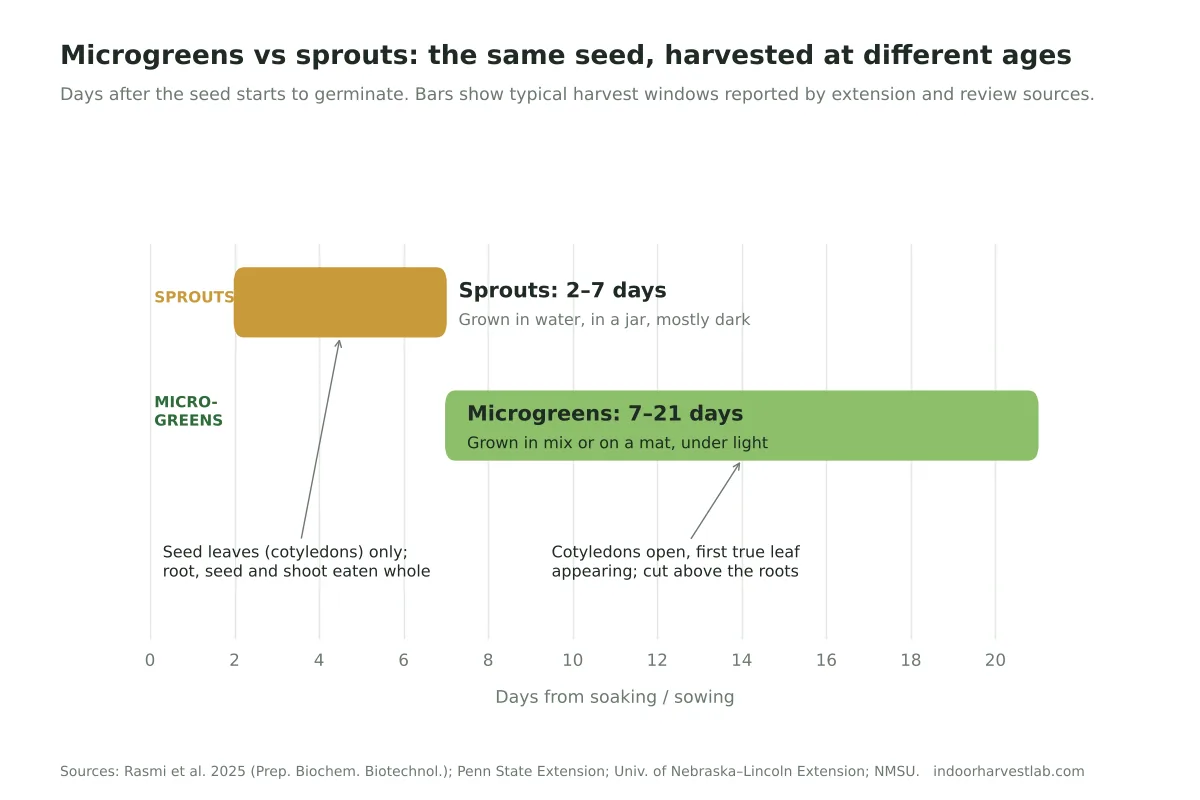
Microgreens vs sprouts: the core differences at a glance
Same seed, same species, different stage of life. That’s the whole story in one line, but the details matter, because they decide how you grow each crop, what it tastes like and how carefully you need to handle it.
New Mexico State University puts it plainly: the primary biological difference “is their age.” With microgreens “just the top part of the plant is eaten and the roots are left behind, whereas sprouts are eaten whole” (NMSU). A 2025 review in Preparative Biochemistry & Biotechnology gives the usual windows: sprouts are harvested 2–7 days after starting, microgreens 7–21 days after the young true leaves begin to form (Rasmi et al., 2025).
| Feature | Sprouts | Microgreens |
|---|---|---|
| Harvest age | About 2–7 days (Nebraska Extension: 3–6 days for most home jars) | About 7–21 days; most crops 10–14 days |
| Growing medium | None: seeds sit in water and are rinsed | Potting mix, soilless mix or a fibre mat |
| Light | Not needed; usually kept in the dark | Needed once seedlings emerge (window or grow light) |
| Part you eat | Whole thing: seed, root and shoot | Stem and leaves only, cut above the roots |
| Leaf stage | Cotyledons barely open or still closed | Cotyledons fully open; first true leaf may appear |
| Typical size | A few centimetres, mostly white root and stem | About 1–3 inches (2.5–7.5 cm), green or coloured |
| Main food-safety concern | Warm, wet sprouting can multiply bacteria from the seed | Similar to other raw produce; seed and water quality still matter |
| Who should avoid raw | Children, older adults, pregnant women, people with weakened immunity (FDA) | No specific federal warning; wash and handle as fresh produce |
Notice the pattern in this sprouts vs microgreens comparison. Every row that makes sprouts quick and easy (no light, no medium, eat the whole thing) is also a row that keeps them close to the seed, the water and the warm, damp conditions where bacteria thrive. Every row that makes microgreens a little more work moves them further from that risk. Keep that trade-off in mind; it explains almost everything below.
How sprouts and microgreens are grown
If you’ve only ever bought them, the growing methods look like minor variations on a theme. In practice they’re two different crafts.
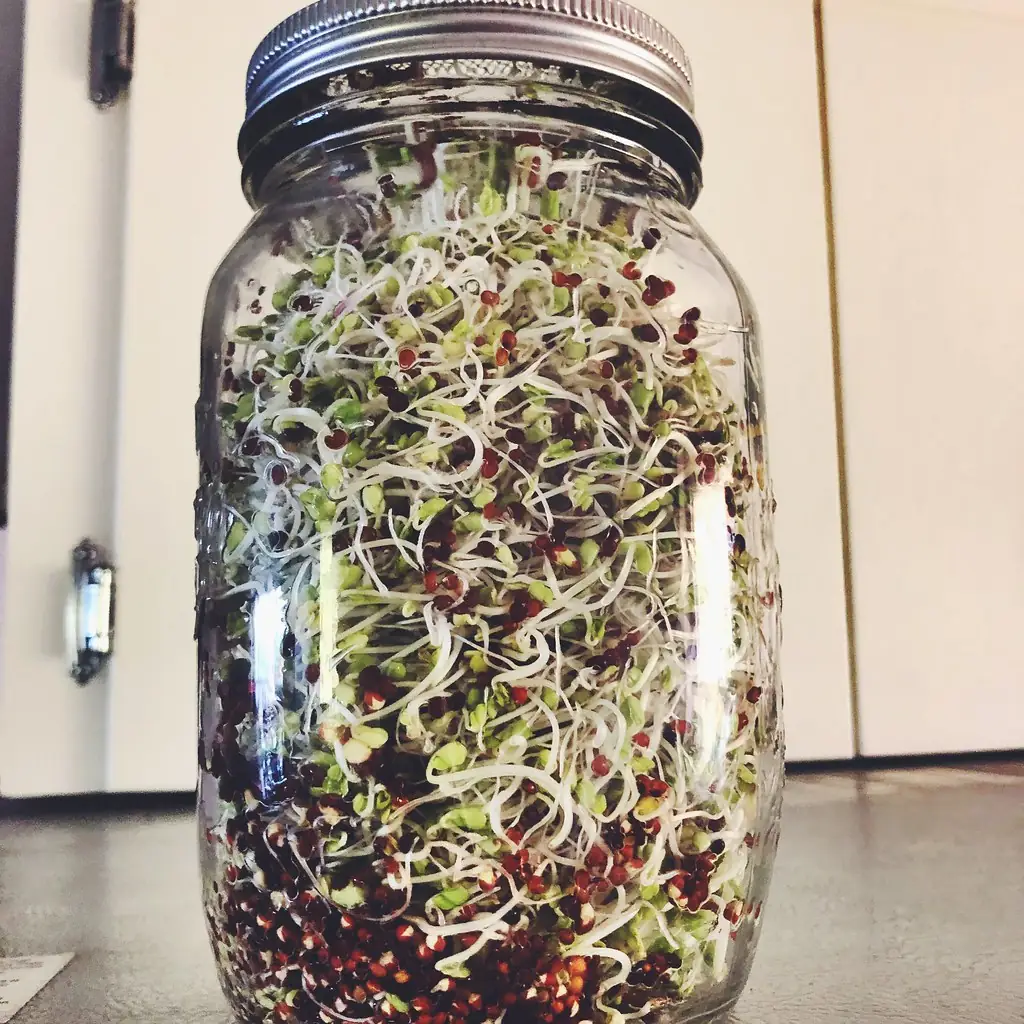
Sprouts: a jar, water and darkness
Sprouts are germinated in water and kept wet by repeated rinsing. University of Nebraska–Lincoln Extension tells home growers to keep the jar “in a dark place at room temperature, 68–72°F,” to rinse two to four times a day, and to expect a harvest in about three to six days depending on the seed (Browning, Nebraska Extension). Commercially, Penn State notes sprouts are typically harvested 3–10 days after sowing (Penn State Extension).
Alfalfa, broccoli, radish, clover, mung bean and lentil are the classic sprouting seeds. If you want the full jar method with soak times by seed, we cover it step by step in our guide to growing sprouts in a jar.
Microgreens: a tray, a medium and light
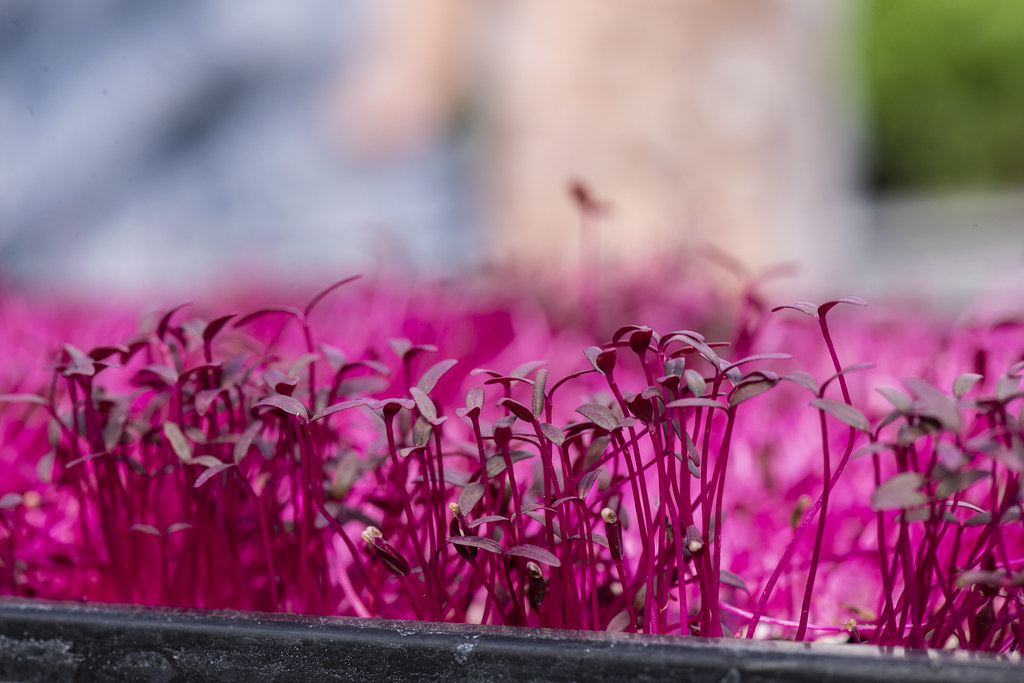
Microgreens are sown densely on top of a growing medium. NMSU describes soaking seeds “briefly (2 to 4 hours), if at all,” then sowing them on a soilless medium, a fibrous grow mat or, less commonly, soil, with roots kept moist while the shoots grow “above the growing medium under light” (NMSU). Illinois Extension says they are normally harvested 10–14 days after planting, once the leaves have fully spread (Illinois Extension).
Light is the step that changes everything. It turns pale stems green or purple, builds pigments and gives you a real leaf to cut. Our microgreens light requirements guide has the PPFD and photoperiod numbers, and if you’d rather skip soil entirely, see growing microgreens without soil.
Where the line blurs
Some crops sit right on the boundary. Pea shoots and sunflower greens are grown like microgreens but are often sold alongside sprouts, and a sprout left in light for a few extra days starts greening up like a young microgreen. What decides the label isn’t the seed; it’s whether the plant grew in a medium under light and was cut above the roots. Our pea shoots guide is a good example of a crop that straddles both worlds.
Microgreens vs sprouts nutrition: which is healthier?
This is the most searched version of the question, and also the one where the internet gets loosest with the numbers. Here’s what the research actually supports.
The famous “4 to 40 times” figure
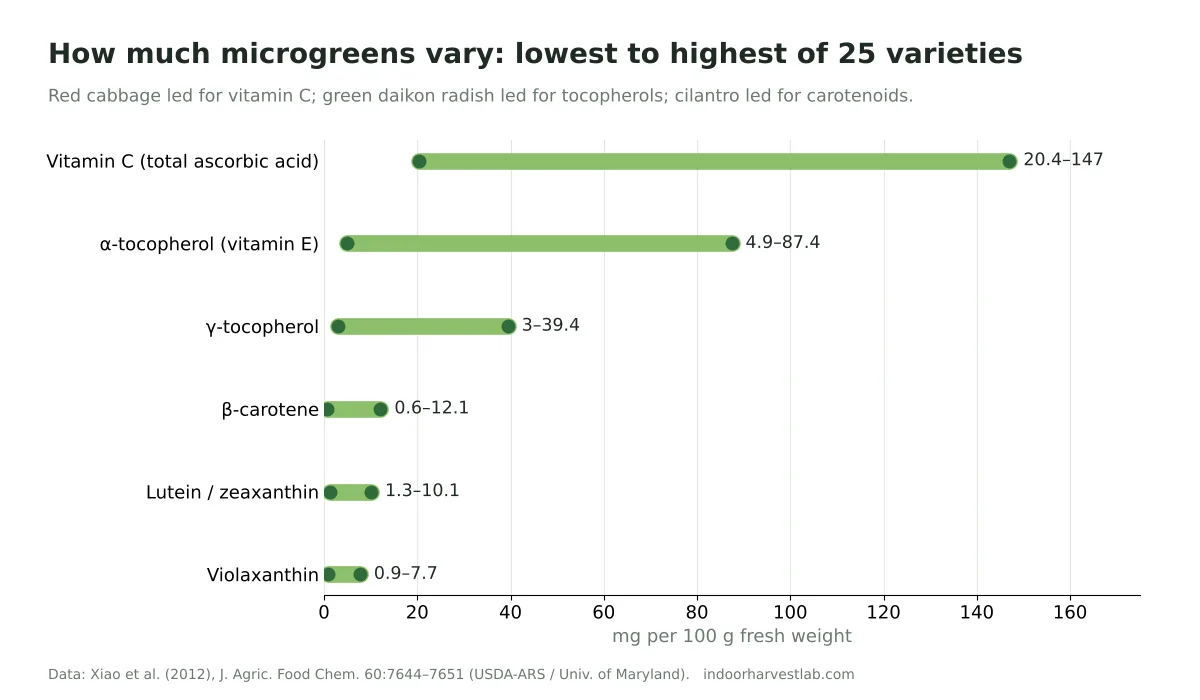
Much of the microgreen nutrition buzz traces back to one 2012 study by USDA-ARS and University of Maryland researchers, who measured vitamin C, carotenoids, vitamin K1 (phylloquinone) and tocopherols (vitamin E) in 25 commercially grown microgreens (Xiao et al., 2012). They found huge variation between species: total vitamin C ranged from 20.4 to 147.0 mg per 100 g fresh weight, β-carotene from 0.6 to 12.1 mg, and α-tocopherol from 4.9 to 87.4 mg. Red cabbage, cilantro, garnet amaranth and green daikon radish topped the charts for vitamin C, carotenoids, vitamin K1 and vitamin E respectively.
The University of Maryland’s own news release summarised the result as microgreens containing “four to 40 times more nutrients than their mature counterparts” (UMD, 2012). Two caveats are worth knowing. First, that comparison was against mature leaves taken from the USDA nutrient database, not against sprouts. Second, the multiplier varies hugely by nutrient and species, so it’s a ceiling, not a promise for every tray.
Head-to-head studies of microgreens and sprouts
Direct comparisons are rarer, but they point in the same direction. A 2026 study in Open Life Sciences compared mung bean microgreens with mung bean sprouts on a fresh-weight basis. The microgreens had lower protein and fat but nearly double the dietary fibre, higher calcium, magnesium, iron and zinc, slightly less potassium and significantly more vitamin C (Marottickal et al., 2026).
A 2024 Food Chemistry study on perilla (shiso) found a similar split: germinated seeds were richer in lipids, proteins, sugars, free amino acids and minerals, while microgreens had significantly higher vitamins and polyphenols (Bhaswant et al., 2024). The authors concluded that sprouted seeds boost macronutrient intake, while microgreens boost antioxidant intake.
| Nutrient group | Tends to be higher in | Why (the likely mechanism) |
|---|---|---|
| Protein, fat, sugars | Sprouts | More of the seed’s stored reserves are still present and eaten |
| Vitamin C | Microgreens | Light-driven leaf growth; measured higher in mung bean microgreens |
| Carotenoids, polyphenols | Microgreens | Pigments are built in light-exposed, photosynthesising leaves |
| Dietary fibre | Microgreens (mung bean study) | More developed stems and leaves |
| Calcium, magnesium, iron, zinc | Mixed: higher in mung bean microgreens, but higher in perilla seeds | Depends on species and on what the medium supplies |
Bottom line on microgreens vs sprouts nutrition: if you want vitamins and colourful antioxidants, microgreens usually win. If you want a protein-dense crunch from beans and lentils, sprouts have the edge. For the special case of broccoli, where sulforaphane is the headline compound, read our broccoli microgreens vs sprouts breakdown.
Microgreens vs sprouts safety: why raw sprouts carry a warning
Here’s the section that matters most if you’re cooking for a family. Sprouts have a long outbreak history; microgreens, so far, a much shorter one. The reason isn’t that sprout growers are careless. It’s the biology of the method.
Why sprouting multiplies bacteria
The FDA explains that sprouts are grown from seeds and beans “under warm and humid conditions,” and that “if just a few harmful bacteria are present in or on the seed, the bacteria can grow to high levels during sprouting, even if you are growing your own sprouts under sanitary conditions at home” (FDA). The pathogens named are Salmonella, Listeria and E. coli.
The University of Connecticut’s food safety program counts an estimated 2,308 US illnesses from raw or lightly cooked sprouts across 38 known outbreaks since 1990, and notes that a 2011 outbreak in Europe sickened more than 2,000 people and killed at least 22 (UConn Food Safety). Washing doesn’t fix it, because bacteria can sit inside the seed or within the sprout tissue rather than just on the surface.
Why microgreens are lower-risk (but not zero-risk)
A peer-reviewed review in the International Journal of Food Microbiology compared microgreens with sprouts along the whole farm-to-fork chain and found real overlap in production and consumption, but also key differences: microgreens grow in a medium rather than in water, under light, for longer, and the roots and seed (where contamination concentrates) are usually left behind at harvest (Riggio et al., 2019). Illinois Extension sums it up: microgreens “are safer to grow than infamous sprouts” (Illinois Extension).
Still, NMSU is careful to say microgreens are “about as risky as any fresh produce that is eaten raw,” and they have been recalled in the past (NMSU). Mould is the more common home problem; if your tray goes fuzzy, our microgreens mold guide shows how to tell mould from harmless root hairs.
Who should avoid raw sprouts
The FDA advises that children, older adults, pregnant women and people with weakened immune systems “should avoid eating raw or lightly cooked sprouts of any kind,” including onion, alfalfa, clover, radish and mung bean sprouts (FDA). The University of California says home-grown sprouts are no exception: if they are eaten raw, young children, elderly people and people with weakened immunity should not eat them, and cooked sprouts are fine if heated to steaming hot or above 165°F (74°C) (Suslow & Harris, UC ANR 8151).
So for anyone pregnant or cooking for a toddler, the practical swap is simple: cook the sprouts into a stir-fry or soup, or grow microgreens instead and treat them like any other washed salad green.
Numbers to hold for growing both safely
Here are the figures that matter, gathered from extension publications in one place. Everything else in your setup can flex; these are worth respecting.
| What | Sprouts | Microgreens | Source |
|---|---|---|---|
| Room / germination temperature | 68–72°F (20–22°C), in the dark | Room temperature; see crop-specific guides | Nebraska Extension |
| Seed disinfection at home | 3% hydrogen peroxide heated to 140°F (60°C), 5 minutes, then rinse 1 minute under running water | Not routinely required; buy sprouting-grade or untreated food-grade seed | UC ANR 8151; Nebraska Extension |
| Rinsing | 2–4 times a day until harvest | Water the medium, not the leaves; avoid standing water | Nebraska Extension |
| Days to harvest | 3–6 days at home (3–10 commercially) | 10–14 days for most crops (7–21 range) | Nebraska; Penn State; Illinois; Rasmi et al. |
| Jar / tray sanitising | ¾ cup bleach per gallon of water (3 tbsp per quart), soak at least 5 minutes | Same solution works for trays | UC ANR 8151 |
| Fridge storage | 40°F (4°C) or below; use within 1–2 weeks | Refrigerate; UMD notes a short shelf life of 2–5 days | UConn; Nebraska; UMD |
| Safe cooking temperature | Steaming hot or above 165°F (74°C) | Usually eaten raw after washing | UC ANR 8151; UMD |
Two warnings on that table. The University of California notes that commercial sprouters treat seed with 2% calcium hypochlorite for about 10 minutes, but says “use of chlorine at these levels is not recommended for treating seeds in the home” (UC ANR 8151). And no home treatment guarantees sterile seed. Disinfection lowers risk; it doesn’t remove it, which is why the high-risk-group advice stands regardless.
Taste, cost and which one to grow
Nutrition and safety aside, most people settle the microgreens vs sprouts question based on what’s on the plate. The two crops do very different jobs.
| Sprouts | Microgreens | |
|---|---|---|
| Flavour | Mild, nutty, “green-bean” crunch; radish and broccoli sprouts are peppery | Concentrated version of the adult plant: spicy radish, sweet pea, earthy beet |
| Texture | Crisp, juicy, stringy roots | Tender leaves, crisp stems |
| Best uses | Stir-fries, soups, spring rolls, cooked noodle dishes | Salads, sandwiches, garnishes, bowls, eaten raw |
| Cook or raw? | Cooking recommended for high-risk eaters | Usually raw; heat dulls colour and texture |
| Seed per harvest | Small amount: a few tablespoons fill a quart jar | Dense sowing on a full tray |
| Equipment | Jar, mesh lid, nothing else | Tray, medium, and usually a grow light in winter |
On cost, sprouts are cheaper per gram because they need little seed and no light. Microgreens need far more seed per tray; our microgreens seeding density guide shows the grams-per-tray figures. In winter, a grow light is the main extra cost, but the same light also runs herbs and greens.
A quick decision guide
Honestly, many home growers end up doing both. But if you’re picking one to start with this season, use this table.
| If you… | Choose | Why |
|---|---|---|
| Have no grow light and a dark kitchen | Sprouts (and cook them if anyone in the house is high-risk) | Sprouts need no light at all |
| Are pregnant, or cook for young children or older relatives | Microgreens | FDA advises high-risk groups to avoid raw sprouts |
| Want food within 3–5 days | Sprouts | Fastest crop you can grow indoors |
| Want the most vitamin C and pigments per bite | Microgreens | Light-grown leaves; supported by Xiao et al. and the mung bean study |
| Want a protein-rich, crunchy topping for cooked dishes | Bean and lentil sprouts | More seed reserves remain |
| Want regular salads all winter | Microgreens on a rotating schedule | Sow a tray every few days for a steady supply |
If you go the microgreens route, our guides to the blackout period and how to harvest microgreens take you from seed to plate.
From the lab bench
Step back from the tables and the microgreens vs sprouts pattern is clear: a sprout is still mostly a seed, and a microgreen is already a plant. That single idea explains the nutrition data, the food-safety data and even the flavour.
A seed is a packed lunch of starch, protein and oil. In the first few days of germination, enzymes start breaking those reserves down, but the seedling is still living off them. Eat it then, and you’re eating much of that packed lunch, which is exactly why sprouts come out ahead on protein and fat in the perilla and mung bean comparisons. Once the cotyledons open in light and start photosynthesising, the plant switches on pigment and antioxidant pathways: chlorophyll, carotenoids, anthocyanins, vitamin C. That’s the stage the Maryland team measured, and it’s why the numbers for microgreens jump.
The safety story follows the same logic. Contamination usually rides in on the seed. Sprouting gives any bacteria on or inside that seed several days of warmth, moisture and leaked sugars, and then you eat the seed and the root zone where they multiplied. Microgreens leave the seed coat and roots behind in the tray, and the edible shoots grow up into drier air under light. The risk is lower because of where you cut, not because the seed is cleaner.
Two practical rules follow. First, the seed source matters more than anything you do afterwards, for both crops: buy seed sold specifically for sprouting or microgreens, never garden seed that may carry fungicide coatings. Second, if someone in your household is in a high-risk group, don’t try to engineer your way around the FDA advice with clever disinfection; just cook the sprouts or grow microgreens. That’s not caution for its own sake; it’s matching the method to the biology.
FAQ
What is the main difference between microgreens and sprouts?
Age and how they’re grown. Sprouts are germinated in water, usually in the dark, and eaten whole after about 2–7 days. Microgreens grow in a medium under light for about 7–21 days and are cut above the roots once the seed leaves open.
Microgreens vs sprouts: which is healthier?
For vitamins and antioxidants, usually yes. Studies on mung bean and perilla found microgreens higher in vitamin C and polyphenols, while sprouts or germinated seeds were higher in protein, fat and sugars. The best choice depends on which nutrients you want.
Are microgreens safer than sprouts?
Generally, yes. Sprouts grow in warm, wet conditions that let bacteria from the seed multiply, and they are eaten with the seed and roots. Microgreens grow under light in a medium and are cut above the roots, but they are still a raw food, so wash them and buy clean seed.
Can pregnant women eat microgreens or sprouts?
The FDA advises pregnant women, young children, older adults and people with weakened immune systems to avoid raw or lightly cooked sprouts of any kind. Cooked sprouts heated above 165°F (74°C) are fine. Microgreens carry no specific federal warning but should be washed like other raw produce.
Can you grow microgreens from sprouting seeds?
Yes. Many seeds sold for sprouting, such as broccoli, radish and alfalfa, can also be grown as microgreens on a tray of medium under light. Just make sure the seed is untreated and sold for eating, not coated garden seed.
Is a pea shoot a sprout or a microgreen?
Pea shoots are usually grown like microgreens: sown in a medium, grown under light and cut above the roots after one to two weeks. A pea sprouted in a jar for a few days and eaten whole would be a sprout.
Do you need a grow light for microgreens?
Not always, but in winter it helps a lot. A bright south-facing window can work, yet weak winter light often gives tall, pale microgreens. Sprouts need no light at all.
Sources
- U.S. Food and Drug Administration. Selecting and Serving Produce Safely (sprouts section). FDA Human Foods Program, 2024.
- University of Connecticut Food Safety. Seed and Bean Sprouts. UConn Extension.
- LaBorde, L. What You Should Know About Sprouts. Penn State Extension, 2005.
- Suslow, T. V., & Harris, L. J. (2004). Growing Seed Sprouts at Home. University of California ANR Publication 8151.
- Browning, S. (2021). Growing Edible Sprouts at Home. University of Nebraska–Lincoln Extension, Lancaster County.
- New Mexico State University. All About Eating & Growing Microgreens.
- University of Illinois Extension (2015). Growing Tiny Greens. Flowers, Fruits, and Frass blog.
- Xiao, Z., Lester, G. E., Luo, Y., & Wang, Q. (2012). Assessment of vitamin and carotenoid concentrations of emerging food products: edible microgreens. Journal of Agricultural and Food Chemistry, 60(31), 7644–7651. doi:10.1021/jf300459b
- University of Maryland, Department of Nutrition and Food Science (2012). Mighty Microgreens.
- Riggio, G. M., Wang, Q., Kniel, K. E., & Gibson, K. E. (2019). Microgreens: a review of food safety considerations along the farm to fork continuum. International Journal of Food Microbiology, 290, 76–85. doi:10.1016/j.ijfoodmicro.2018.09.027
- Marottickal, S. S., et al. (2026). Enhanced nutritional value of mung bean microgreens compared to sprouts: a quantitative study. Open Life Sciences, 21(1), 20251278. doi:10.1515/biol-2025-1278
- Bhaswant, M., et al. (2024). Comparative analysis of macro- and micro-nutrients of Perilla frutescens var. crispa f. viridis microgreens and germinated seeds. Food Chemistry, 455, 139858. doi:10.1016/j.foodchem.2024.139858
- Rasmi, P. K., et al. (2025). A comprehensive review of herb microgreens as emerging functional foods. Preparative Biochemistry & Biotechnology, 56(1), 1–13. doi:10.1080/10826068.2025.2511840