
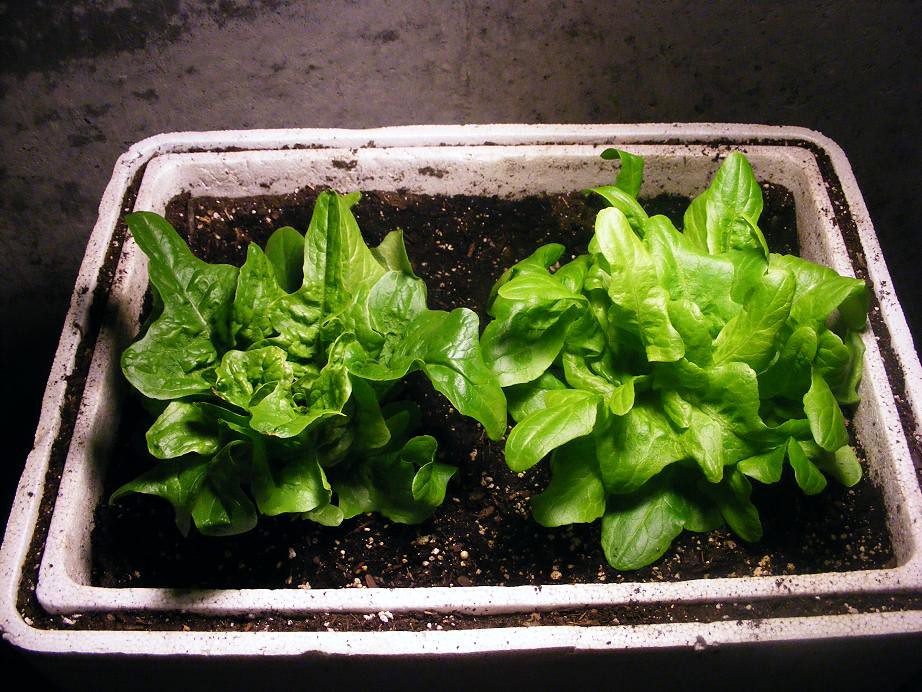
Short answer: to grow lettuce indoors, give it a grow light for 14–16 hours a day at about 200–300 µmol/m²/s at leaf level (a daily light integral of 12–17 mol/m²/day), keep the room around 60–70 °F by day and no warmer than 75 °F, and grow loose-leaf or butterhead types in a free-draining potting mix spaced about 6 inches apart. Leaf lettuce is ready to pick in roughly 5–8 weeks from seed, and you can keep cutting outer leaves for weeks after that.
Growing lettuce indoors is the easiest way to start with salad crops under lights, because it is fast, short and happy in cool rooms. What goes wrong indoors is almost always light (a sunny window is rarely enough in winter), heat (which makes lettuce bolt and turn bitter) or wet potting mix. This guide sets out the numbers that extension and research growers use, then turns them into a home setup.
Table of Contents
Can you grow lettuce indoors without a grow light?
In summer on a bright south-facing sill, lettuce indoors can manage without one. In winter, rarely well. Commercial indoor growers aim for a daily light integral (DLI) of 12–17 mol/m²/day, and the University of Kentucky puts the lower limit lettuce tolerates at 6.5–9.7 mol/m²/day (University of Kentucky CCD-CP-63). A few feet back from a winter window, light drops well below that, and lettuce indoors grown there stretches, stays pale and forms loose, floppy leaves.
For lettuce indoors, a simple LED shop light or panel fixes this. You do not need a large or expensive fixture: a 2-foot or 4-foot LED bar over one or two trays gives enough light for leaf lettuce if you keep it close and run it long enough. The next section shows how strong “enough” is.
Light for lettuce indoors: PPFD, DLI and hours
DLI is the total light a plant receives in a day. It equals PPFD (the light intensity at the leaves, in µmol/m²/s) × hours × 0.0036. The two reference targets for lettuce indoors are:
- 17 mol/m²/day, the target in the Cornell CEA lettuce handbook, but only with fans blowing air down onto the plants; without that airflow Cornell drops the target to 12 mol/m²/day to avoid tipburn (Cornell CEA Hydroponic Lettuce Handbook, Brechner and Both).
- 12–17 mol/m²/day as the optimum range from the University of Kentucky, which also lists 200–300 µmol/m²/s for seedling growth.
Home growers rarely have Cornell’s downward airflow, so 12 mol/m²/day is the sensible target for lettuce indoors. At 16 hours a day, that needs about 210 µmol/m²/s at leaf level.

| Hours of light per day | PPFD for 12 mol/m²/day | PPFD for 17 mol/m²/day |
|---|---|---|
| 12 | 278 | 394 |
| 14 | 238 | 337 |
| 16 | 208 | 295 |
| 18 | 185 | 262 |
Longer days let a weaker light reach the same DLI for lettuce indoors, but there is a limit. In a 2023 study of iceberg lettuce in an indoor vertical hydroponic system under white LEDs at a constant 200 µmol/m²/s, raising the photoperiod from 12 hours (DLI 8.64) to 16 hours (DLI 11.5) increased head weight from 275.5 g to 393 g, while 20 hours (DLI 14.4) reduced fresh weight, dry weight and leaf area (Gavhane et al. 2023, Scientific Reports 13:10923). A 16-hour day is a good default.
If you have no light meter, a phone app gives a rough reading, and manufacturers’ PPFD maps show the value at a given hanging height. Our guides to grow light distance and hours of light explain how distance and timer settings change the dose.
Temperature and humidity for lettuce indoors
Lettuce is a cool-season crop, and a warm room causes more trouble for lettuce indoors than anything except low light.
| Condition | Target | Source |
|---|---|---|
| Ideal range for growth | 50 °F nights, up to 68 °F days | University of Minnesota Extension |
| Indoor production setpoints | 75 °F day / 65 °F night (24/19 °C) | Cornell handbook |
| Upper limits | day no higher than 75 °F, night no higher than 65 °F | University of Kentucky |
| Lower limits | about 59 °F day, 50 °F night | University of Kentucky |
| Bolting risk | above 75 °F | University of Minnesota Extension |
| Relative humidity | 50–70% | Cornell handbook |
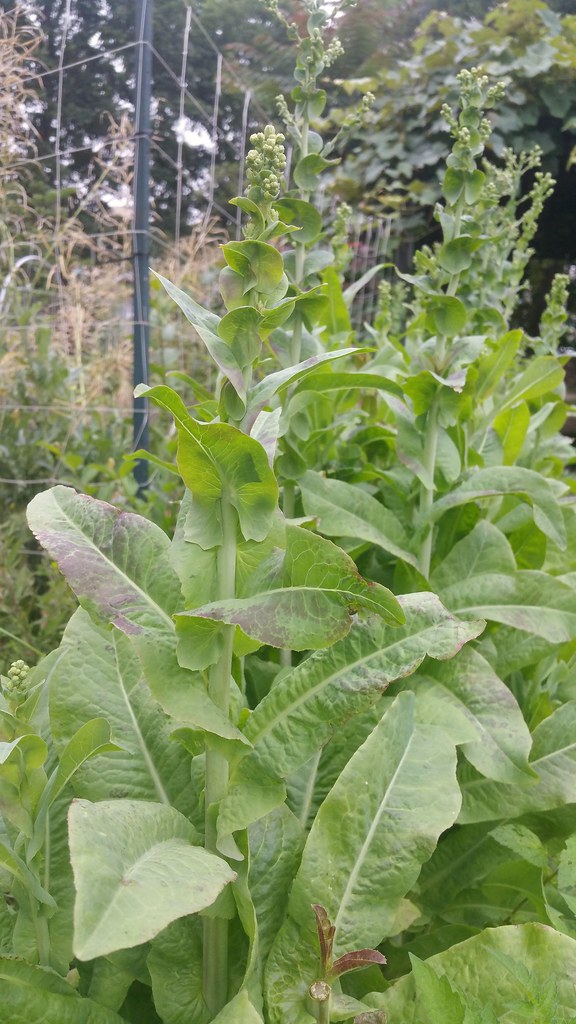
The University of Minnesota lists heat, long days and high light intensity as the triggers for bolting, which gives lettuce an extremely bitter flavor (UMN Extension, Schuh and MacKenzie). Indoors, heat is the one you control: keep trays away from radiators and out of the warm air right under the ceiling, and remember that some fixtures warm the air around them.
Best types of lettuce indoors
- Loose-leaf lettuce (green and red leaf, oakleaf, salad bowl types): the best choice. It gives the most harvests per square foot and can be picked a few leaves at a time.
- Butterhead / Bibb: small, soft heads that suit containers and hydroponic kits. The Cornell handbook’s production target is a 5-ounce (150 g) head.
- Romaine: possible, but the University of Kentucky rates it the most challenging type indoors, largely because of tipburn in the tall, fast-growing heart.
- Crisphead (iceberg): slow and large; leave it for the garden unless you run a proper hydroponic setup.
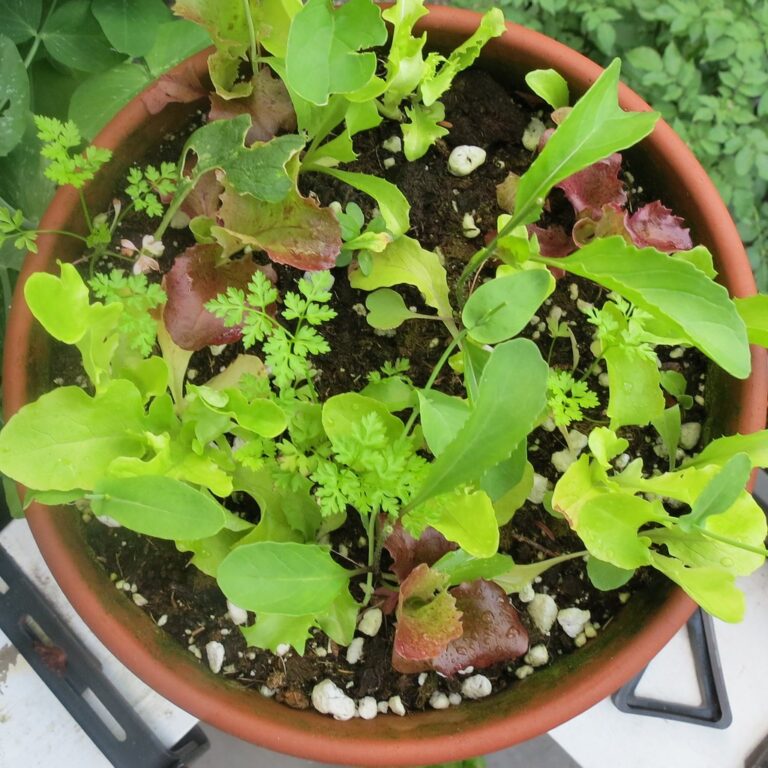
Mixed baby-leaf packets are also good lettuce indoors choices, since you harvest them young, before heat or light stress shows.
How to grow lettuce indoors step by step
- Choose a container. Any pot or tray with drainage holes works. Missouri Extension suggests a 10-inch container for four plants, spaced at least 6 inches apart (University of Missouri Extension). For baby leaf, a shallow tray sown in rows is enough.
- Use soilless potting mix. Missouri recommends a soilless mix containing perlite, not garden soil, which compacts around roots and can carry pathogens. Moisten the mix before sowing.
- Sow shallowly. UMN gives ¼–½ inch deep for garden sowing; indoors, a light cover is enough. Sow 2–3 seeds per spot and thin to one.
- Keep germination cool. Most lettuce indoors or out germinates best at 15–22 °C (59–72 °F), and high temperature stops germination altogether (Wei et al. 2024, Plants 13:2051). Seedlings appear in about 3 days, per the University of Kentucky. If seeds fail, test a few with paper towel germination in a cooler room.
- Turn the light on from day one. Cornell starts at 50 µmol/m²/s for the first 24 hours and then raises it to 250. At home, set the timer to 16 hours and lower the fixture as soon as seedlings emerge so they do not stretch.
- Feed lightly. Missouri uses 2 teaspoons of slow-release fertilizer spread over the mix, away from the base of the plants. A balanced liquid feed at label rate every week or two also works once true leaves form.
- Water to keep the mix evenly moist. Never leave pots standing in water; Missouri calls a plant sitting in water “one of the fastest ways to kill a plant”.
- Keep air moving. A small fan on low reduces tipburn and fungal problems. The University of Kentucky recommends airflow of 0.7–2.2 miles per hour across lettuce.
- Harvest outer leaves. Start when leaves reach a usable size, picking the outer leaves and leaving the center to keep growing, as both UMN and Missouri advise.
Timeline: from seed to salad
| Stage | Typical timing | Source |
|---|---|---|
| Germination | about 3 days | University of Kentucky |
| Seedling ready to transplant | 14–21 days | University of Kentucky |
| Harvest after transplanting | 21–35 days | University of Kentucky |
| Seed to 150 g head (hydroponic, optimized) | 35 days | Cornell handbook |
| Head size at harvest | 100–210 g (3.5–7.5 oz) | University of Kentucky |
Under a home light at 12 mol/m²/day, expect lettuce indoors to follow the slower end of these ranges. Cut-and-come-again leaf lettuce indoors keeps producing for several weeks until the plant starts to stretch upward, which is the first sign of bolting. Sowing a new pot every 2–3 weeks gives a steady supply.
Growing lettuce indoors in hydroponics
Lettuce is the classic hydroponic crop, and simple systems suit it well. Oklahoma State lists an EC of 1.2–1.8 mS/cm and pH 6.0–7.0 for lettuce (OSU HLA-6722); Cornell runs 1.2 mS/cm at pH 5.8, and the University of Kentucky about 1.5 mS/cm at pH 5.5–6.0.
For a first try at hydroponic lettuce indoors, a Kratky jar or tote needs no pump, and deep water culture adds an air pump for faster growth. Our hydroponic EC chart covers target ranges for other crops you might grow alongside it.
Common problems and mistakes to avoid
- Relying on a window in winter. Leggy, pale lettuce indoors is a light problem, not a fertilizer problem. Add a grow light and lower it.
- A warm room. Above about 75 °F, lettuce bolts: the center stretches and leaves turn bitter. Move it somewhere cooler and sow again.
- Running lights 20–24 hours. More hours is not always better; in the Gavhane study, 20 hours reduced growth compared with 16.
- Tipburn. Brown, dry leaf edges on inner leaves come from calcium not reaching fast-growing tissue. The University of Kentucky links it to poor airflow and rapid growth; fixes are a fan, a lower light level (the reason Cornell drops to 12 mol without airflow), cooler temperatures and more tolerant varieties.
- Soggy mix. Constantly wet potting mix invites root rot and fungus gnats. Let the surface dry slightly between waterings.
- Crowding. Plants closer than about 6 inches (except baby leaf) compete for light and stay small.
- Harvesting the center. Picking the heart first stops regrowth; take outer leaves.
Where this applies
These targets work in any home, but the season and climate change what you fight. In cold climates in winter, rooms are cool enough for lettuce indoors, and light is the only real limit. In hot climates, or in summer anywhere, heat is the problem: grow in the coolest room, use LEDs rather than hotter lamps, and choose bolt-resistant leaf types. Basements are often ideal if they stay above about 50 °F at night.
If your home runs dry in winter from heating, humidity around lettuce indoors may fall below Cornell’s 50% minimum; grouping trays together helps, but avoid misting leaves, which encourages disease. For a companion crop under the same light, see how to grow basil indoors, though basil wants a warmer spot than lettuce.
FAQ
How long does lettuce take to grow indoors?
Seedlings emerge in about 3 days. Leaf lettuce indoors is usually ready for the first picking about 5 weeks after sowing, and small heads take 5–8 weeks depending on light (University of Kentucky timings).
How many hours of light does lettuce need indoors?
About 14–16 hours a day under a grow light. At 16 hours, aim for roughly 200–300 µmol/m²/s at leaf level. Very long days (20 hours) reduced lettuce growth in a 2023 study.
Why is my indoor lettuce bitter?
Bitterness usually means the plant is starting to bolt, most often from warm temperatures above about 75 °F, long days or high light. Pick it now and resow in a cooler spot.
Can lettuce regrow after cutting?
Yes, lettuce indoors regrows if you pick outer leaves or cut an inch or so above the growing point. Leaf types regrow best; heading types give one main harvest.
Related guides: grow basil indoors · microgreens without soil · seed germination temperature chart · more in Leafy Greens.
Sources
- Brechner, M., and Both, A. J. Hydroponic Lettuce Handbook. Cornell Controlled Environment Agriculture.
- Sharma, A., Leonberger, K., Gauthier, N., and Ying, Q. (2025). Hydroponic Lettuce Production in Controlled Environments (CCD-CP-63). University of Kentucky.
- Gavhane, K. P., et al. (2023). Determination of optimal daily light integral (DLI) for indoor cultivation of iceberg lettuce in an indigenous vertical hydroponic system. Scientific Reports 13: 10923.
- Schuh, M., and MacKenzie, J. Growing lettuce, endive and radicchio in home gardens. University of Minnesota Extension.
- Geist, L. Container gardens to supply your salads. University of Missouri Extension.
- Oklahoma State University Extension. Electrical Conductivity and pH Guide for Hydroponics (HLA-6722).
- Wei, J., et al. (2024). Advance in the Thermoinhibition of Lettuce (Lactuca sativa L.) Seed Germination. Plants 13(15): 2051.
Featured image: “Harvest Day” by aperkins01096, CC BY 2.0.